George Washington
Continental Army commander
44 at the event · 24 years older than you are now
American Revolution · New Jersey
25–26 December 1776 — the gamble that saved the revolution
“It is the end of 1776. We declared ourselves a free nation in July, and by December the King's army has chased us across New Jersey and over the Delaware in rags. My enlistment ends in six days. So does the war, unless General Washington's mad plan works.”
This happened 230 years before you were born — 250 years ago.
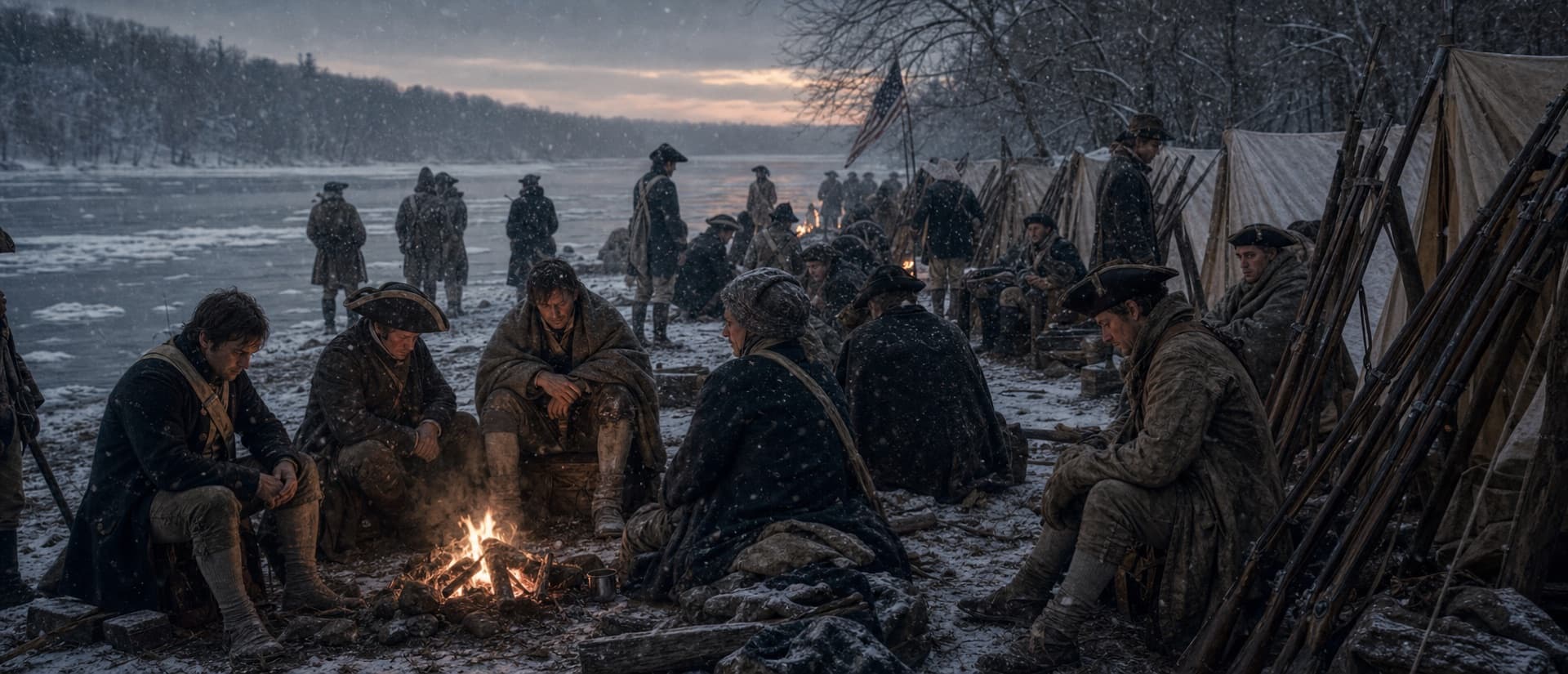
The euphoria of July 1776 was long gone. Through the autumn, General William Howe's army drove Washington's Continentals out of New York and across New Jersey in a demoralizing retreat. By December the ragged American army — barely 2,400 fit men, many without shoes or coats — huddled on the Pennsylvania side of the Delaware River. Enlistments for most of the army expired on 31 December, and the cause teetered on collapse. Thomas Paine, marching with the troops, wrote 'The American Crisis' — 'These are the times that try men's souls' — and Washington had it read aloud to his freezing men. He resolved on one desperate throw: recross the ice-choked river on Christmas night and fall on the Hessian garrison at Trenton before dawn.
Trenton was a small battle with enormous stakes. A defeat, or even inaction, likely meant the disintegration of the Continental Army and the end of the Revolution within weeks. Instead, Washington's night crossing and dawn assault captured nearly 900 Hessians at almost no cost, stunned the British, and — with the follow-up victory at Princeton — reversed the collapse. It kept the army in the field, revived enlistments and morale, and proved Washington could strike back. The Revolution survived its darkest winter.
December 1776. We declared a nation in July; by now the King's army has run us across New Jersey in rags. Half of us have no shoes. Our enlistments end on the last day of the year — and so, everyone whispers, does the war. By the fire, an officer reads Paine aloud: these are the times that try men's souls.
By December 1776 Washington's army had retreated across New Jersey to the Delaware. Enlistments expired 31 December. 250 years ago.
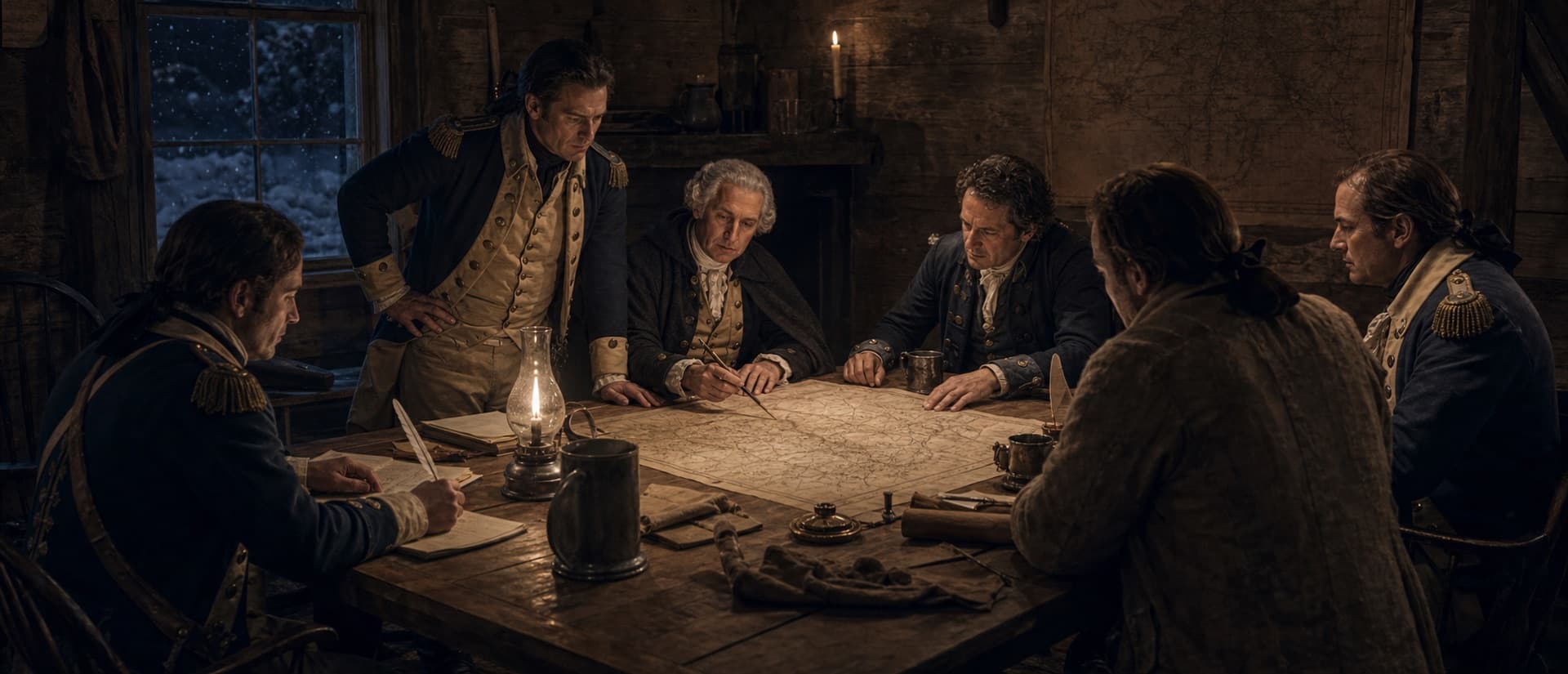
Then the order comes down, and it sounds like madness. On Christmas night we will recross the Delaware — the river running thick with ice — and march nine miles to Trenton, to fall on the Hessians at first light. The watchword is handed man to man: Victory, or Death.
Washington planned a surprise night crossing and dawn attack on the Hessian garrison at Trenton. The password was 'Victory or Death.'
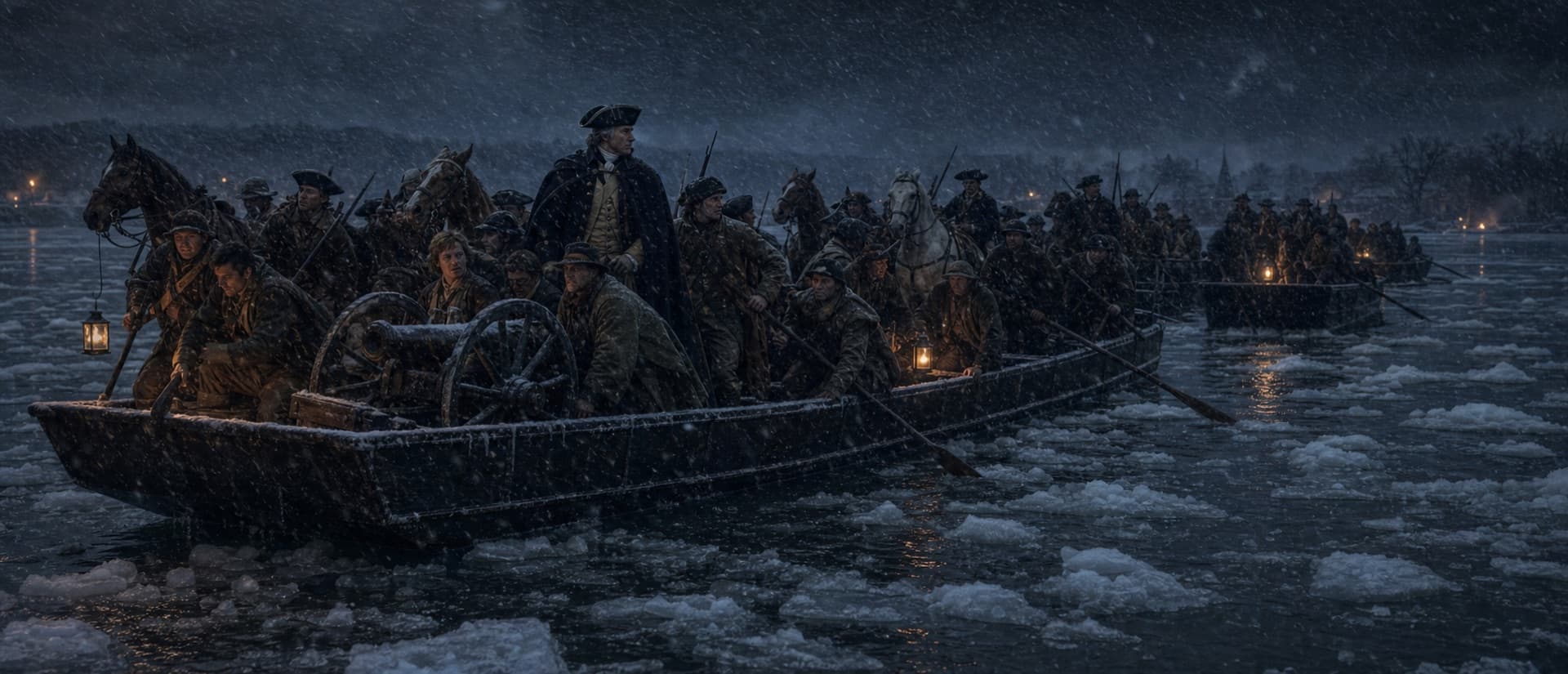
The storm comes with the dark — sleet, then snow, then a wind off the river like a blade. Marblehead fishermen work the long boats across, threading the ice floes, while we stand jammed shoulder to shoulder with the horses and the guns. It takes all night to put the army over.
On the night of 25 December, in a nor'easter, Col. John Glover's Marblehead mariners ferried ~2,400 men, horses, and 18 cannon across the ice-choked Delaware.
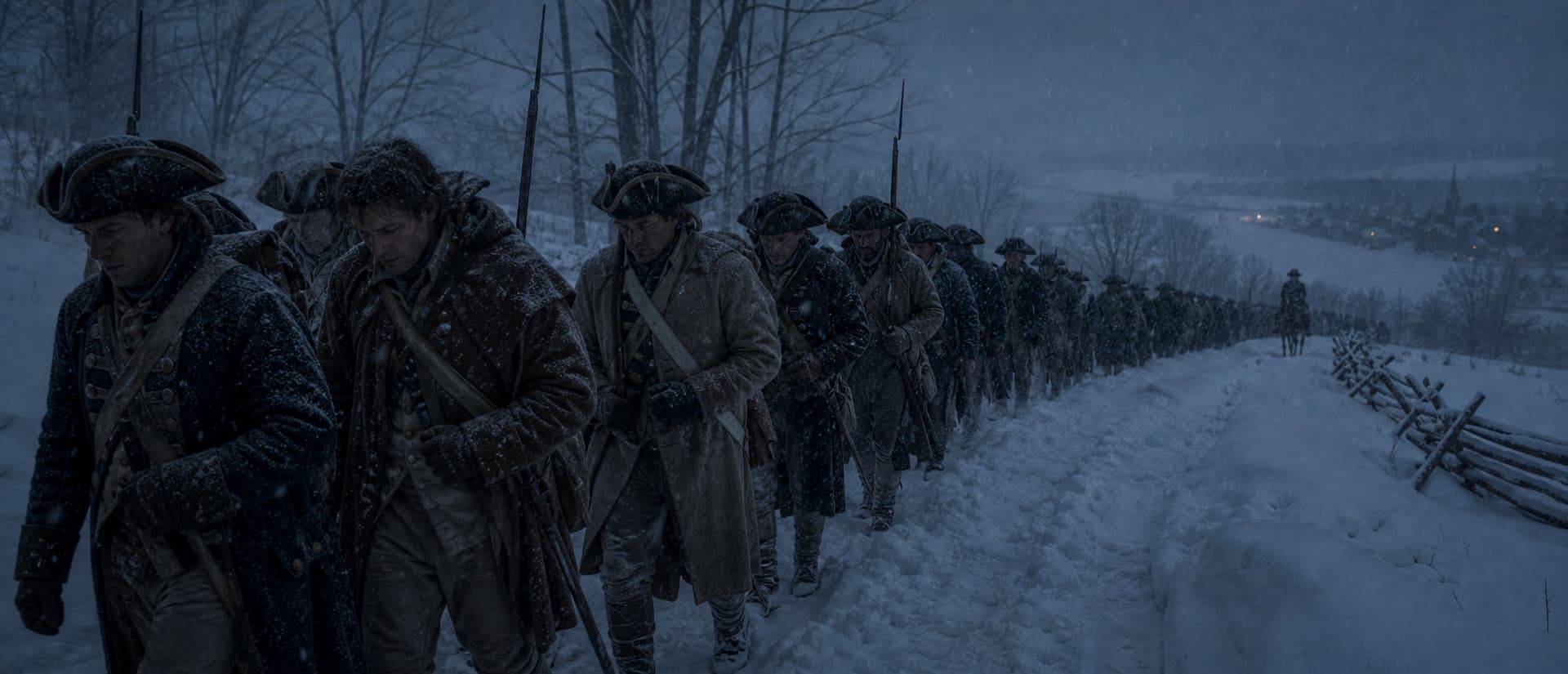
On the far bank we form up and march — two columns, nine miles through the black and the drifts. The sleet freezes on our muskets. Two men lie down in the snow and do not get up again. We keep the powder dry under our coats and pray the storm hides us the whole way.
The army marched ~9 miles to Trenton in a brutal storm; two soldiers froze to death on the road. The weather helped conceal the approach.
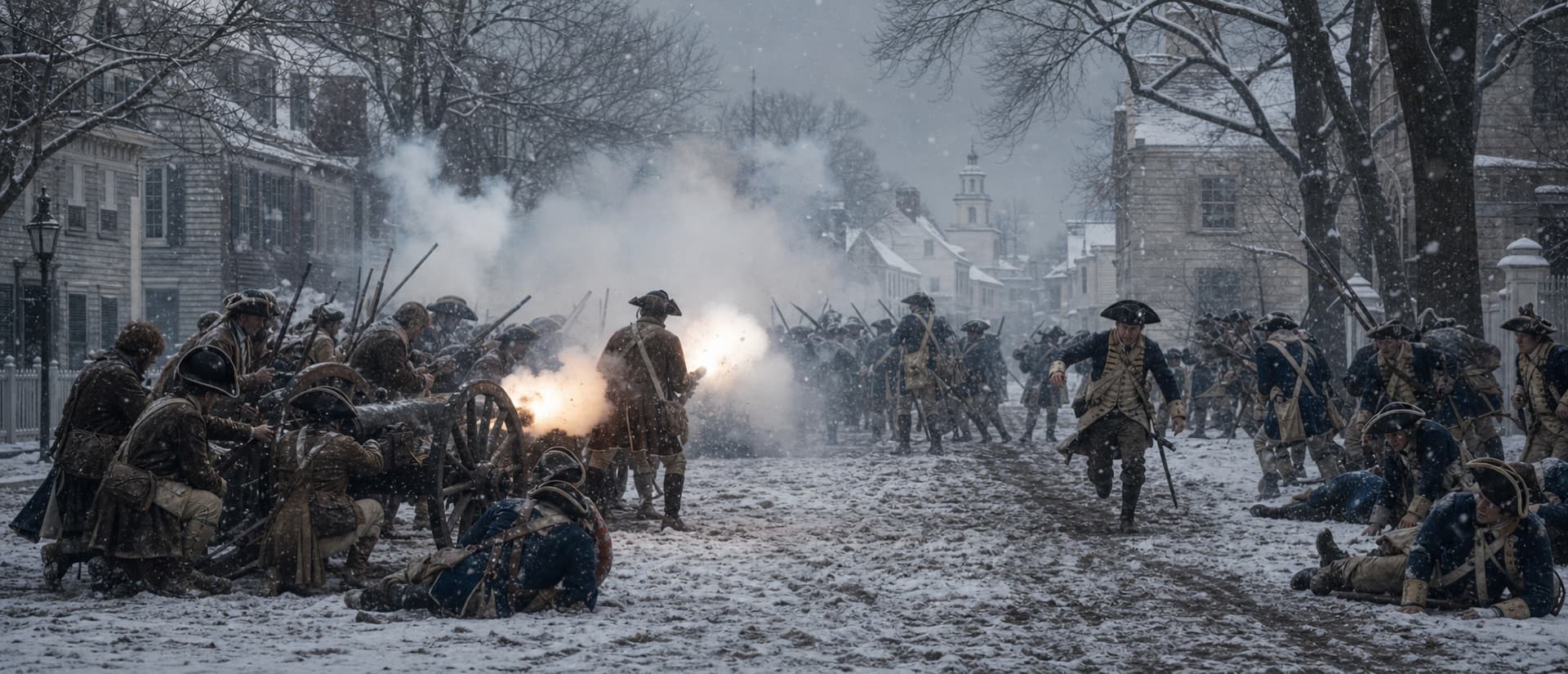
Eight in the morning, and Trenton is asleep. We come out of the storm into the streets before they can form. Our cannon sweep the length of the town; the Hessians stumble from their quarters into a fire they cannot answer. Their commander, Rall, falls from his horse, mortally hit.
The Americans attacked around 8 a.m. on 26 December, catching the Hessian garrison unprepared. Cannon commanded the main streets; Col. Johann Rall was mortally wounded.
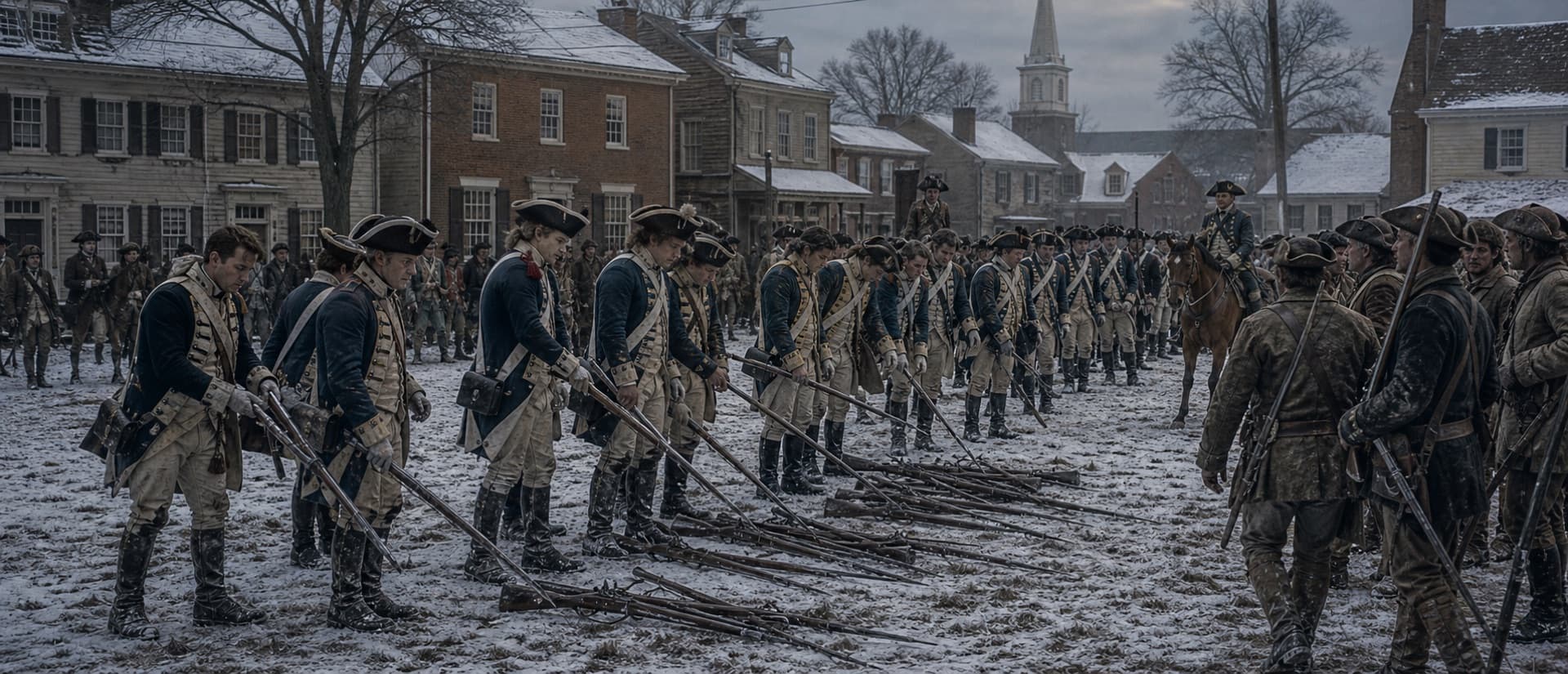
It is over in less than an hour. Near nine hundred Hessians lay down their arms — a whole garrison, taken. We have lost only a handful, and not one killed in the fighting, they say. Frozen, starving, written off for dead, we have won.
In under an hour, ~900 Hessians were captured. American combat losses were negligible — a stunning, near-bloodless victory.
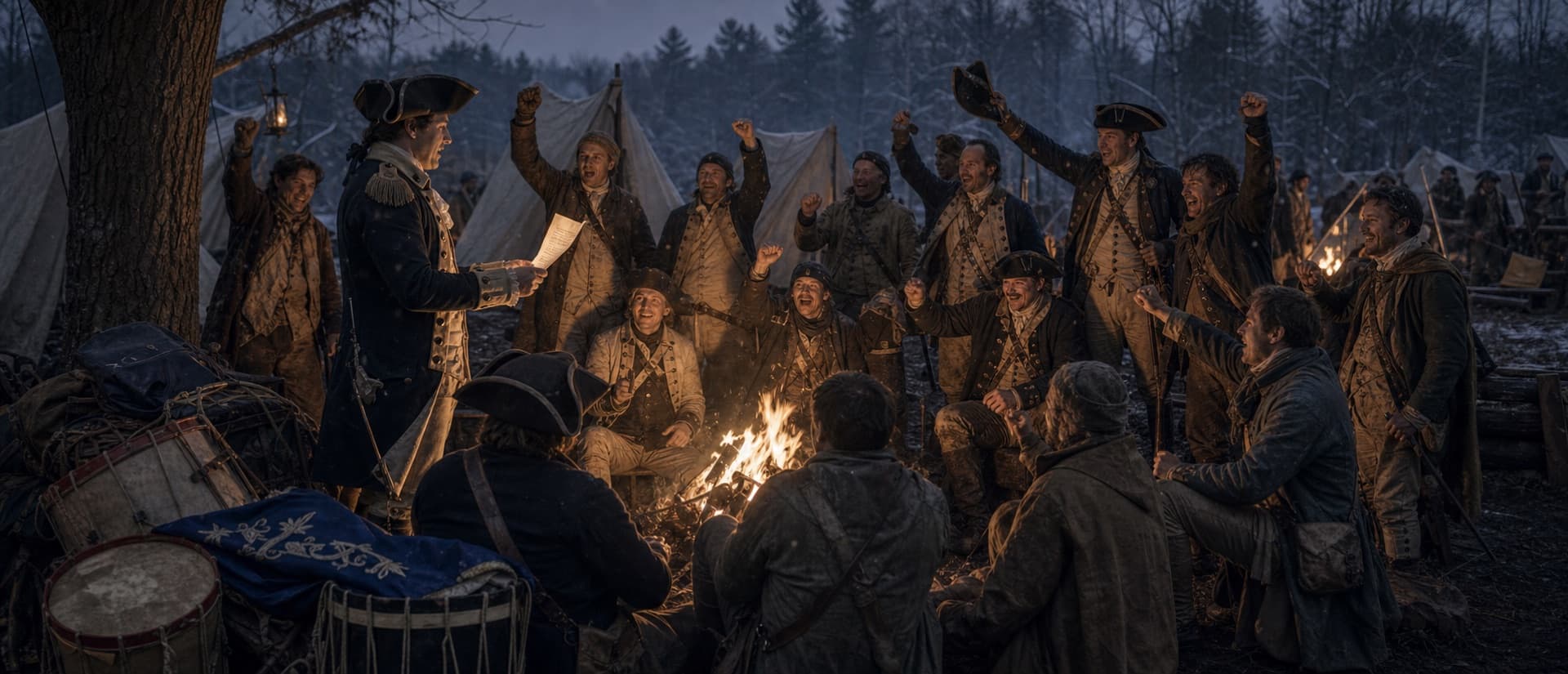
The news runs through the colonies like fire through dry grass. Men who were going home in six days stay. A week later we beat them again at Princeton. The cause that was dying in the snow is alive — because a beaten army rowed across a frozen river and dared to turn around.
Trenton, followed by Princeton on 3 January 1777, revived American morale and enlistments and reversed the collapse of 1776.
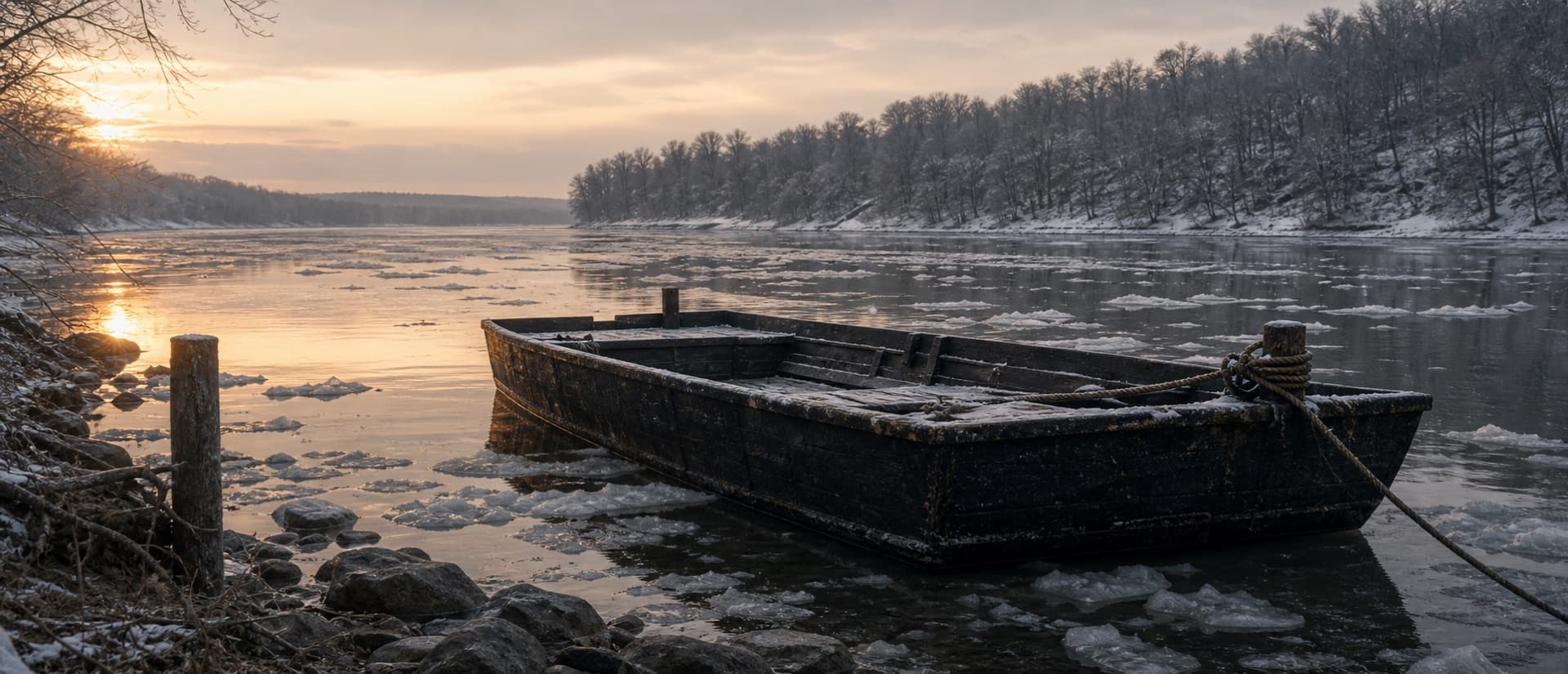
They will paint us one day, standing tall in the boat with the flag streaming — and they will get the details wrong. It was night, and sleet, and terror, and we hunched down against the ice. But they will get the meaning right. This was the night the revolution refused to die.
Emanuel Leutze's famous 1851 painting romanticizes the crossing. The reality — a night storm, ice, and desperation — turns 250 in 2026.
Objects, maps, and small visual clues that make the story easier to read.
Trenton, followed nine days later by the victory at Princeton, reversed the near-collapse of the American cause. Washington kept his army intact past the 31 December enlistment cliff, enlistments and morale revived, and the British were forced to pull back from much of New Jersey. A small, near-bloodless battle became the turning point that let the Revolution survive its worst winter.
December 26, 1776
This happened 230 years before you were born — 250 years ago.
250 years ago — the winter the revolution nearly died, six months after it was declared.
Who was there
Their ages at the time, compared with your age now.
George Washington
Continental Army commander
44 at the event · 24 years older than you are now
Nathanael Greene
Commander of one attack column
34 at the event · 14 years older than you are now
Henry Knox
Artillery chief who brought the guns across
26 at the event · 6 years older than you are now
John Glover
Marblehead commander whose mariners ferried the army
44 at the event · 24 years older than you are now
James Monroe
Young officer wounded in the Trenton attack
18 at the event · 2 years younger than you are now
The essentials — the kind of thing that shows up on the exam.
250th anniversary series
The 250th-anniversary arc from the first shots in Massachusetts to the words, gambles, and victories that made independence real.
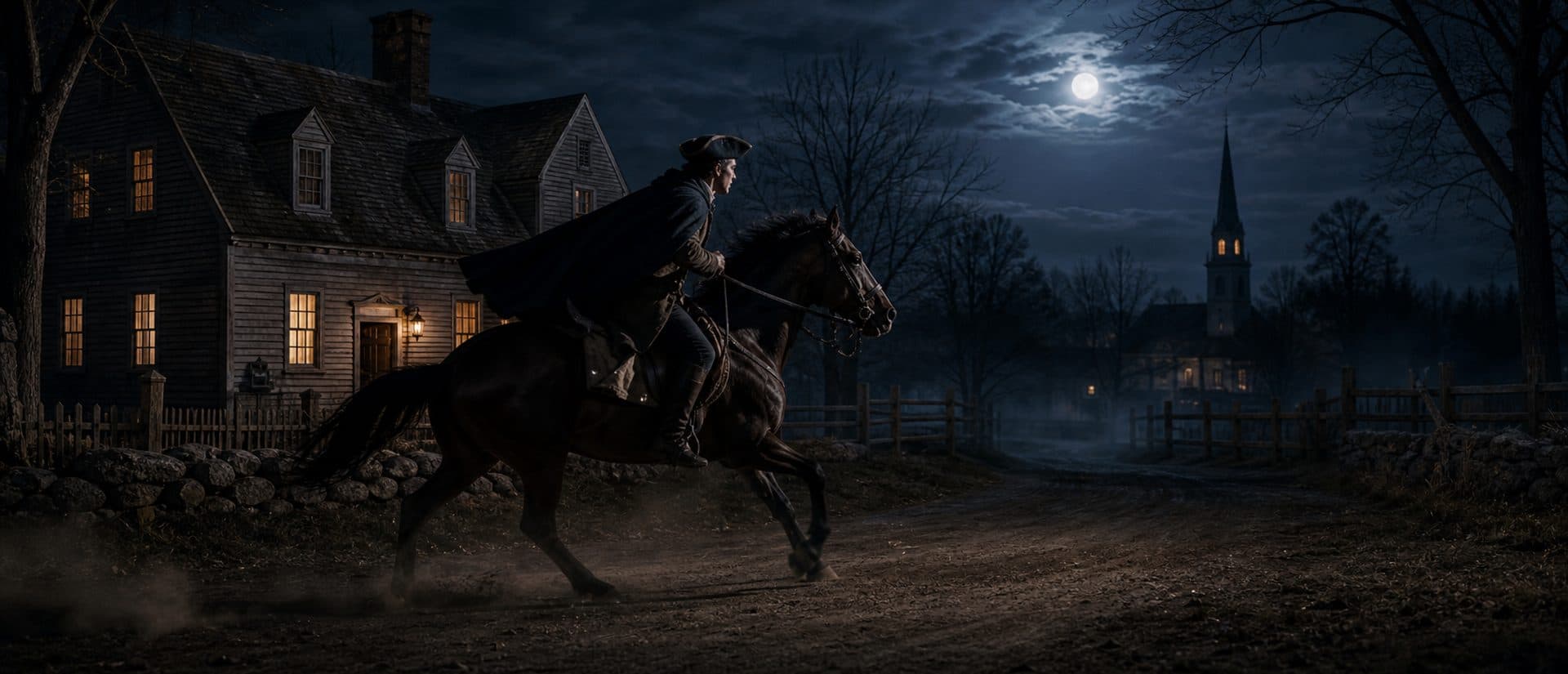
The shot heard round the world
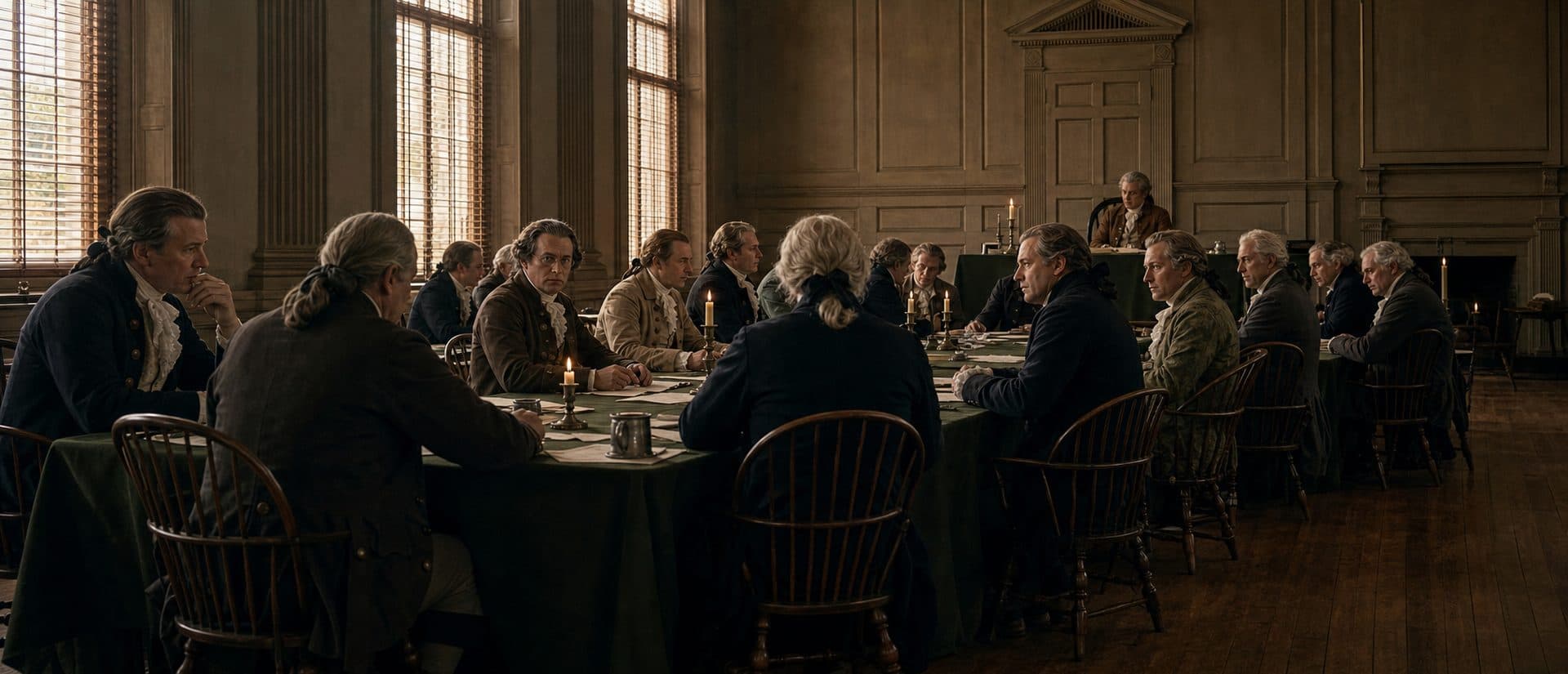
Thirteen colonies put their names to treason
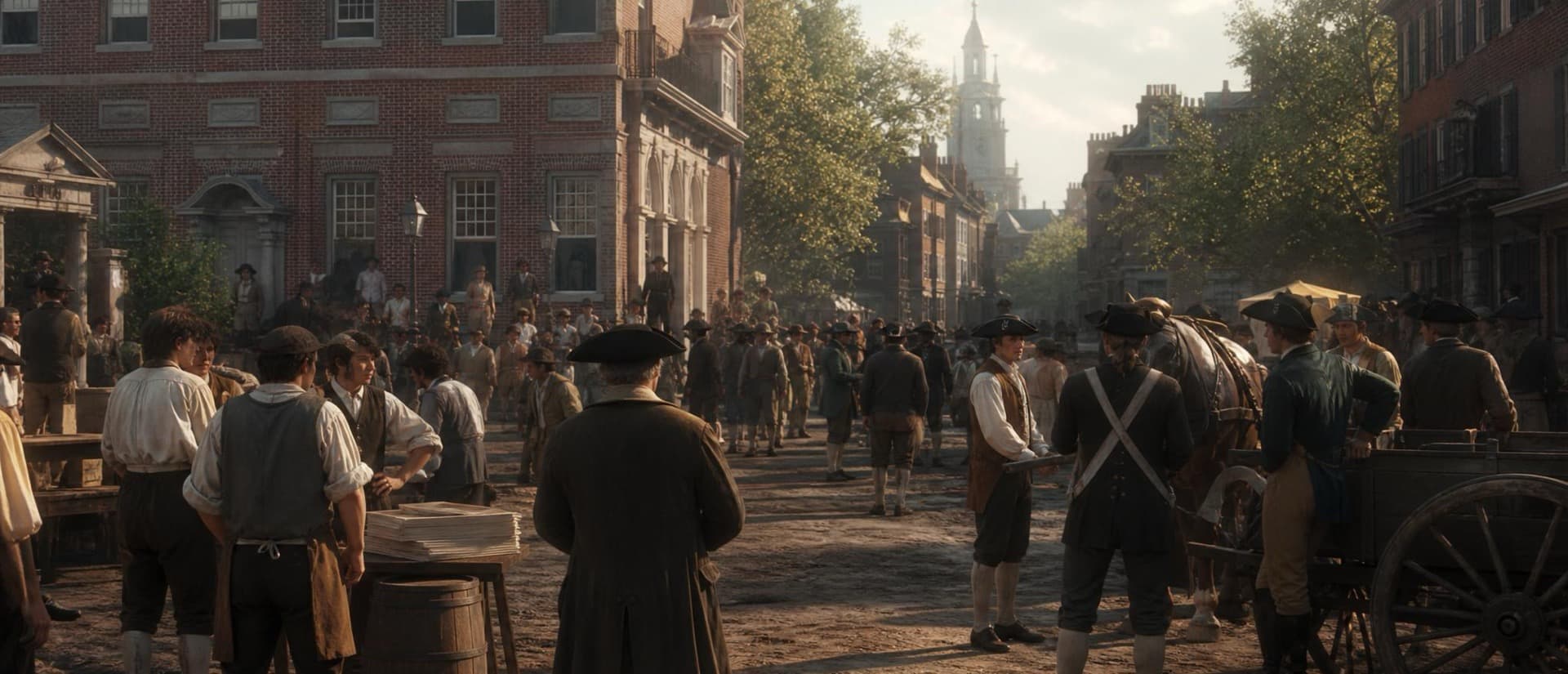
July 1776 - the Declaration leaves Philadelphia and reaches the war
25–26 December 1776 — the gamble that saved the revolution
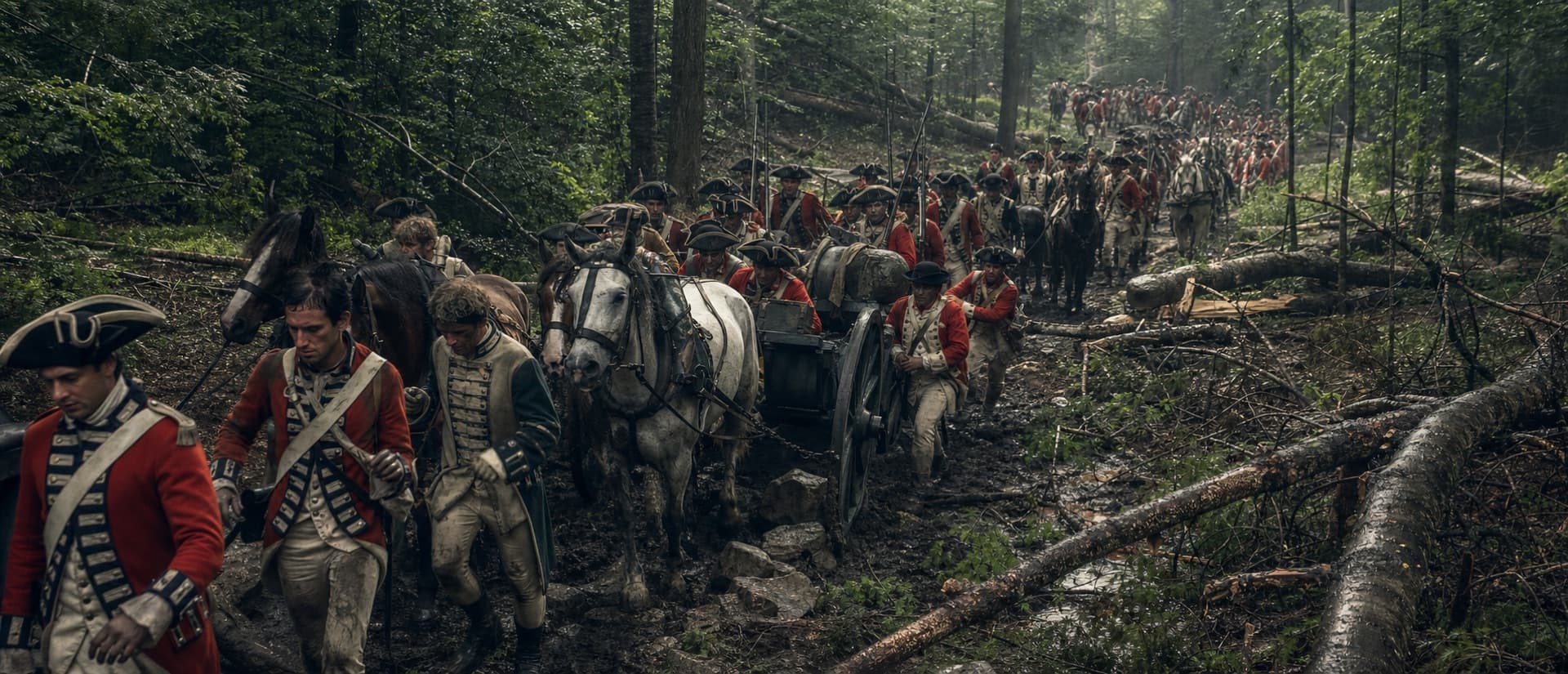
19 September – 17 October 1777 — the turning point of the Revolution
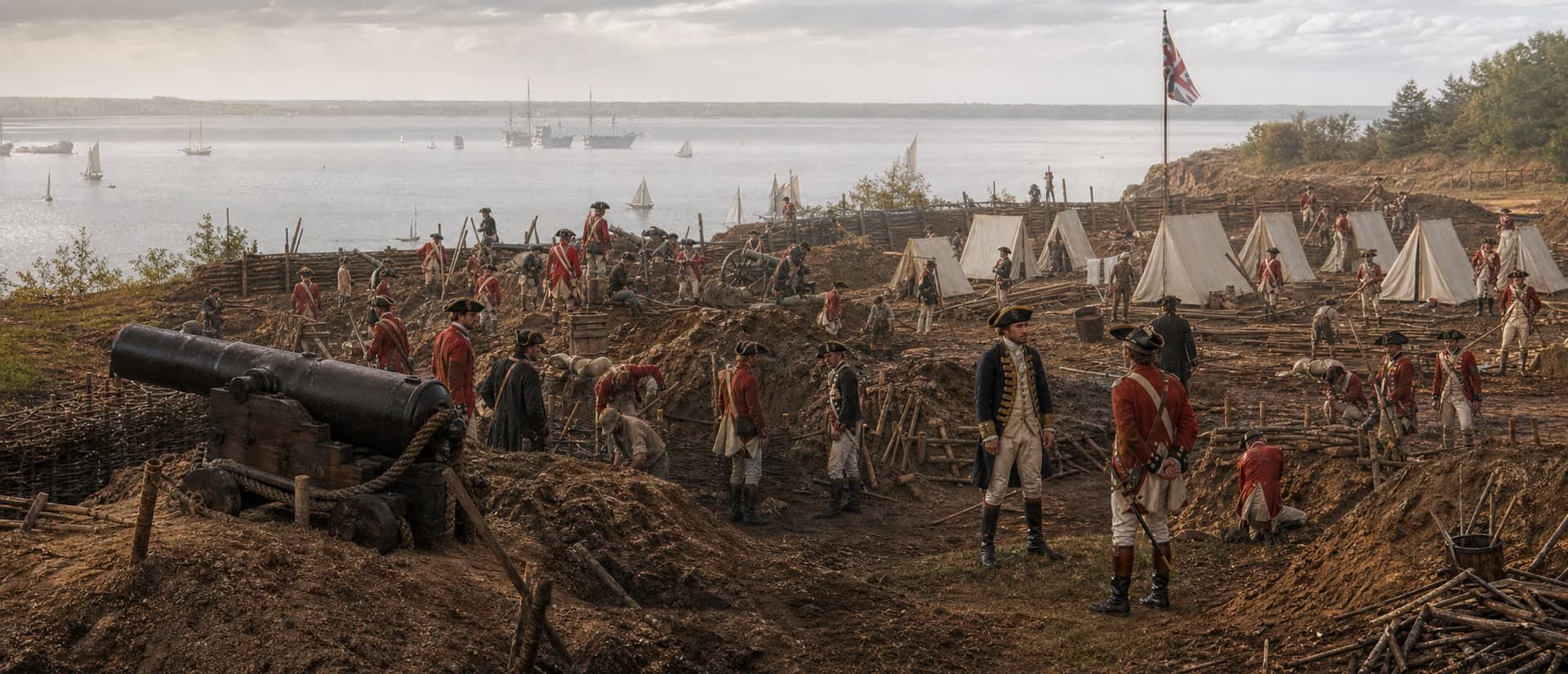
28 September – 19 October 1781 — the battle that won the Revolution