Thomas Jefferson
Principal drafter of the Declaration
33 at the event · 13 years older than you are now
American Revolution · Philadelphia
4 July 1776 — thirteen colonies put their names to treason
“It is July in Philadelphia and the air will not move. Fifty-six of us are about to write our names beneath words the King can only read as treason — and treason, everyone in this hot room knows, ends at the end of a rope.”
This happened 230 years before you were born — 250 years ago.
By the summer of 1776 the American colonies had been at war with Britain for over a year — Lexington and Concord, Bunker Hill, the siege of Boston. Yet most still spoke of reconciliation with the Crown. Thomas Paine's 'Common Sense' had sold in the hundreds of thousands that spring, arguing that a continent could not sensibly be ruled by an island. On 7 June, Richard Henry Lee of Virginia rose in the Second Continental Congress and moved that the colonies 'are, and of right ought to be, free and independent States.' A committee of five — Jefferson, Adams, Franklin, Sherman, Livingston — was set to draft a formal declaration while Congress argued.
The vote for independence was not a foregone conclusion; it was a wager against the most powerful empire on earth, made by men who would be hanged as traitors if it failed. Their document did more than dissolve a political bond — it asserted, for the first time by a nation, that governments derive their just powers from the consent of the governed, and that certain rights are unalienable. That claim outlived the war, the men, and the century, and it anchors American self-government to this day.
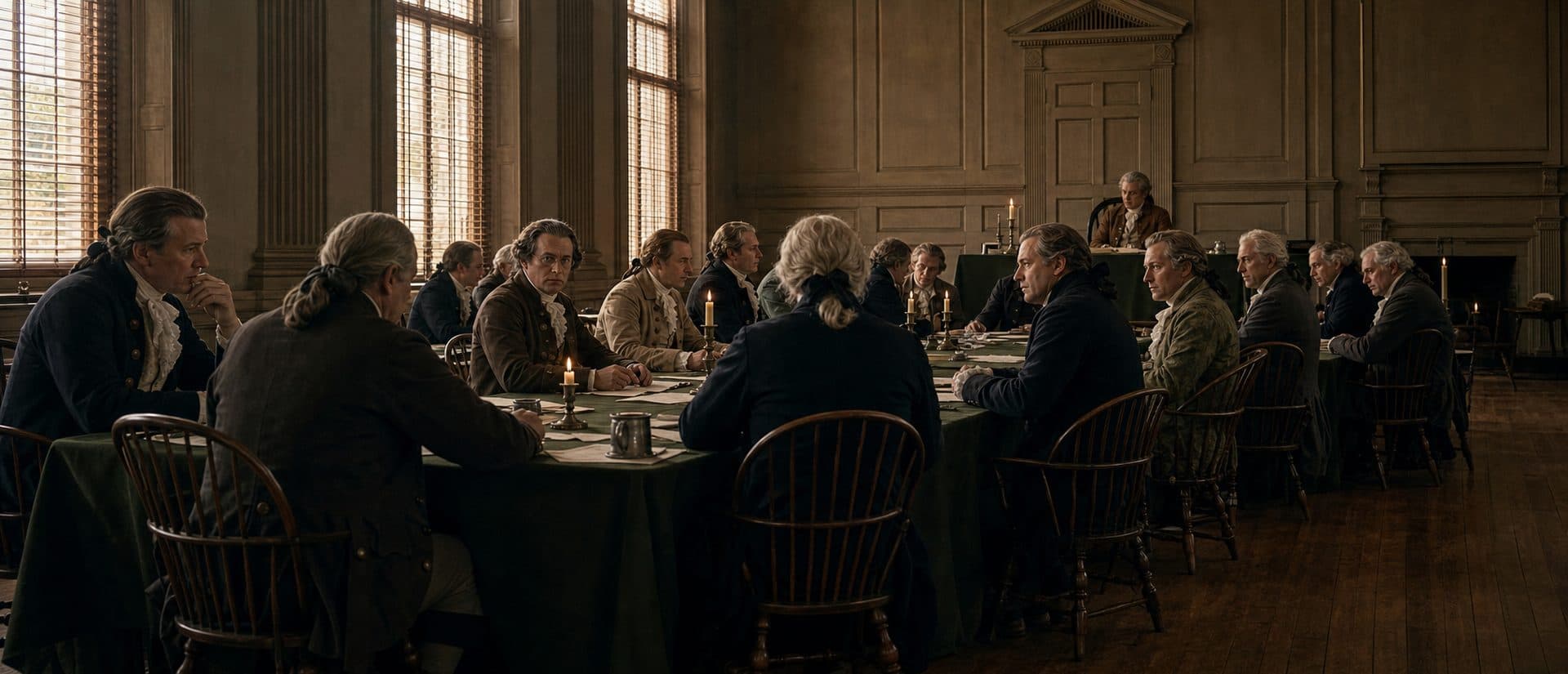
Philadelphia, July 1776. The heat lies on the State House like wet wool. We keep the windows shut — not against the sun, but against listening ears. For what we say in this room, the King has one word: treason.
The Second Continental Congress met in the Pennsylvania State House, now Independence Hall. 250 years ago, 13 colonies moved toward a final break with Britain.
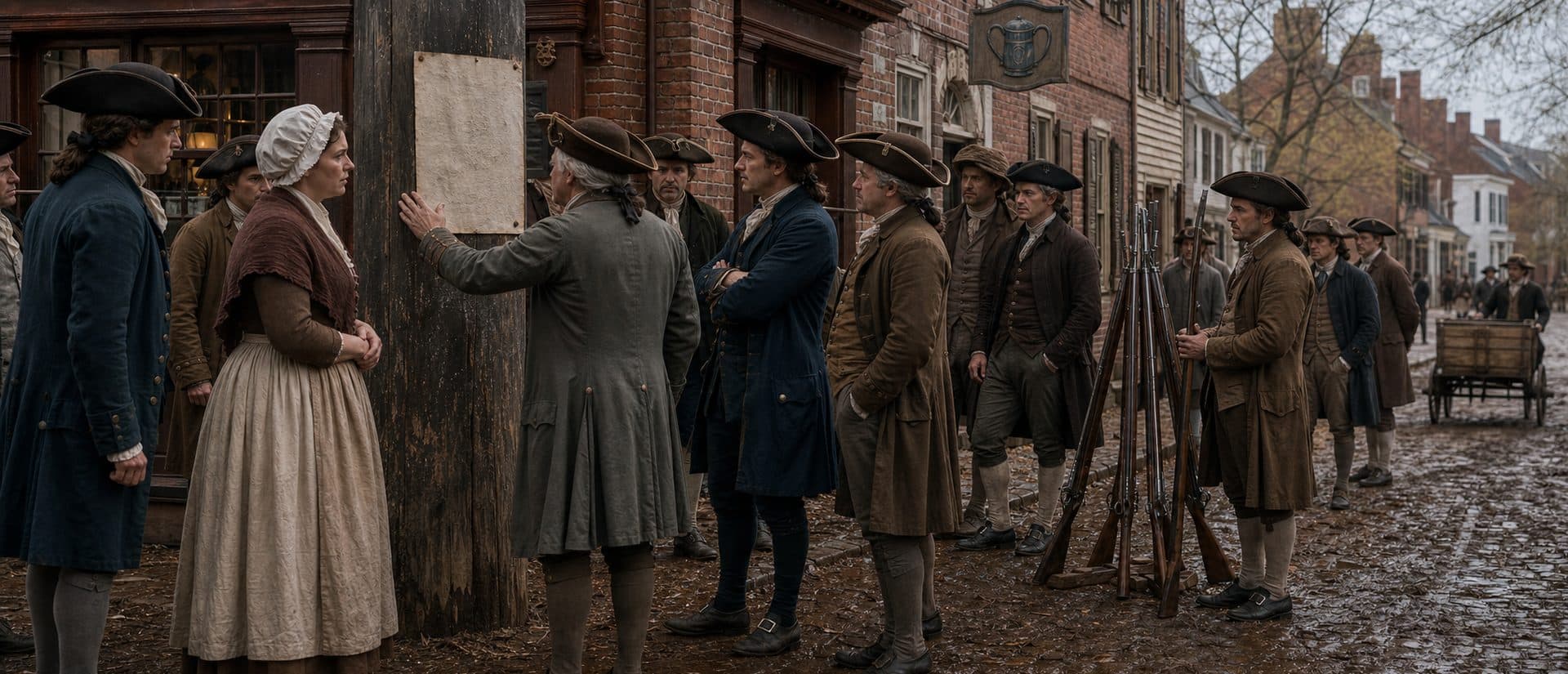
We did not come here lightly. Blood was spilled at Lexington a year past; the guns have not gone quiet since. And in every tavern this spring, one thin pamphlet — 'Common Sense' — asking why an island should rule a continent.
Fighting began at Lexington and Concord in April 1775. Thomas Paine's 'Common Sense' (Jan 1776) sold an estimated 100,000+ copies and turned opinion toward independence.
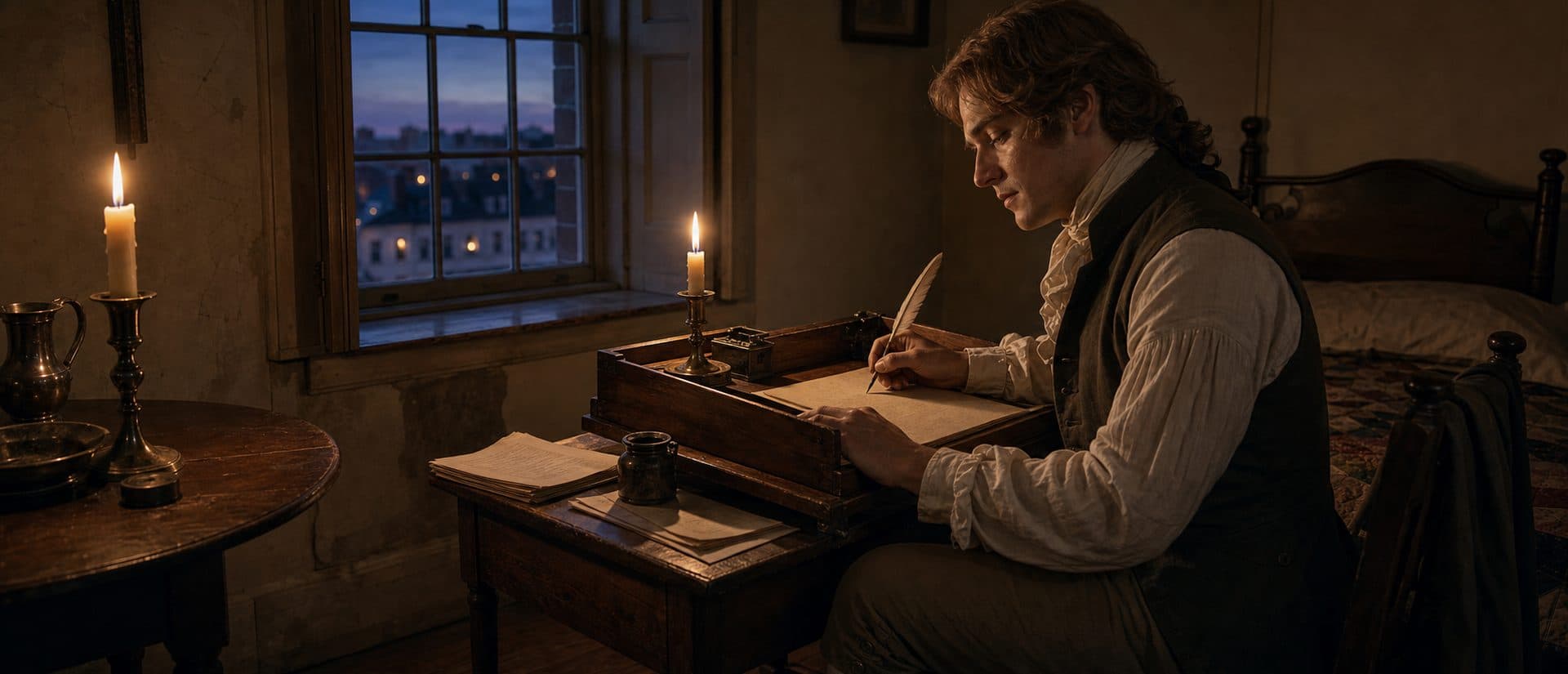
The task of drafting fell to five men — and, in the end, to one. A tall, red-haired Virginian of thirty-three, who wrote little and said less, bent over a small writing box for seventeen days and gave us words to build a nation on.
The Committee of Five — Jefferson, Adams, Franklin, Sherman, Livingston — was appointed 11 June 1776. Thomas Jefferson, 33, was the principal author.
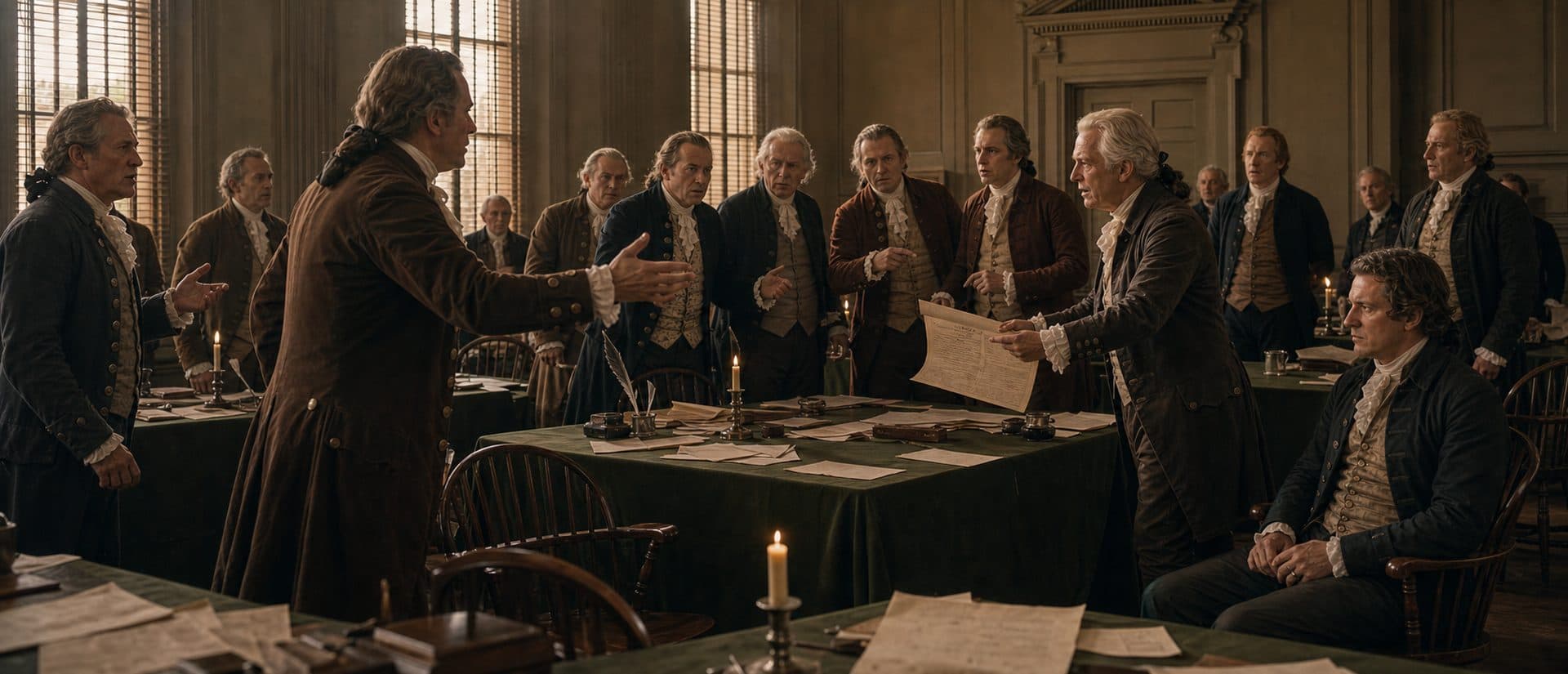
Then Congress took his draft and cut. A quarter of it, struck out on the floor. His fiercest passage — condemning the slave trade — was cut to hold the southern colonies. I watched him sit rigid as we carved at his words. Some of us knew the omission would haunt us.
Congress deleted roughly a quarter of Jefferson's draft, including a passage denouncing the slave trade, to keep South Carolina and Georgia in agreement.
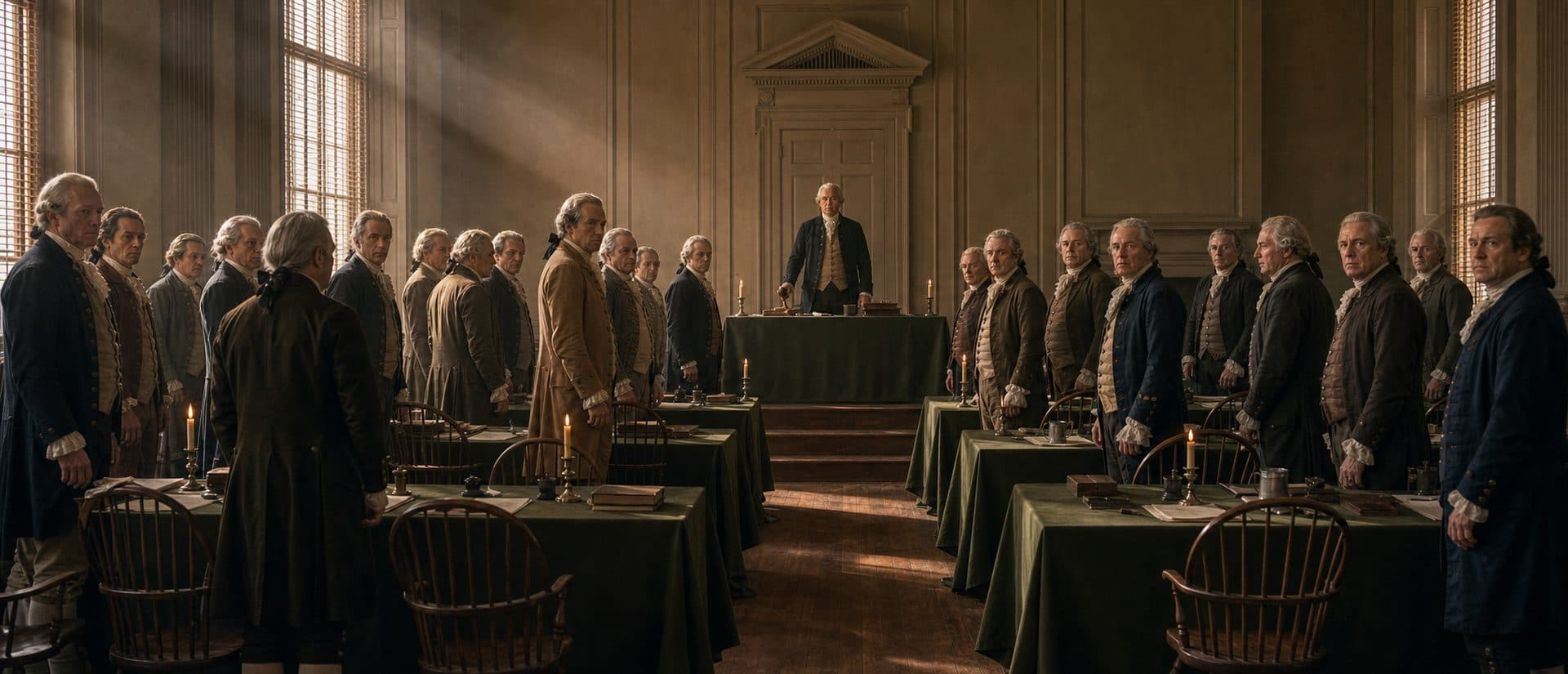
On the second of July, the question at last: independence, yes or no. Twelve colonies say yes. New York, without instructions, holds its silence. It is done — the break is made. John Adams is sure this second of July will be the day America remembers.
On 2 July 1776 Congress voted to approve independence — 12 colonies in favor, New York abstaining. John Adams predicted 2 July would be the day celebrated.
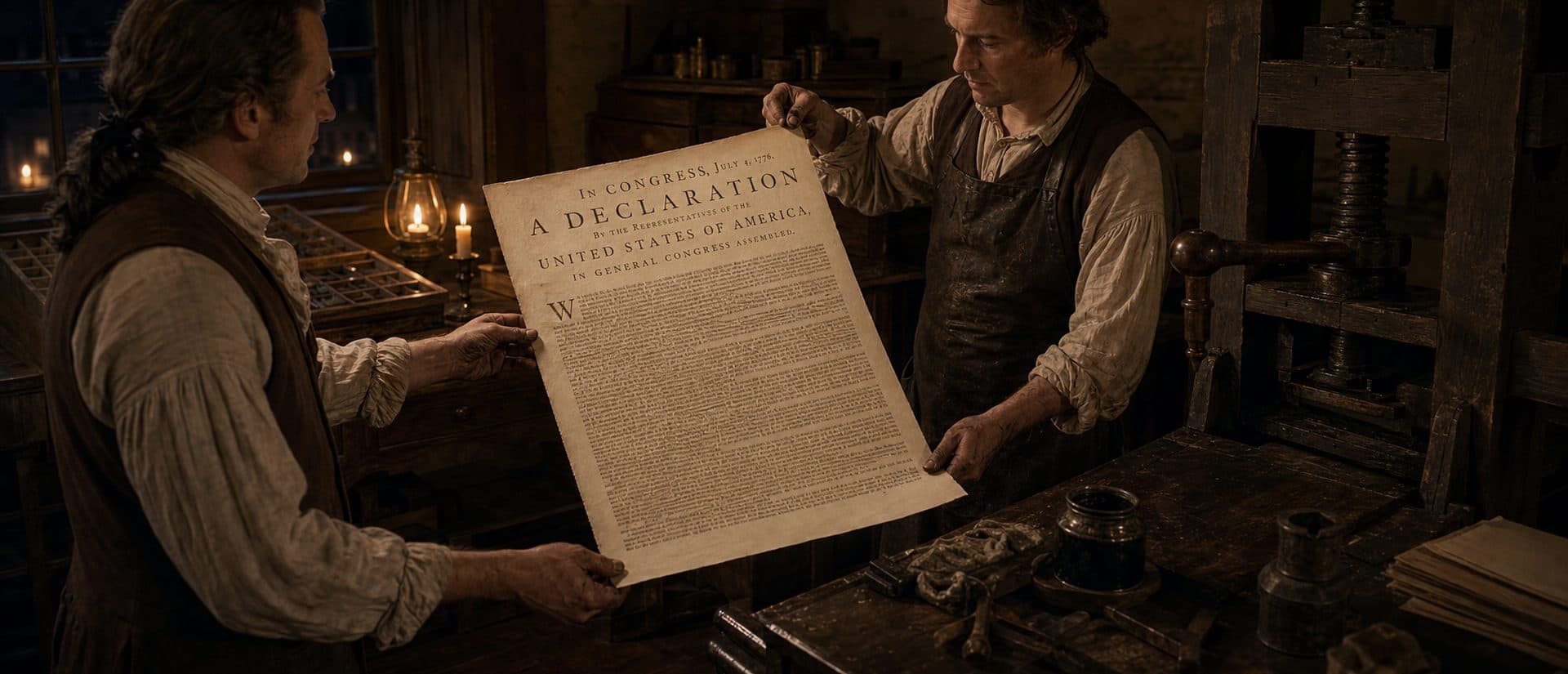
Two more days over the wording. Then, the fourth of July, the text is adopted. There is no cheering. Only the scratch of a clerk's pen and the weight of what we have made — a paper that says a people may govern themselves, and answer to no crown.
On 4 July 1776 Congress adopted the final wording of the Declaration. It was first printed overnight as the 'Dunlap broadsides.'
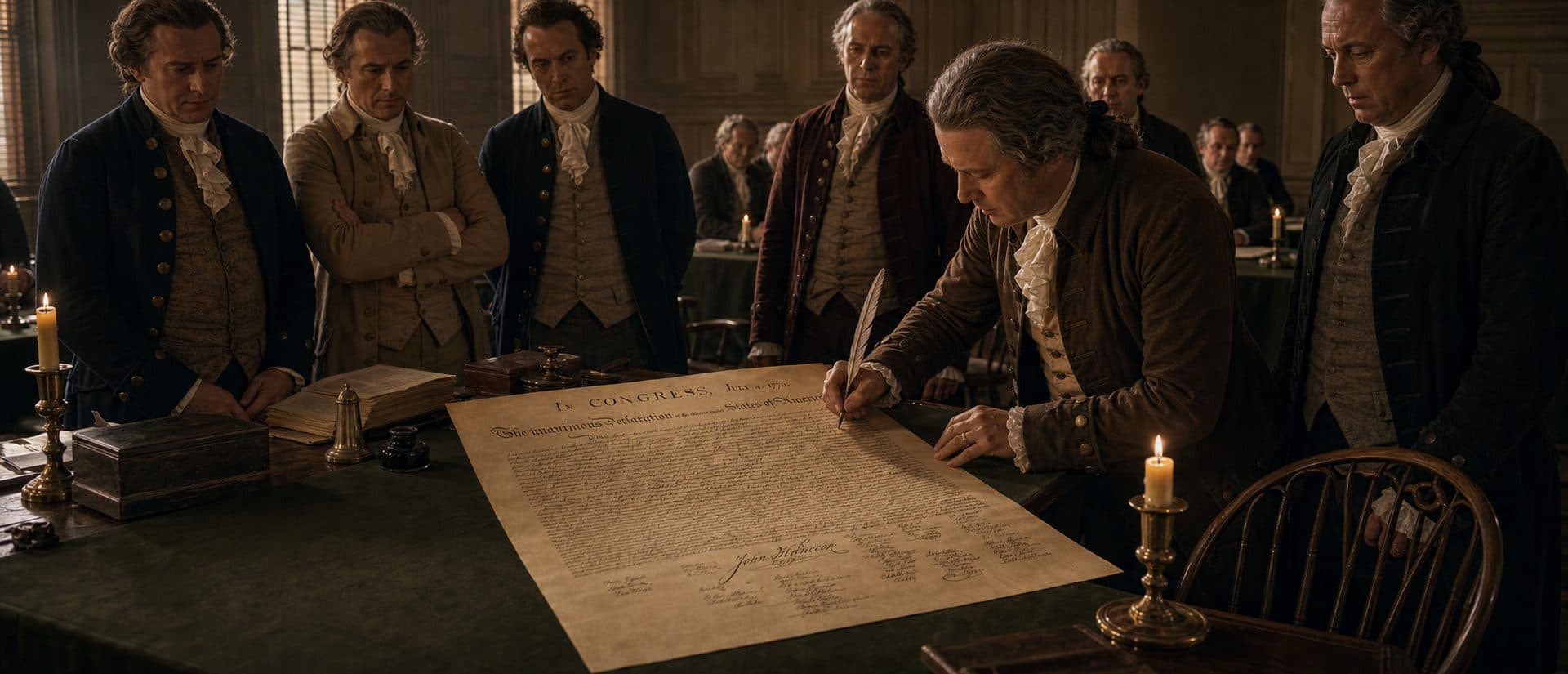
The signing is no grand scene. We come to the table over weeks, and set our names to it one by one. Hancock signs first and signs it large — so the King, he says, may read it without his spectacles. We are told: we must all hang together. Every man in the room knows the other way that sentence ends.
Most delegates signed the engrossed parchment on 2 August 1776. John Hancock's oversized signature is the most famous. 56 men signed in all.
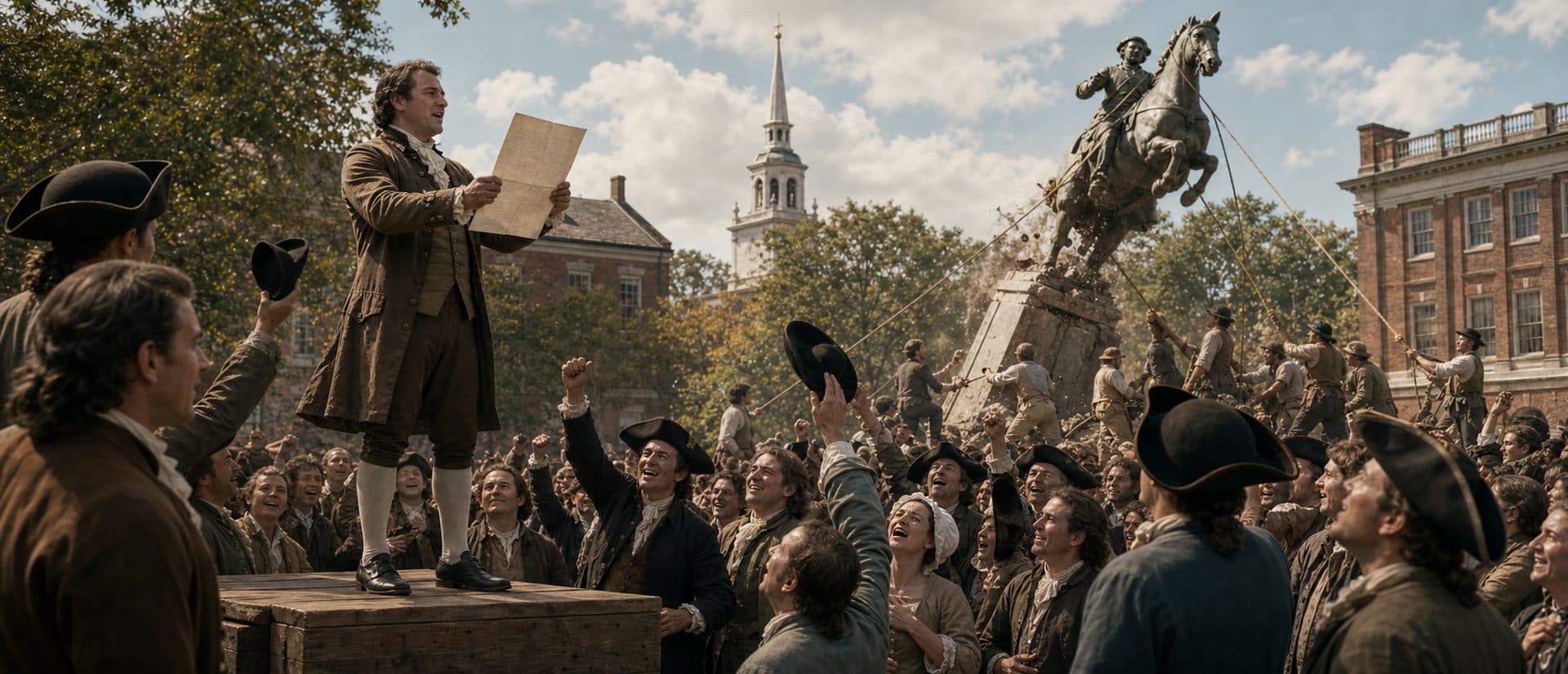
On the eighth of July it is read aloud in the State House yard, and the crowd roars. Read to the army in New York, the soldiers tear down the King's statue and melt it into musket balls. The words are loose in the world now. They cannot be called back.
The Declaration was first read publicly on 8 July 1776. Read to Washington's troops in New York on 9 July, soldiers toppled a statue of King George III and melted it for musket balls.
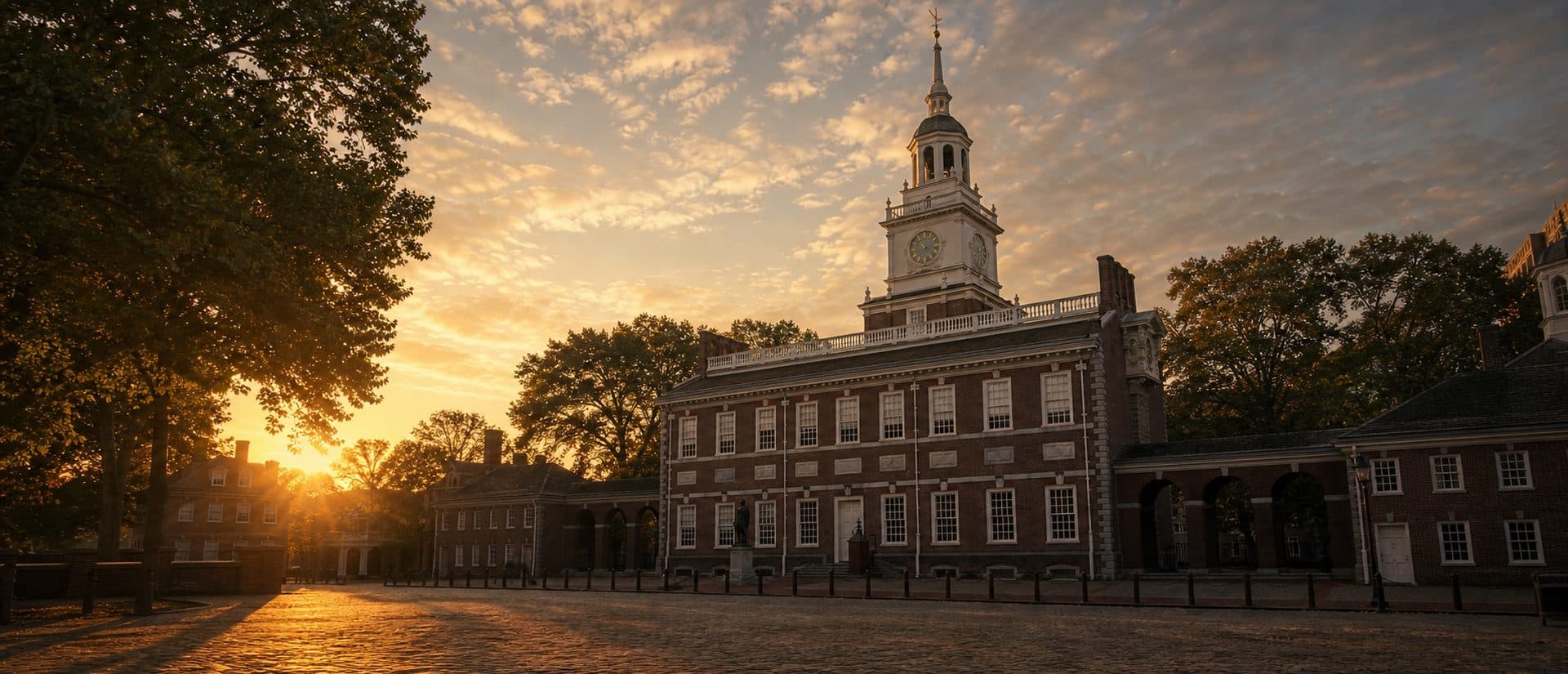
We were fifty-six men who wagered our lives on a sentence. Many of us paid — homes burned, fortunes lost, sons killed. But the sentence held. Two hundred and fifty years on, it still opens the charter of a nation: that all are created equal, and governments answer to the governed.
Of the 56 signers, several lost homes, fortunes, or family in the war. The Declaration turns 250 in 2026 — the United States Semiquincentennial.
Objects, maps, and small visual clues that make the story easier to read.
The Declaration made independence public, explicit, and difficult to reverse. The colonies still had to win the war, and the document did not resolve the contradictions it named, especially slavery and political exclusion. But it gave the rebellion a political theory, a diplomatic claim, and a sentence later generations could use to demand that the country live closer to its own promise.
July 4, 1776
This happened 230 years before you were born — 250 years ago.
250 years ago — the Semiquincentennial. Old enough that no living memory touches it, close enough that its words still govern a nation.
Who was there
Their ages at the time, compared with your age now.
Thomas Jefferson
Principal drafter of the Declaration
33 at the event · 13 years older than you are now
John Adams
Committee of Five member and independence advocate
40 at the event · 20 years older than you are now
Benjamin Franklin
Committee of Five elder statesman
70 at the event · 50 years older than you are now
John Hancock
President of Congress and first signer
39 at the event · 19 years older than you are now
Richard Henry Lee
Moved the independence resolution
44 at the event · 24 years older than you are now
The essentials — the kind of thing that shows up on the exam.
Story series
Two connected chapters: the decision inside the State House, then the printed words racing out across the colonies.
Thirteen colonies put their names to treason
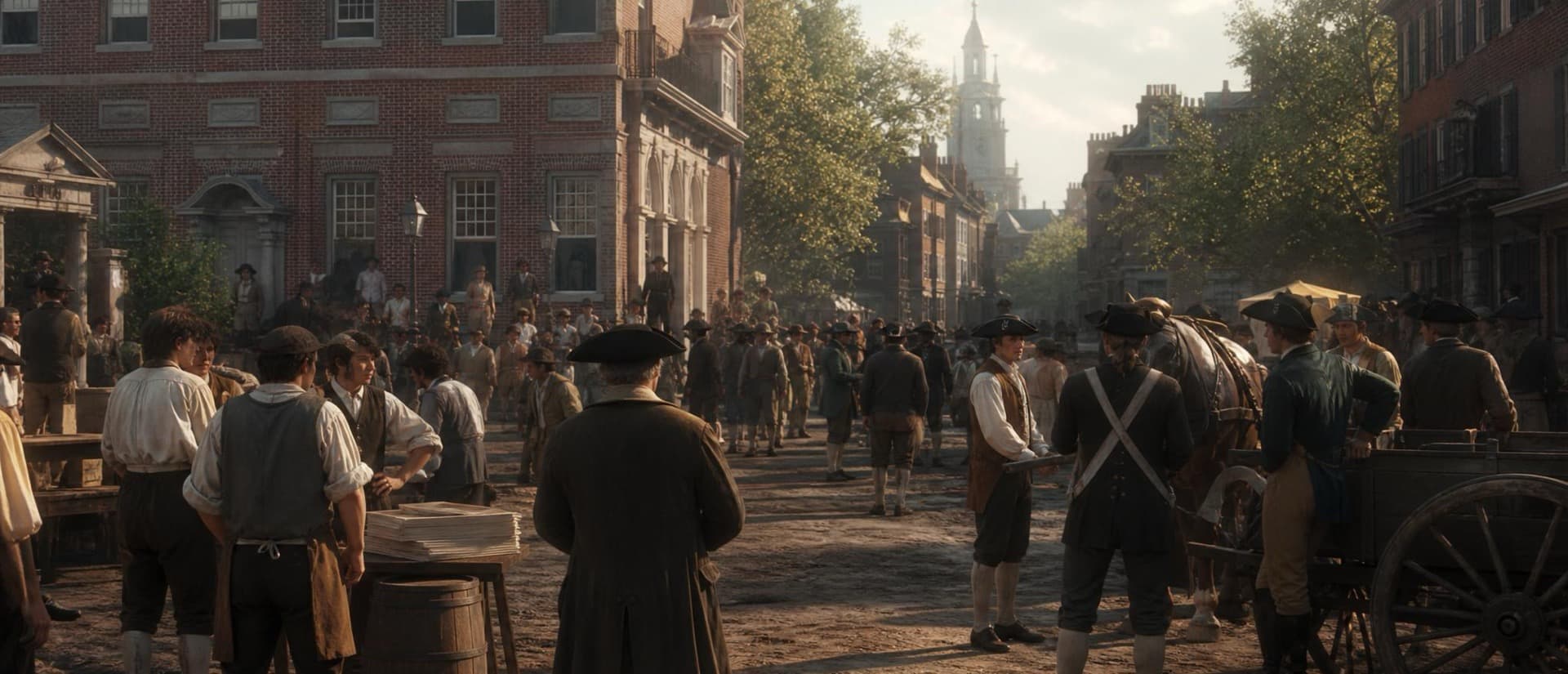
July 1776 - the Declaration leaves Philadelphia and reaches the war
Keep going
More immersive history stories are unlocked now, with anniversary dates used for promotion.
As an Amazon Associate, OlderThan earns from qualifying purchases.