Paul Revere
Alarm rider from Boston toward Lexington
40 at the event · 20 years older than you are now
American Revolution · Massachusetts
19 April 1775 — the shot heard round the world
“I am a farmer. This morning I stood on Lexington Green with my grandfather's musket while seven hundred of the King's Regulars came up the Boston road. By nightfall eight of my neighbors were dead, the Regulars were bleeding back toward Boston, and nothing in these colonies would ever be the same.”
This happened 231 years before you were born — 251 years ago.
By April 1775 Massachusetts was a tinderbox. Boston sat under military occupation; the countryside had organized 'minutemen' — militia pledged to turn out at a minute's notice — and quietly stockpiled powder, muskets, and cannon at Concord. General Thomas Gage, the British commander, learned of the stores and ordered some 700 regulars to march out overnight on 18 April to seize them, and to arrest the rebel leaders Samuel Adams and John Hancock. But the colonists had their own intelligence network. As the troops moved, riders — Paul Revere, William Dawes, and Samuel Prescott — carried the alarm across the countryside.
Lexington and Concord were the first battles of the American Revolution — the moment a political quarrel became a shooting war. At Concord's North Bridge, colonial militia fired on and drove back British regulars for the first time, shattering the myth of British invincibility. The bloody 18-mile British retreat to Boston, and the militia siege that followed, proved that ordinary farmers would fight — and could win.
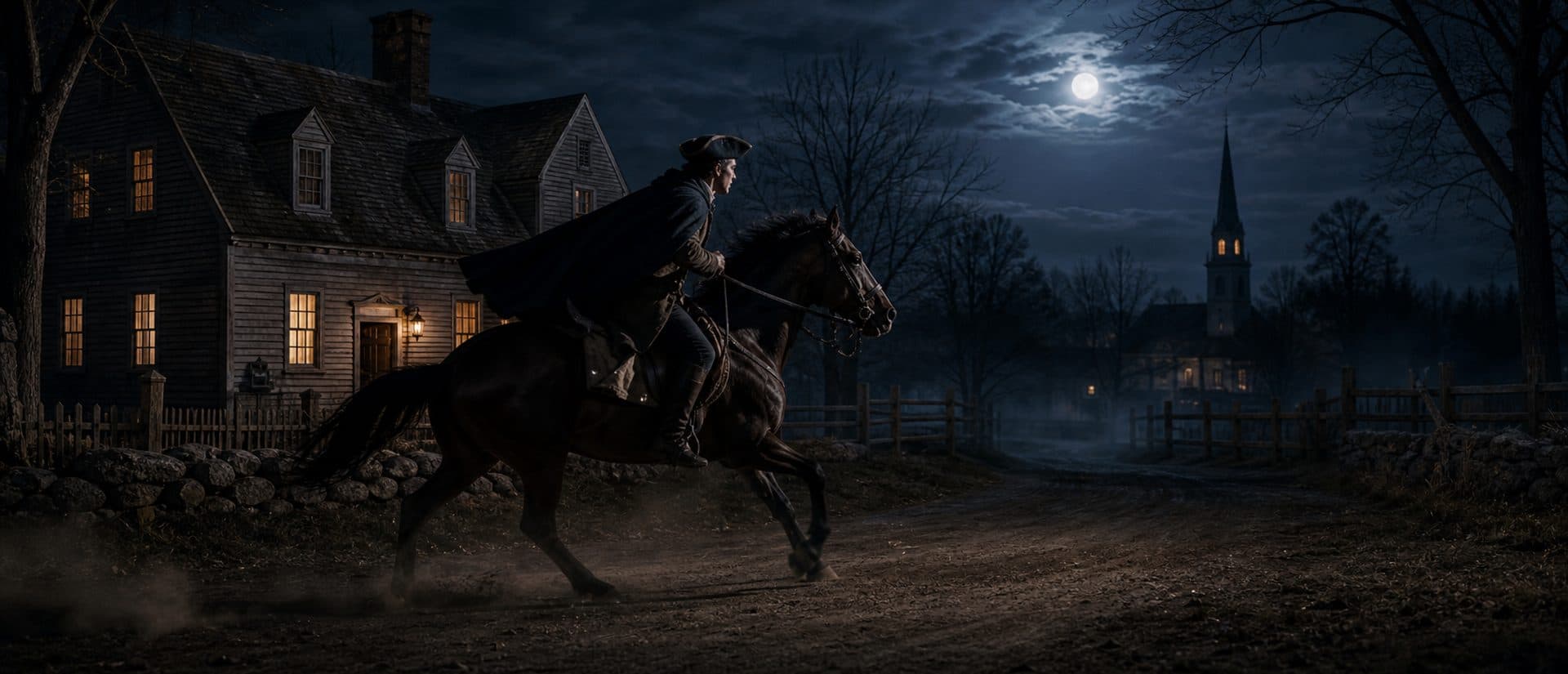
The night of April 18th, the signal burns in the North Church steeple, and the riders go out — Revere, Dawes, Prescott. Hoofbeats and hammering doors, one cry passed farm to farm: the Regulars are coming out. By the hundreds. For our powder and guns.
On the night of 18 April 1775, riders including Paul Revere and William Dawes spread the alarm that ~700 British troops were marching to seize colonial arms at Concord. 251 years ago.
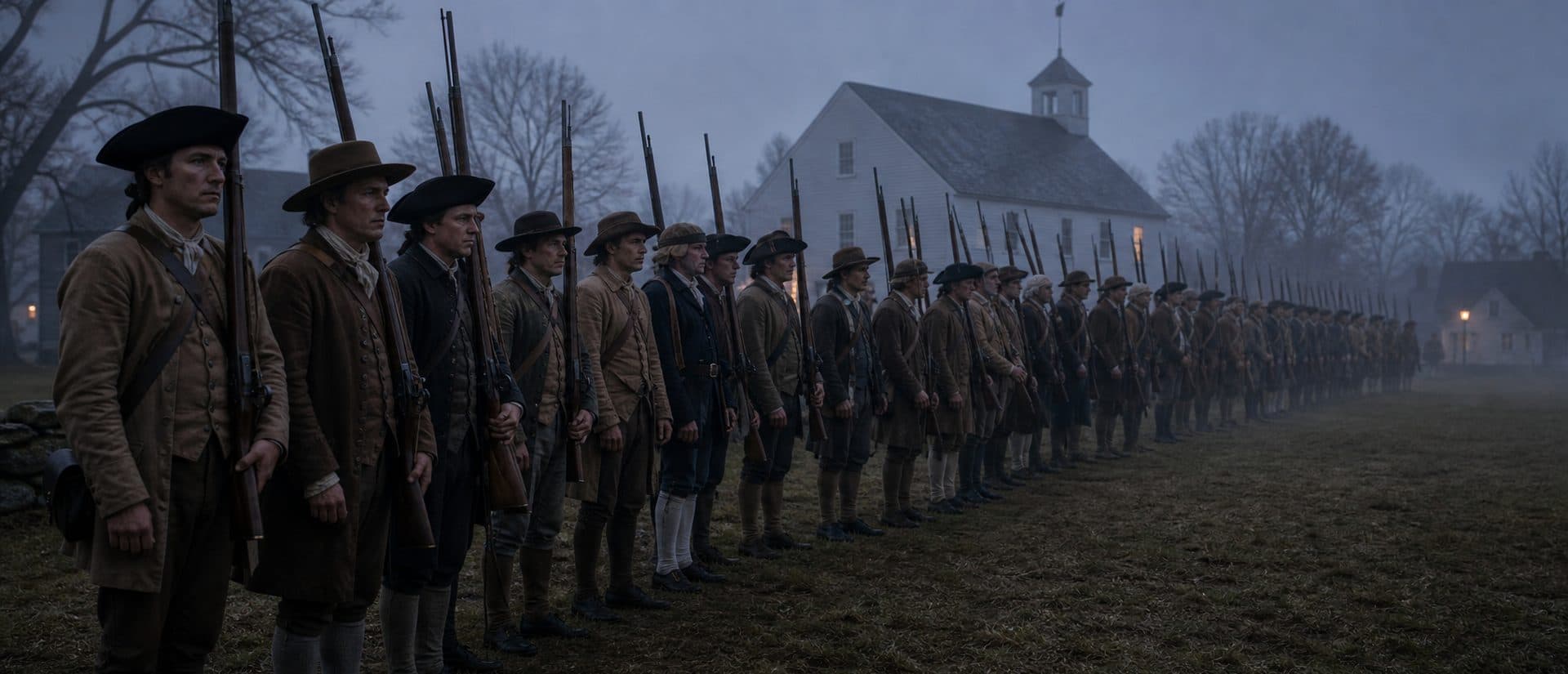
We gather on Lexington Green before the sun — farmers, mostly, muskets taken down from over the hearth. Seventy-odd of us. And up the Boston road, in the grey light, we can already hear them: drums, boots. Captain Parker forms us in a line, and we wait.
About 77 militia under Captain John Parker assembled on Lexington Green to face some 700 British regulars.
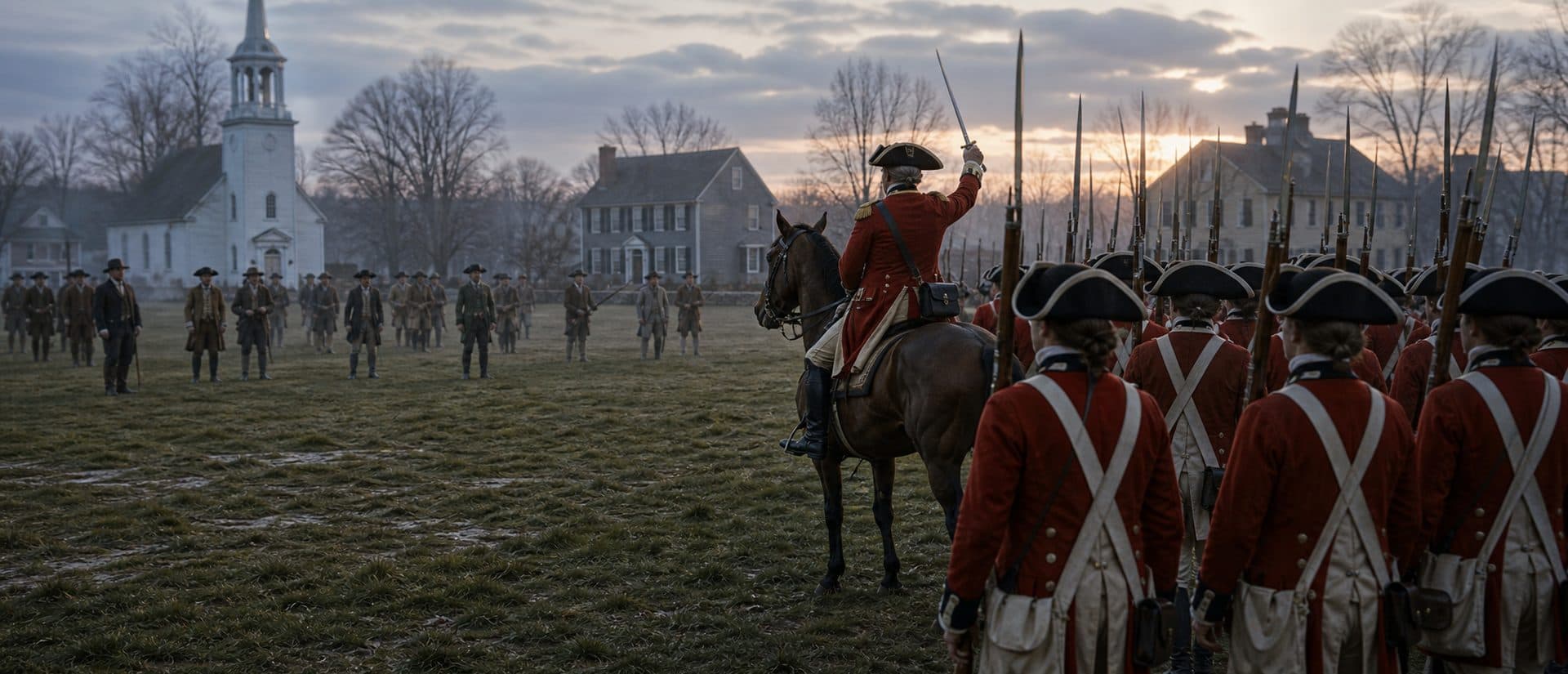
Parker's word runs down the line: stand your ground; don't fire unless fired upon. But if they mean to have a war — let it begin here. The Regulars pour onto the green, rank on rank, an officer waving his sword, shouting for us to throw down our arms.
'Stand your ground... if they mean to have a war, let it begin here' is the order tradition attributes to Parker.
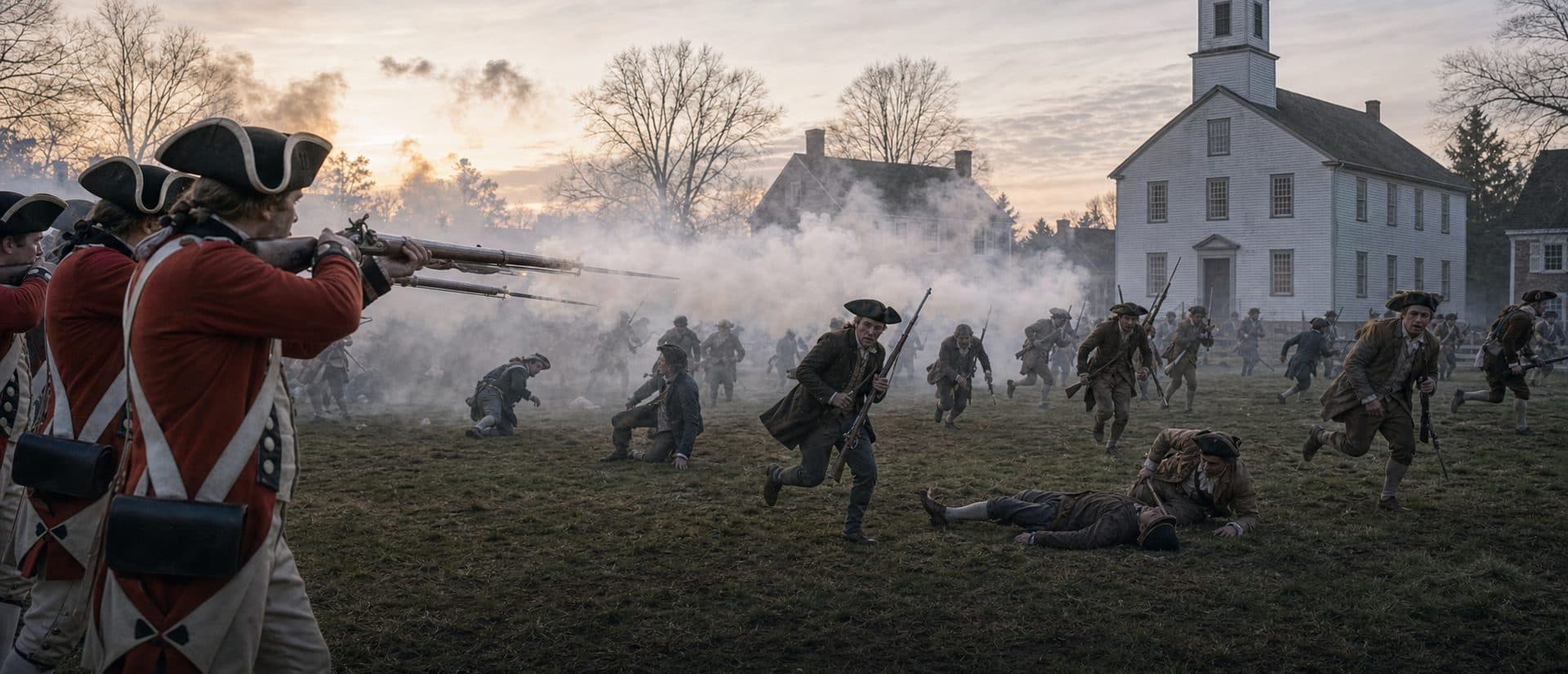
No man knows who fired first — a single crack from somewhere, and the world comes apart. The British volley tears into us. Smoke, screaming, men I've known all my life falling on the grass. Eight dead on the green before we can answer. We break, and run.
Someone fired — no one knows who. British volleys left 8 militia dead and 10 wounded at Lexington.
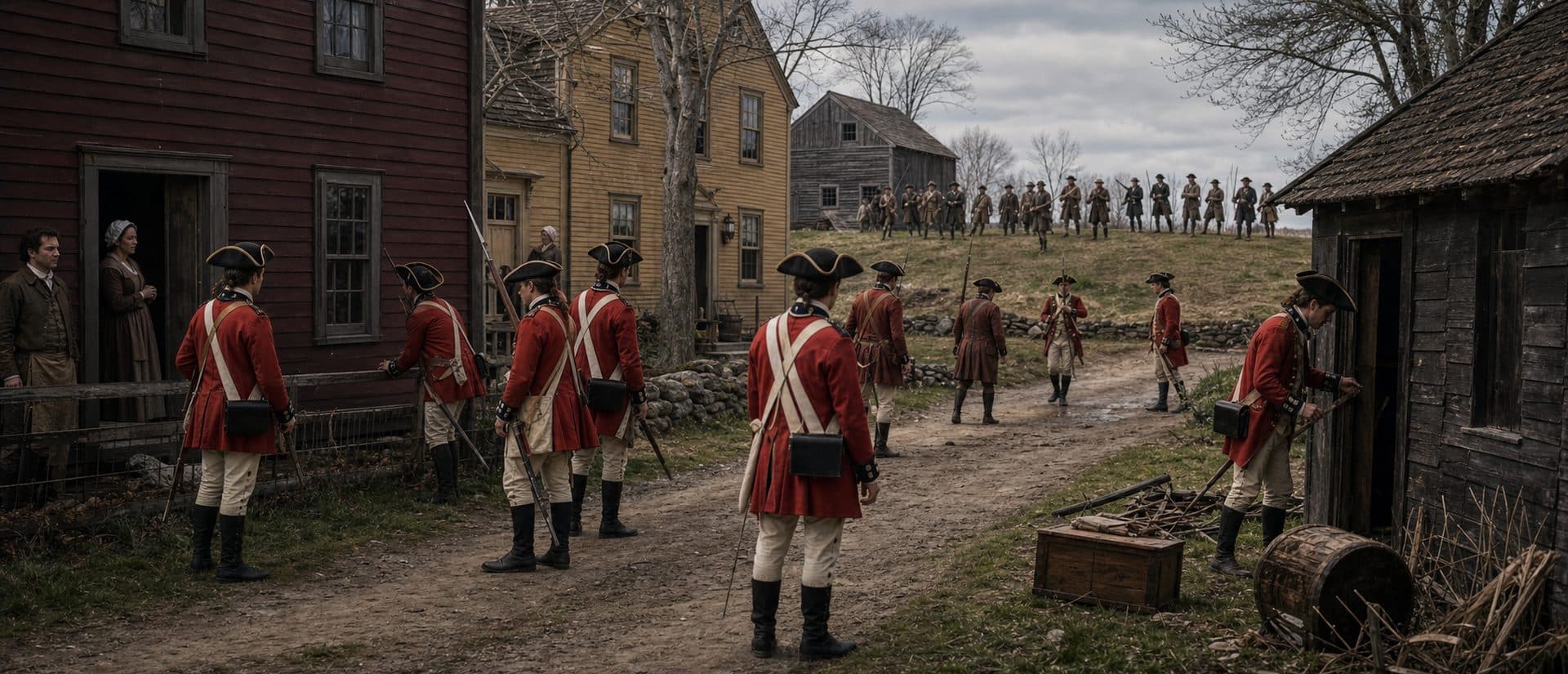
They march on to Concord and take the town apart hunting our stores — but the wagons went into the woods and the swamps days ago. They find almost nothing. And all the while, from every town with a bell, more of us come in. Hundreds. Then thousands.
Forewarned, Concord had hidden or moved most military supplies. Militia converged from surrounding towns through the morning.
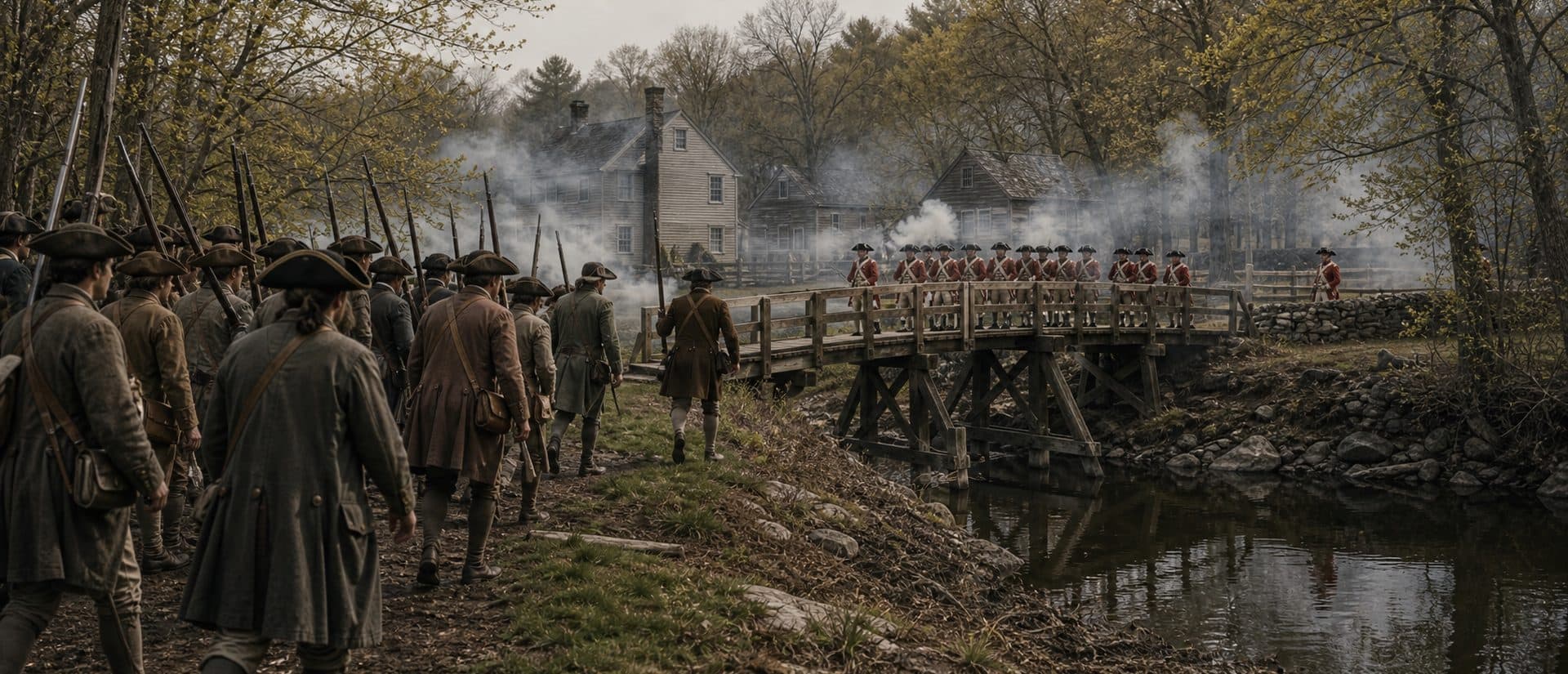
At the North Bridge we see smoke climbing over the town and think they mean to burn it. We come down on the Regulars holding the bridge. They fire first — two of us fall. And this time, on command, we fire back. The King's soldiers break and run. It has never happened before.
At Concord's North Bridge, militia returned fire and forced the regulars back — later immortalized by Emerson as 'the shot heard round the world.'
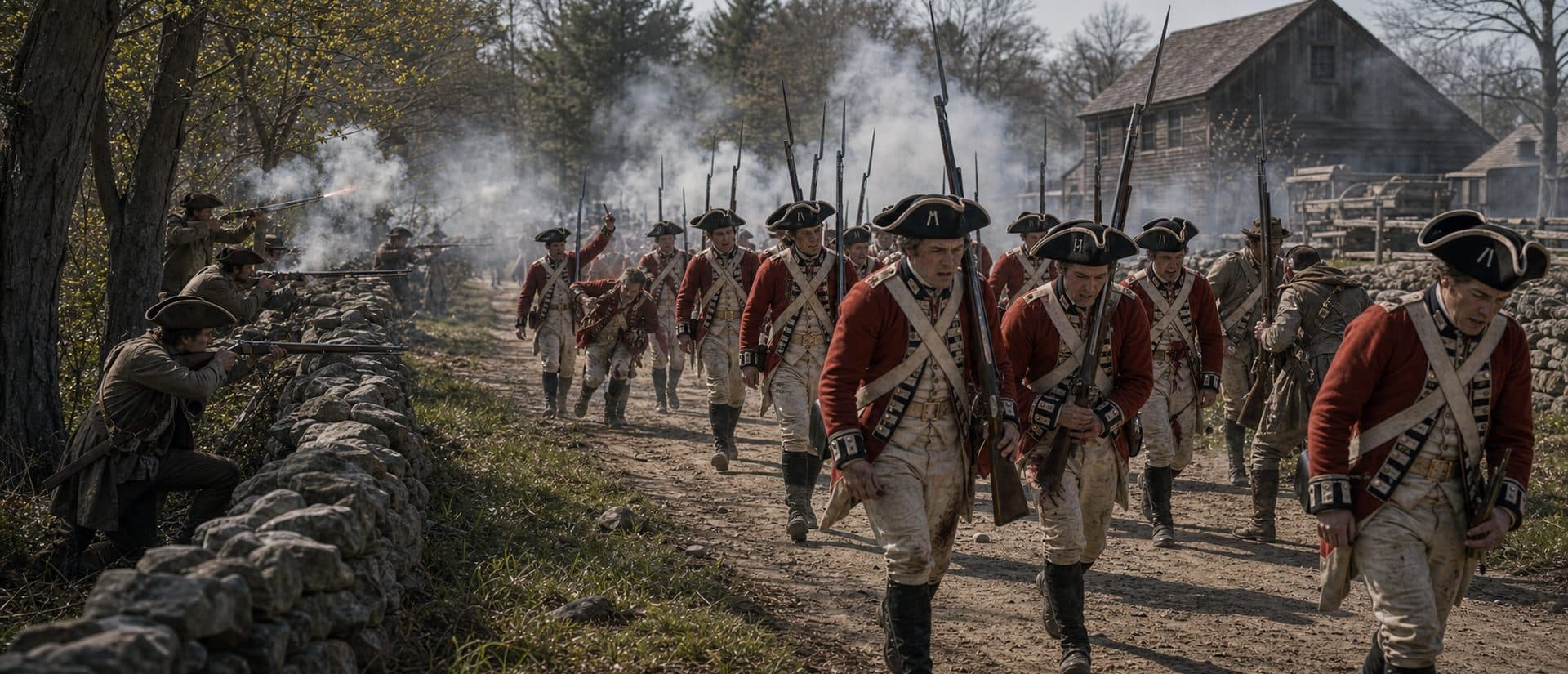
Now it is our turn. The Regulars start the long march back to Boston — eighteen miles of road — and we are behind every stone wall and tree along it. We fire, and fall back, and fire again. Their column bleeds the whole way, cursing an enemy they can barely see.
During the ~18-mile retreat to Boston, militia harried the British column from cover. British losses: ~73 killed, ~174 wounded, ~26 missing.
![The survivors withdrew into Boston; colonial militia besieged the city. The Revolutionary War had begun. [N] years ago.](/_next/image?url=%2Fimages%2Fhistory%2Flexington-and-concord%2Fframe-08.jpg&w=3840&q=75)
By nightfall the Regulars stumble back into Boston, bloodied and stunned — and they do not march out again. For we close around the city, thousands upon thousands, muskets turned inward. One day of alarms and running fights, and the one thing no one could take back: the war has begun.
The survivors withdrew into Boston; colonial militia besieged the city. The Revolutionary War had begun. 251 years ago.
Objects, maps, and small visual clues that make the story easier to read.
The British expedition returned to Boston bloodied and shocked, and thousands of militia closed around the town. The Siege of Boston began almost immediately, turning a local arms-seizure march into open war between Britain and its American colonies.
April 19, 1775
This happened 231 years before you were born — 251 years ago.
251 years ago — the first shots of the revolution whose 250th anniversary America now marks.
Who was there
Their ages at the time, compared with your age now.
Paul Revere
Alarm rider from Boston toward Lexington
40 at the event · 20 years older than you are now
William Dawes
Alarm rider by the land route
30 at the event · 10 years older than you are now
Samuel Prescott
Rider who carried the alarm on to Concord
23 at the event · 3 years older than you are now
John Parker
Captain of the Lexington militia
45 at the event · 25 years older than you are now
Thomas Gage
British commander in Massachusetts
56 at the event · 36 years older than you are now
The essentials — the kind of thing that shows up on the exam.
250th anniversary series
The 250th-anniversary arc from the first shots in Massachusetts to the words, gambles, and victories that made independence real.
The shot heard round the world
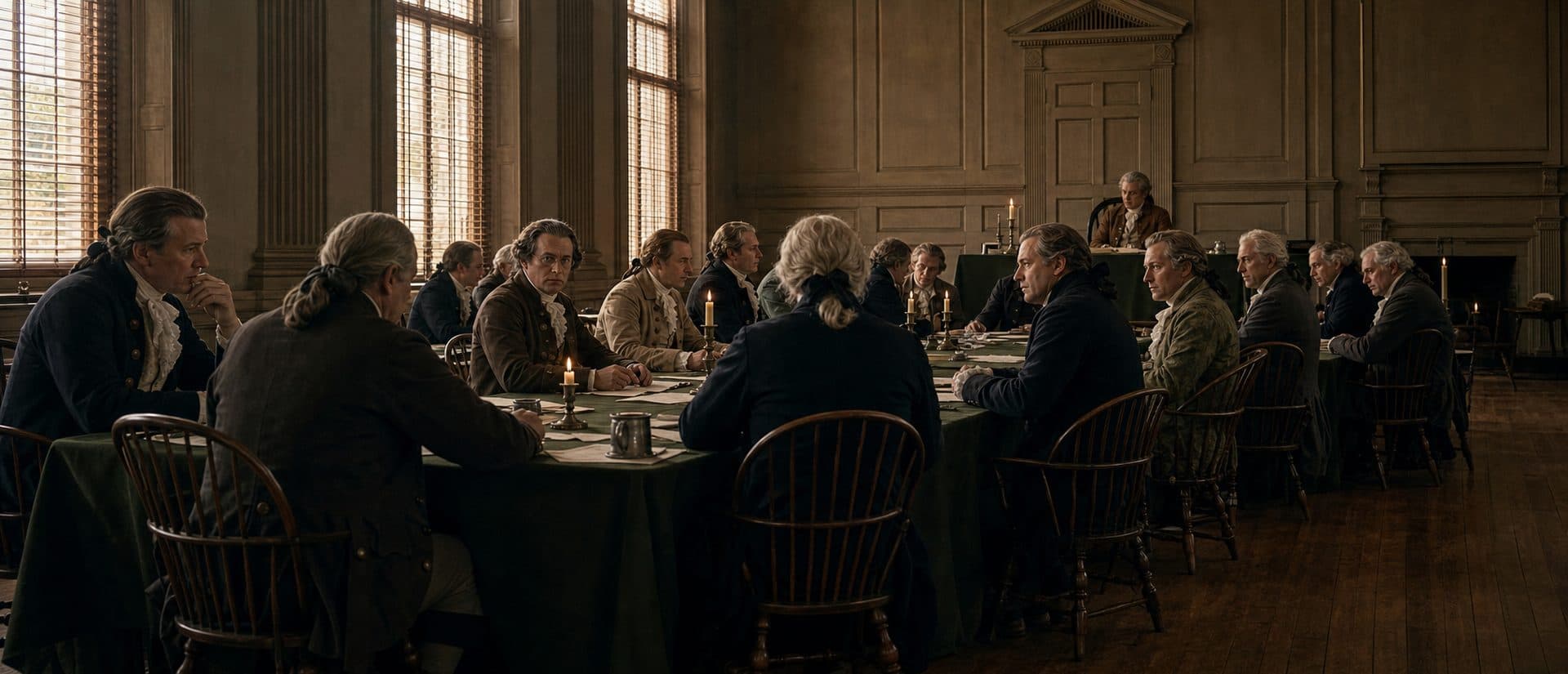
Thirteen colonies put their names to treason
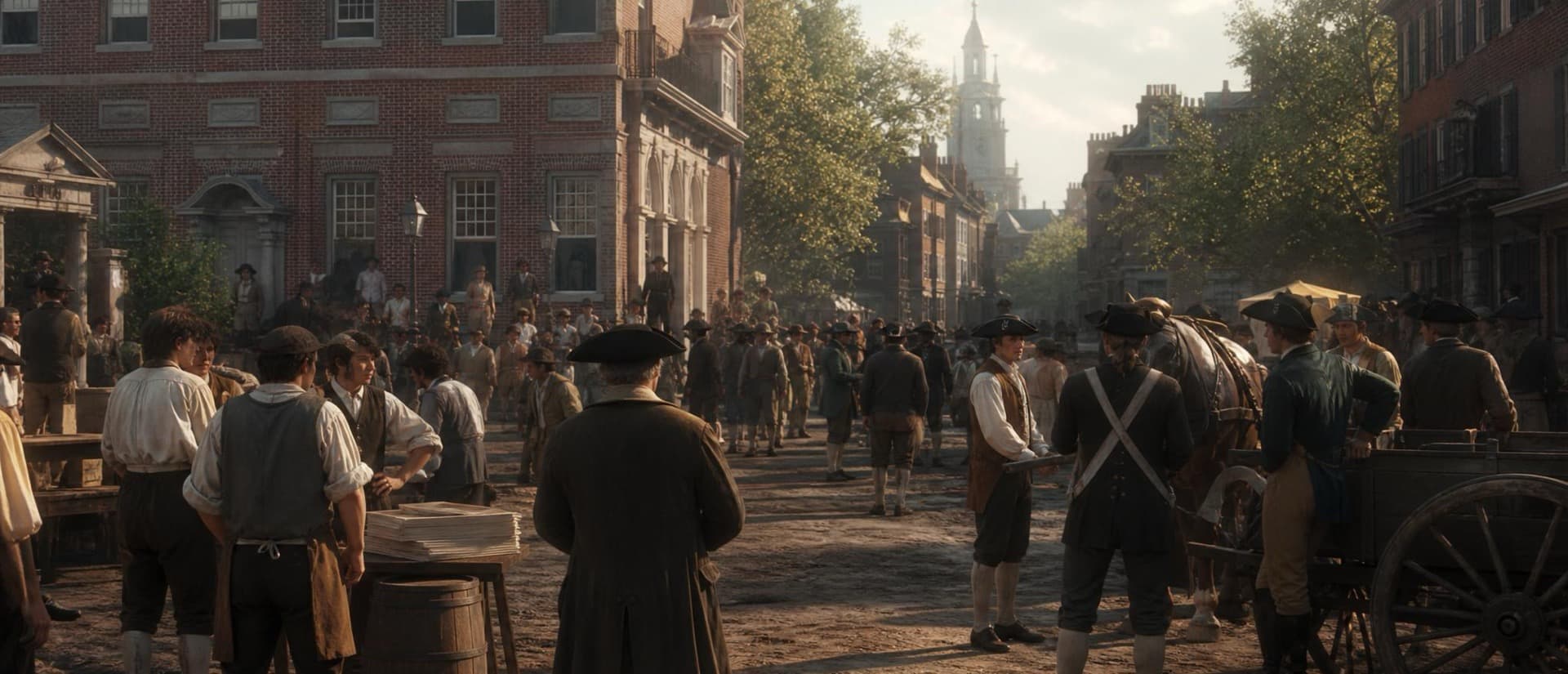
July 1776 - the Declaration leaves Philadelphia and reaches the war
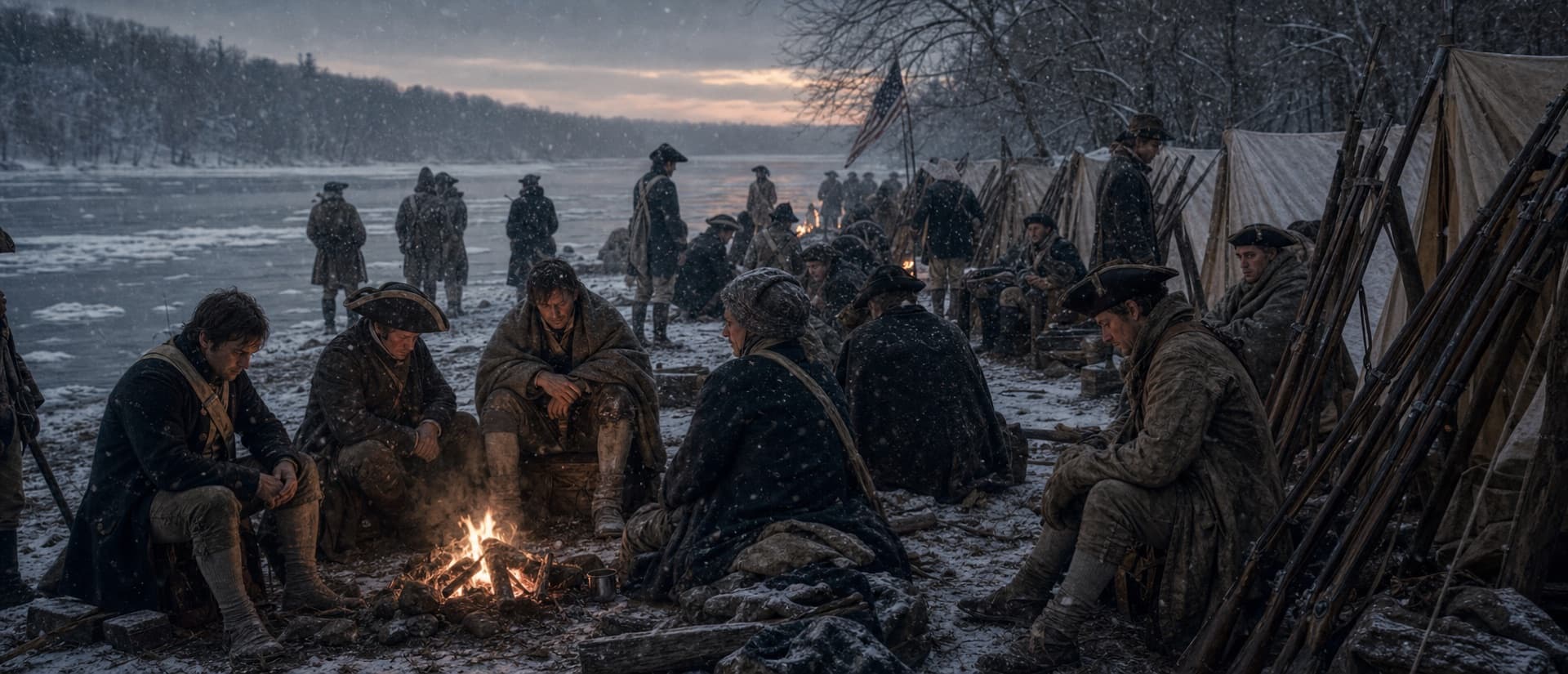
25–26 December 1776 — the gamble that saved the revolution
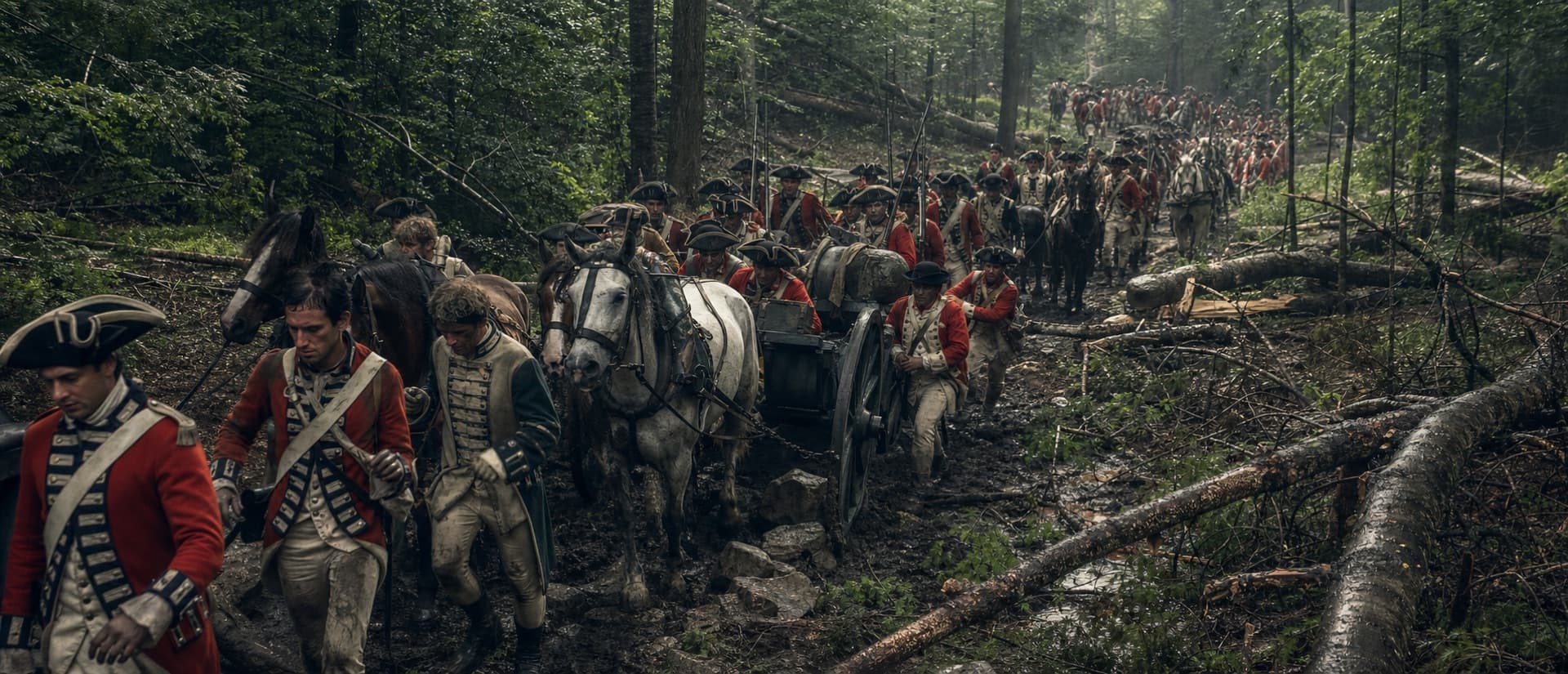
19 September – 17 October 1777 — the turning point of the Revolution
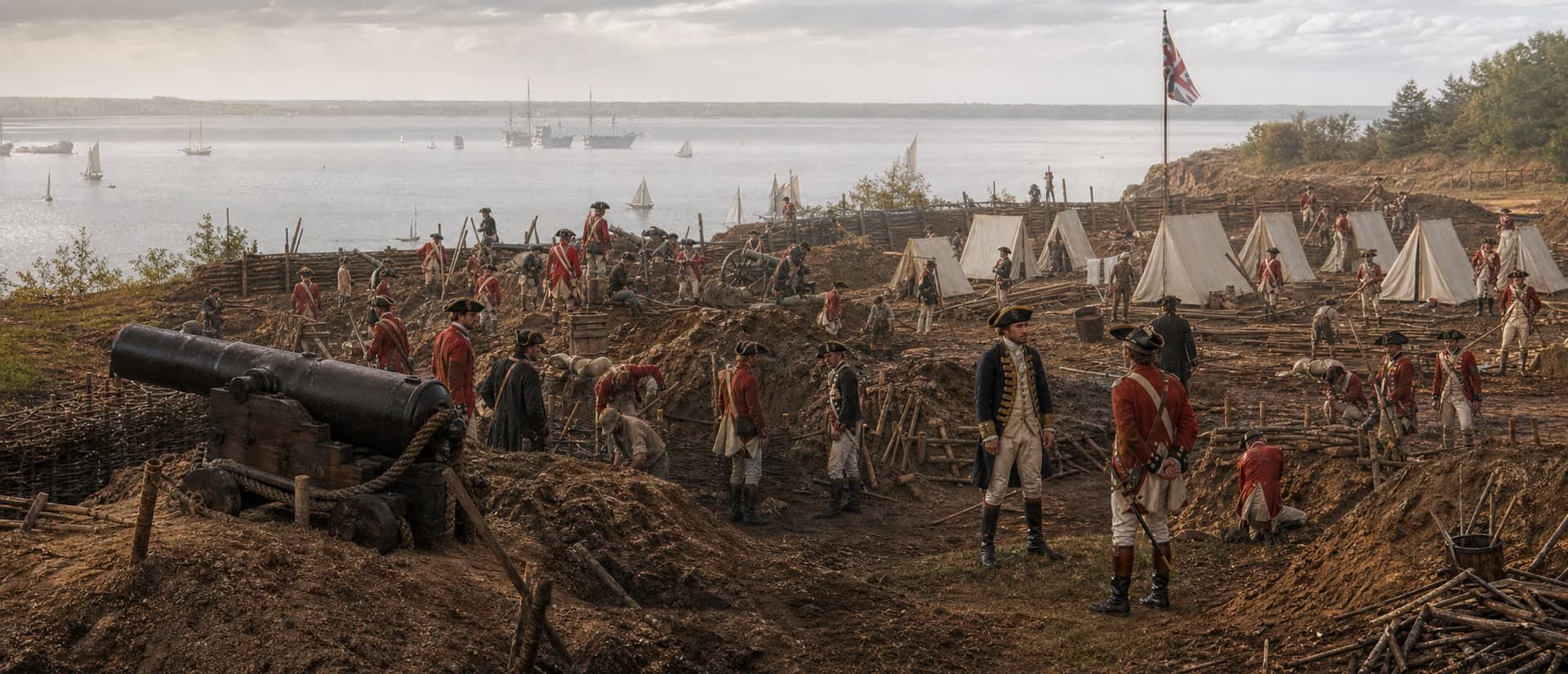
28 September – 19 October 1781 — the battle that won the Revolution
As an Amazon Associate, OlderThan earns from qualifying purchases.