George Washington
Allied commander-in-chief
49 at the event · 29 years older than you are now
American Revolution · Virginia
28 September – 19 October 1781 — the battle that won the Revolution
“I have soldiered since the war was young, and I never thought to see this: a whole British army penned against a Virginia river, a French fleet at their backs, our trenches creeping closer every night. In October of 1781, at a little tobacco port called Yorktown, we ended it.”
This happened 225 years before you were born — 245 years ago.
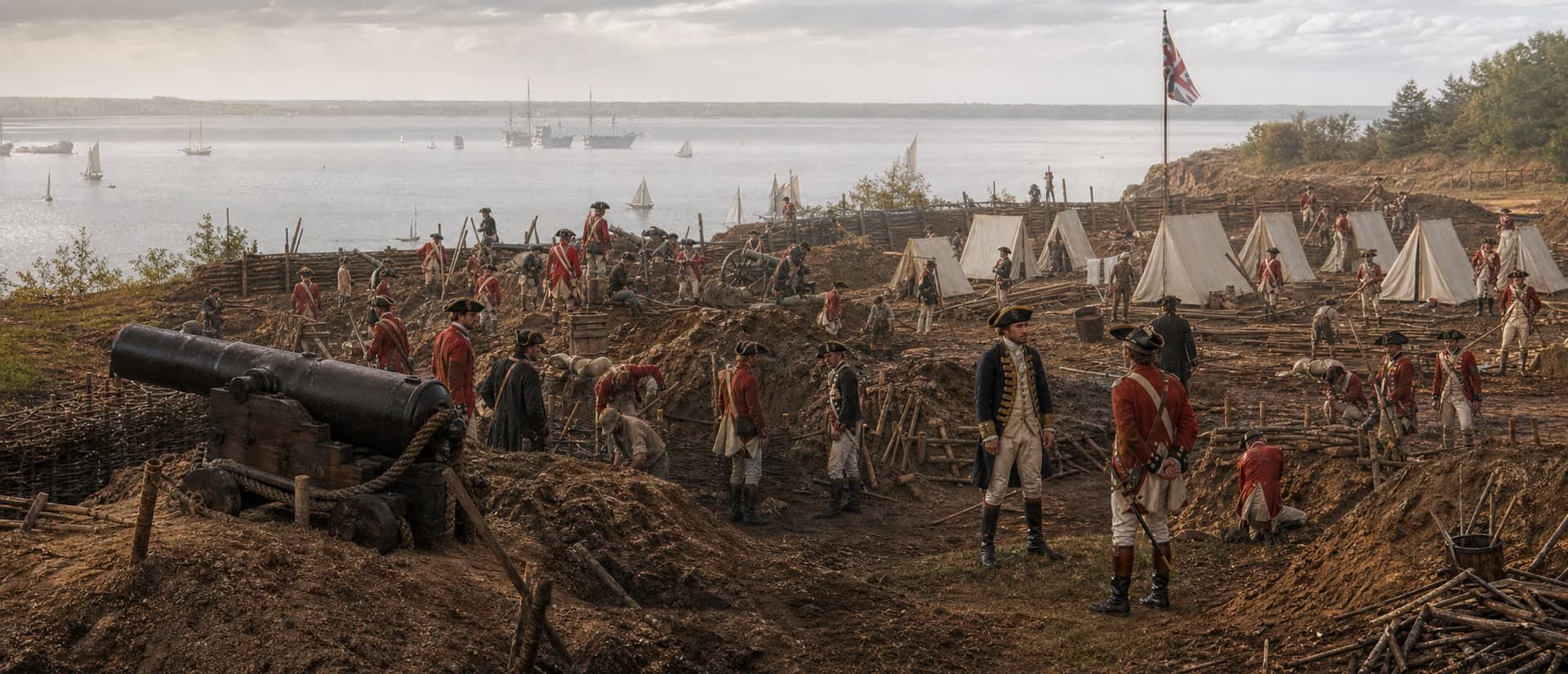
By 1781 the war had ground on for six years. In the south, the British general Lord Cornwallis marched his army into Virginia and fortified the little tobacco port of Yorktown on the York River, expecting the Royal Navy to resupply or evacuate him. It was a fatal assumption. Washington, camped outside British-held New York with the French army of the Comte de Rochambeau, saw the opening and made a bold decision: leave a screen to fool the British and march the combined Franco-American army over 400 miles south to trap Cornwallis. The key was the sea — and a French fleet under the Comte de Grasse was sailing from the West Indies to seize it.
Yorktown was the decisive battle of the American Revolution. When de Grasse's fleet defeated the Royal Navy at the Battle of the Chesapeake, Cornwallis was sealed off with no escape and no relief. His surrender of some 7,000 men shattered Britain's will to continue the war. Though a formal peace — the Treaty of Paris recognizing American independence — was still two years away, Yorktown effectively ended the fighting. The alliance won at Saratoga had delivered the victory that made the Declaration real.
By 1781 the war is old and weary. Then Lord Cornwallis marches his army onto a spit of Virginia land — Yorktown — and digs in with his back to the sea, sure the King's navy will come for him. Far to the north, Washington and the French see it, and slip south in secret: four hundred miles, to spring a trap.
In 1781 Cornwallis fortified Yorktown, Virginia, expecting naval support. Washington and Rochambeau secretly marched the Franco-American army ~400 miles south. 245 years ago.
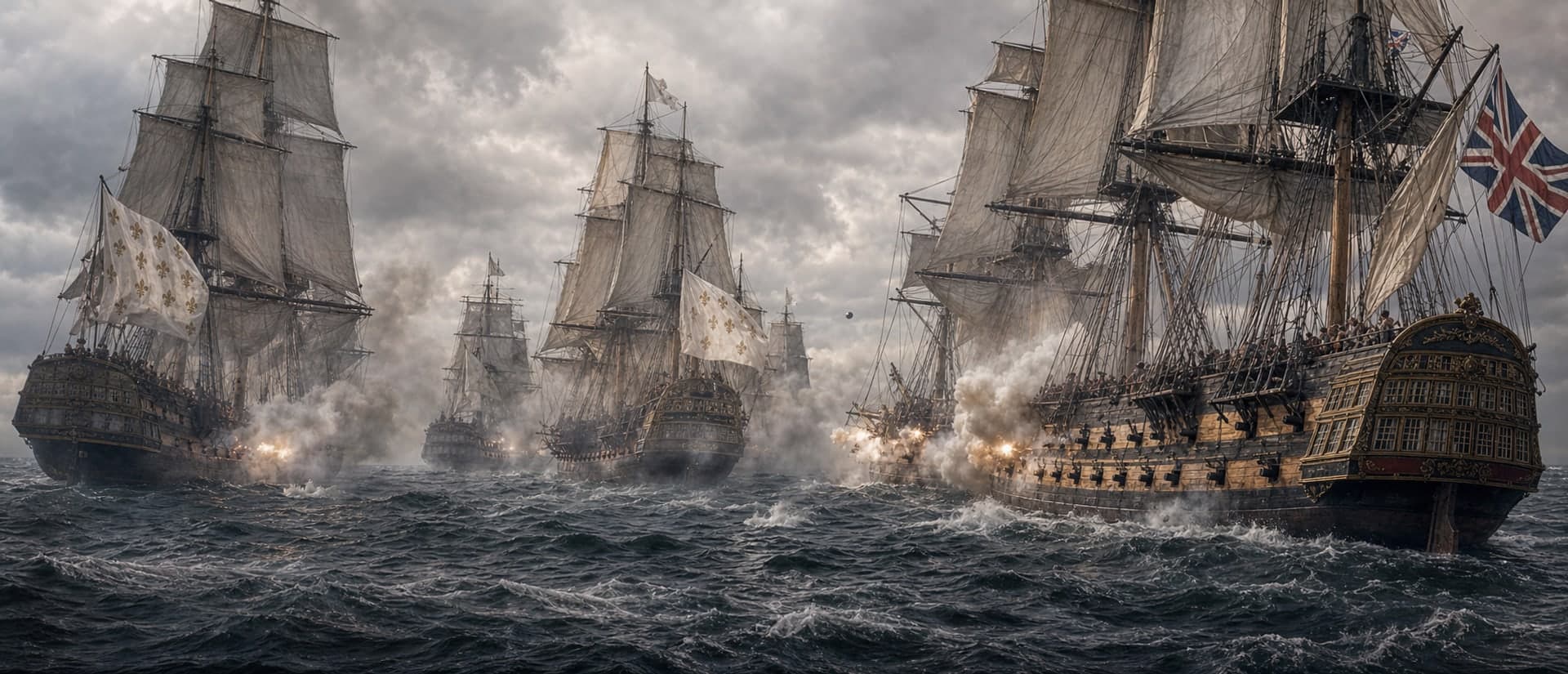
Everything hangs on the water. Out beyond the capes, the French fleet under Admiral de Grasse meets the British navy and beats it back to New York. The sea gate slams shut. Cornwallis looks for his rescuers and sees only French sails. There will be no ships. No escape. He is ours to take.
At the Battle of the Chesapeake (5 Sept 1781), the French fleet under de Grasse defeated the Royal Navy, cutting off Cornwallis's escape and resupply by sea.
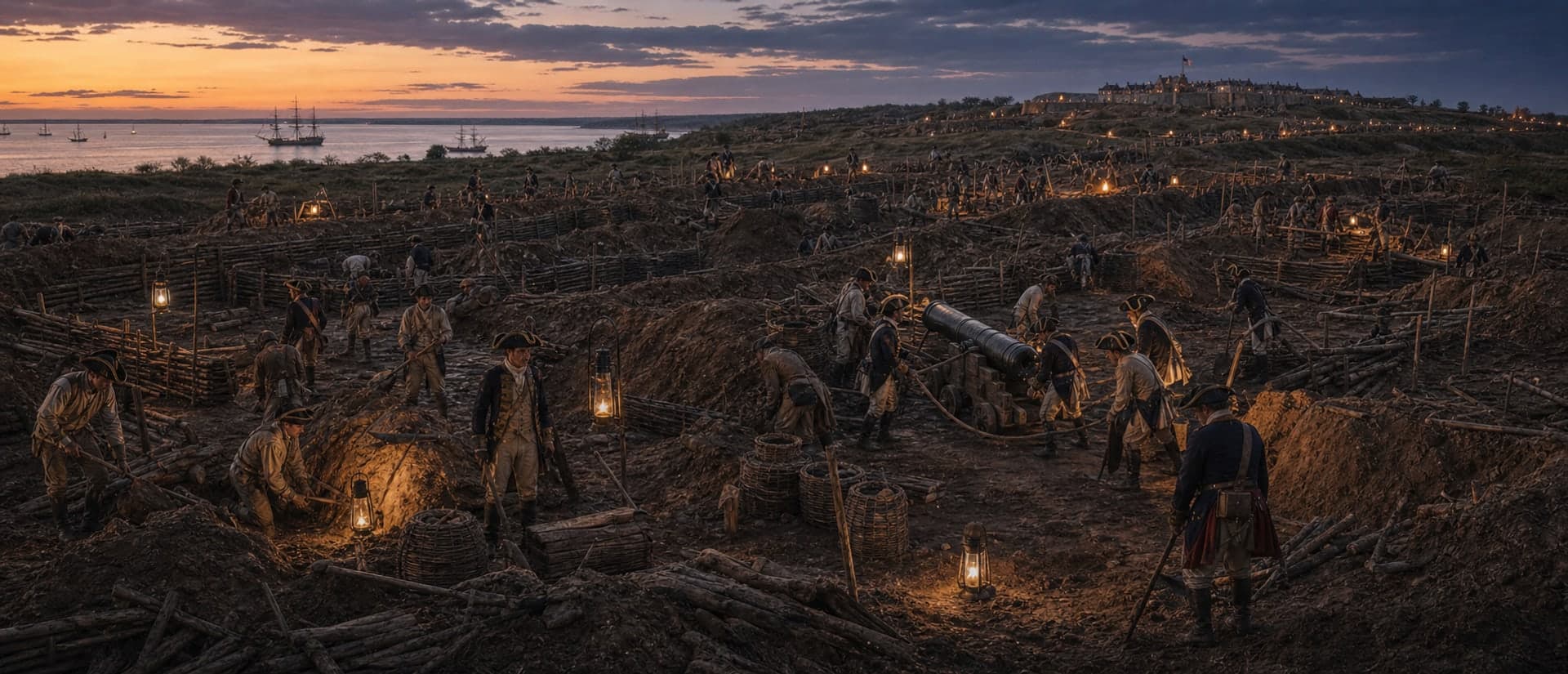
We come up around the town, near eighteen thousand strong — American and French together — and we begin to dig. Night by night the trenches zigzag closer to their walls. Washington himself strikes a pick into the ground, then puts the match to the first gun. The siege has begun.
The combined Franco-American army (~18,000) besieged Yorktown, digging parallel siege trenches. Washington ceremonially opened the first siege line and fired an early gun.
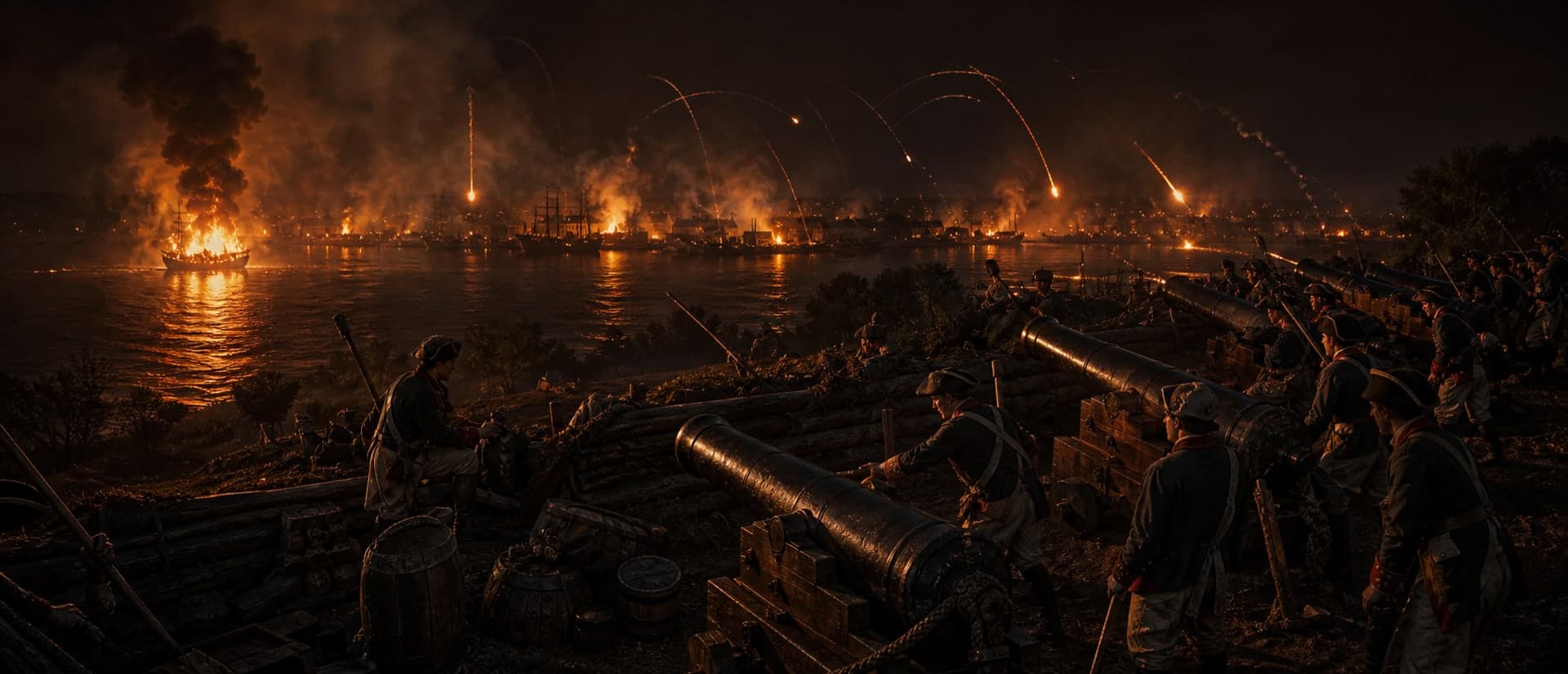
Then the batteries open, and they do not stop. French and American guns hammer Yorktown day and night — the town splinters, ships burn in the river, and Cornwallis's men burrow into the bluffs like moles. From our lines we watch the shells arc over in the dark, red trails falling into the ruin.
Allied siege batteries bombarded Yorktown around the clock, devastating the town and British defenses and forcing the garrison into shelters along the riverbank.
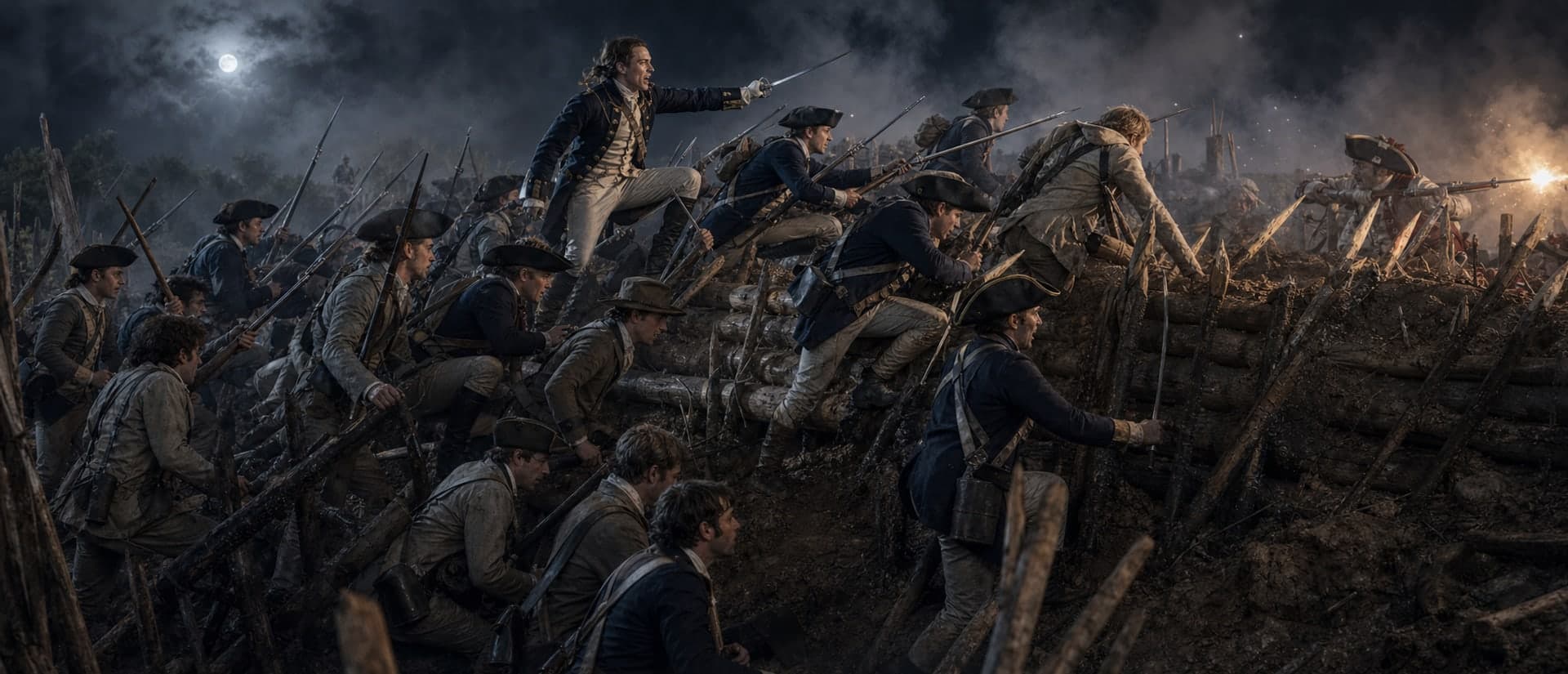
Two strongpoints still bar the way — Redoubts nine and ten. They must be taken by the blade. At night, muskets unloaded and bayonets fixed, the French rush nine and we rush ten — young Colonel Hamilton at the front. In a few furious minutes, both fall. The last doors of Yorktown stand open.
On the night of 14 October 1781, French troops stormed Redoubt 9 and American light infantry under Alexander Hamilton took Redoubt 10 with unloaded muskets and bayonets, letting the siege lines close in.
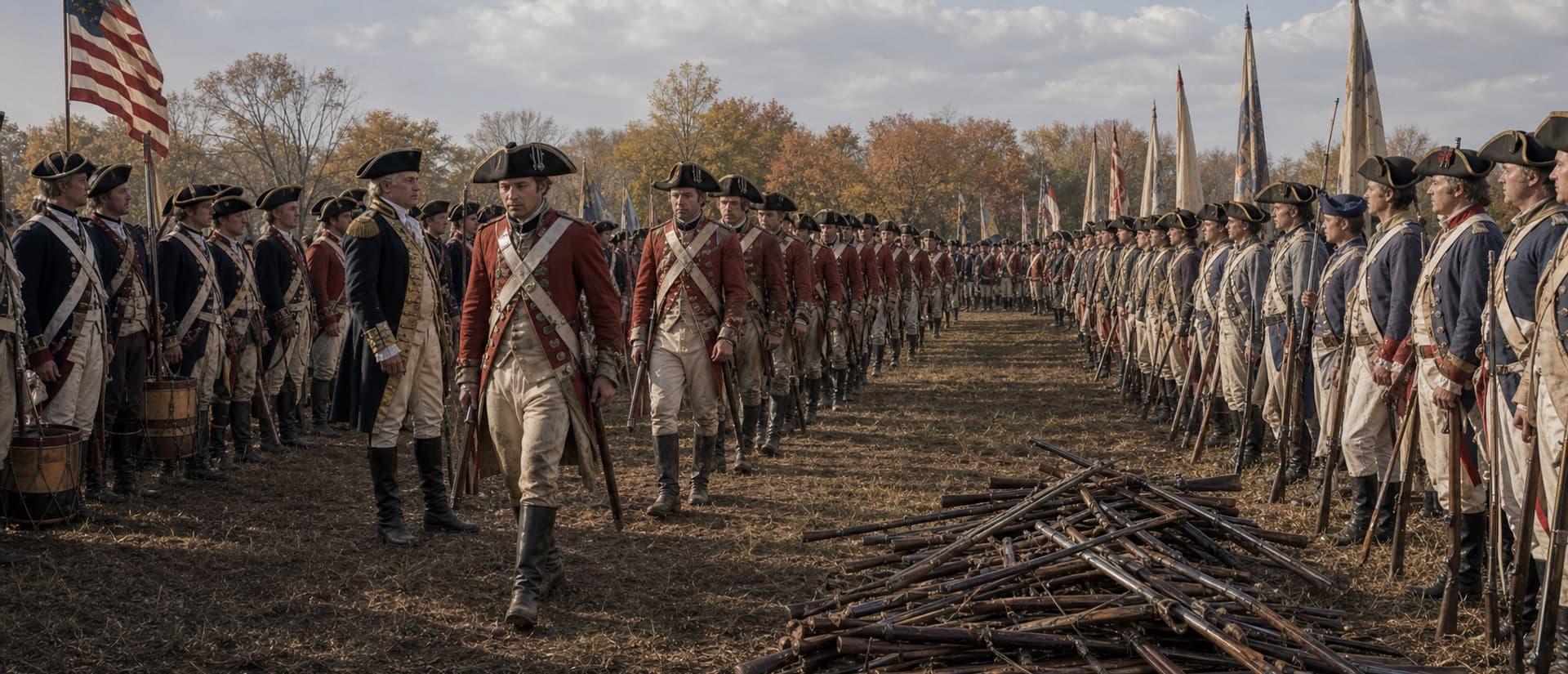
There is nothing left to hold. His works are rubble, his escape across the river broken up by a storm. On October nineteenth, Cornwallis surrenders near seven thousand men. Too 'ill' to come himself, he sends a deputy. Their army marches out between our lines and lays down its arms — and their band, they say, plays 'The World Turned Upside Down.'
On 19 October 1781 Cornwallis surrendered ~7,000 troops. Pleading illness, he sent Gen. O'Hara in his place. Tradition holds a British band played 'The World Turned Upside Down.'
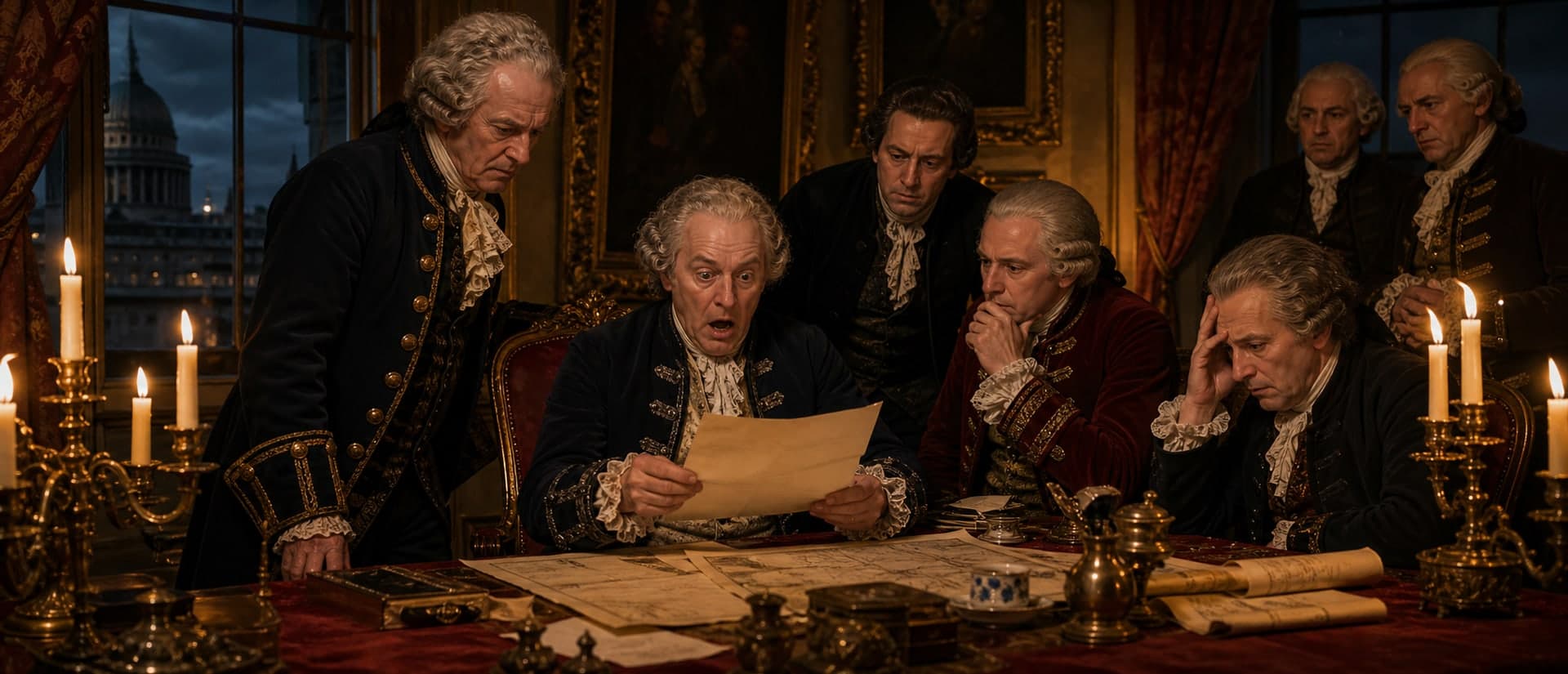
The news takes weeks to cross the ocean. When it reaches London, the King's minister staggers as if shot and cries, 'Oh God, it is all over.' And it is. Two years yet to a treaty, but the fighting is done. From the first shot on Lexington Green to this Virginia field, the impossible thing is won.
When word reached London, Prime Minister Lord North reportedly exclaimed 'Oh God, it is all over.' The Treaty of Paris (1783) formally recognized U.S. independence.
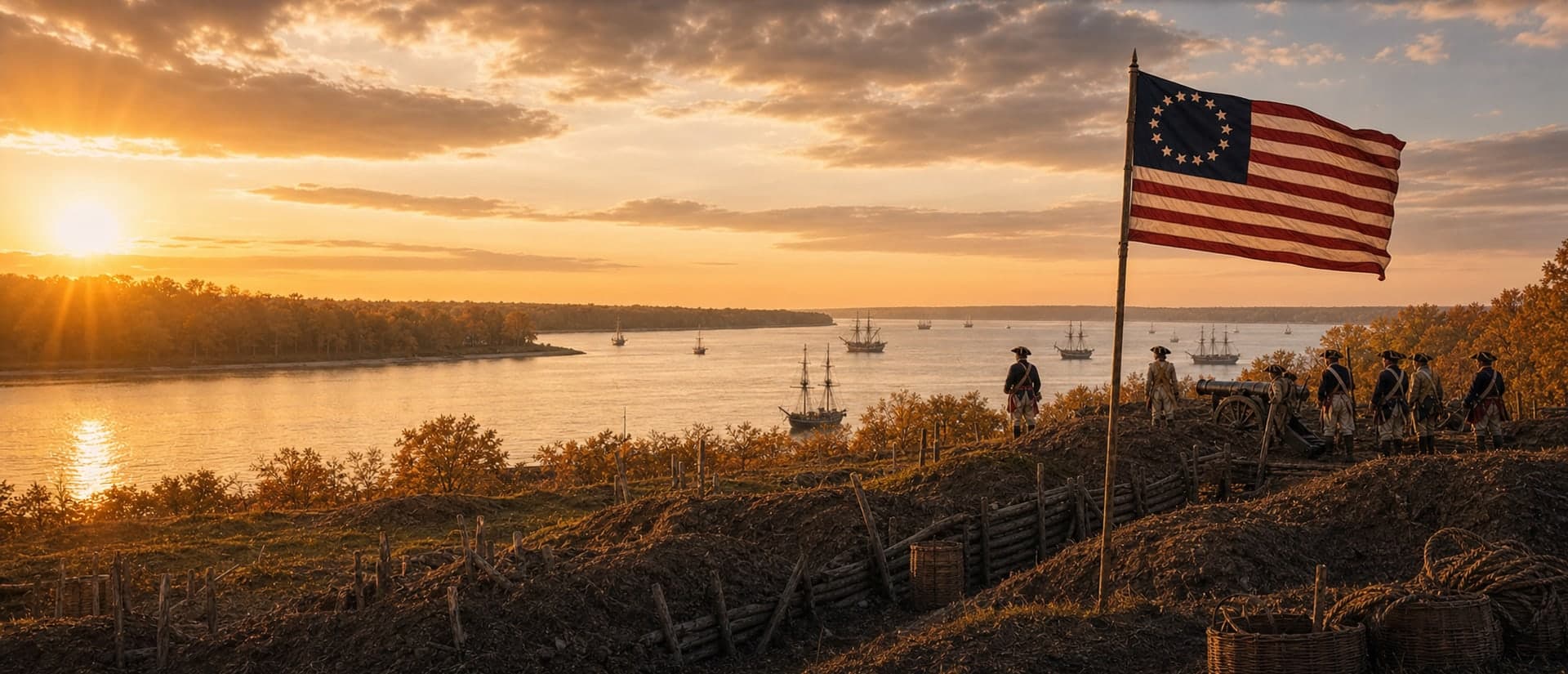
We were a rabble the greatest empire on earth meant to whip back into line. Six years, and a world war, later — on a river in Virginia — we watched them stack their muskets and go home. Two hundred and fifty years on, the nation that began in a hot Philadelphia room still stands. We built it. And it held.
Yorktown secured the independence declared in 1776. The United States it created marks its 250th anniversary in 2026.
Objects, maps, and small visual clues that make the story easier to read.
Yorktown was the last major land battle of the Revolution. The loss of a second entire army broke Britain's will to keep fighting; Lord North's government soon fell and peace negotiations began. The Treaty of Paris, signed in 1783, formally recognized the independence of the United States. The war that began with militia on Lexington Green ended with a world empire conceding a new nation.
October 19, 1781
This happened 225 years before you were born — 245 years ago.
245 years ago — the last great battle of the war that began the United States, whose 250th America now marks.
Who was there
Their ages at the time, compared with your age now.
George Washington
Allied commander-in-chief
49 at the event · 29 years older than you are now
Comte de Rochambeau
Commander of the French army
56 at the event · 36 years older than you are now
Comte de Grasse
Admiral of the French fleet
59 at the event · 39 years older than you are now
Lord Cornwallis
British commander at Yorktown
43 at the event · 23 years older than you are now
Alexander Hamilton
Led the assault on Redoubt 10
24 at the event · 4 years older than you are now
Marquis de Lafayette
French volunteer who helped pin Cornwallis
24 at the event · 4 years older than you are now
The essentials — the kind of thing that shows up on the exam.
250th anniversary series
The 250th-anniversary arc from the first shots in Massachusetts to the words, gambles, and victories that made independence real.
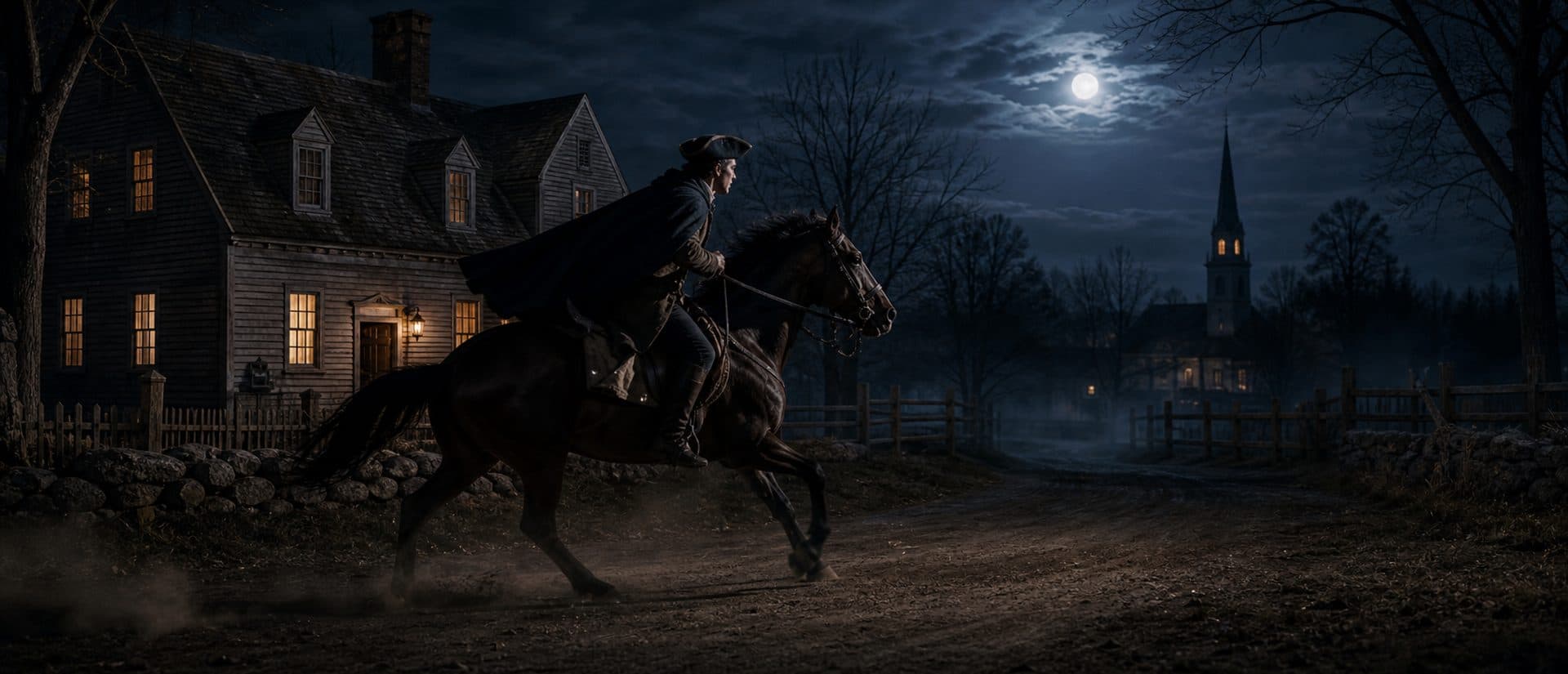
The shot heard round the world
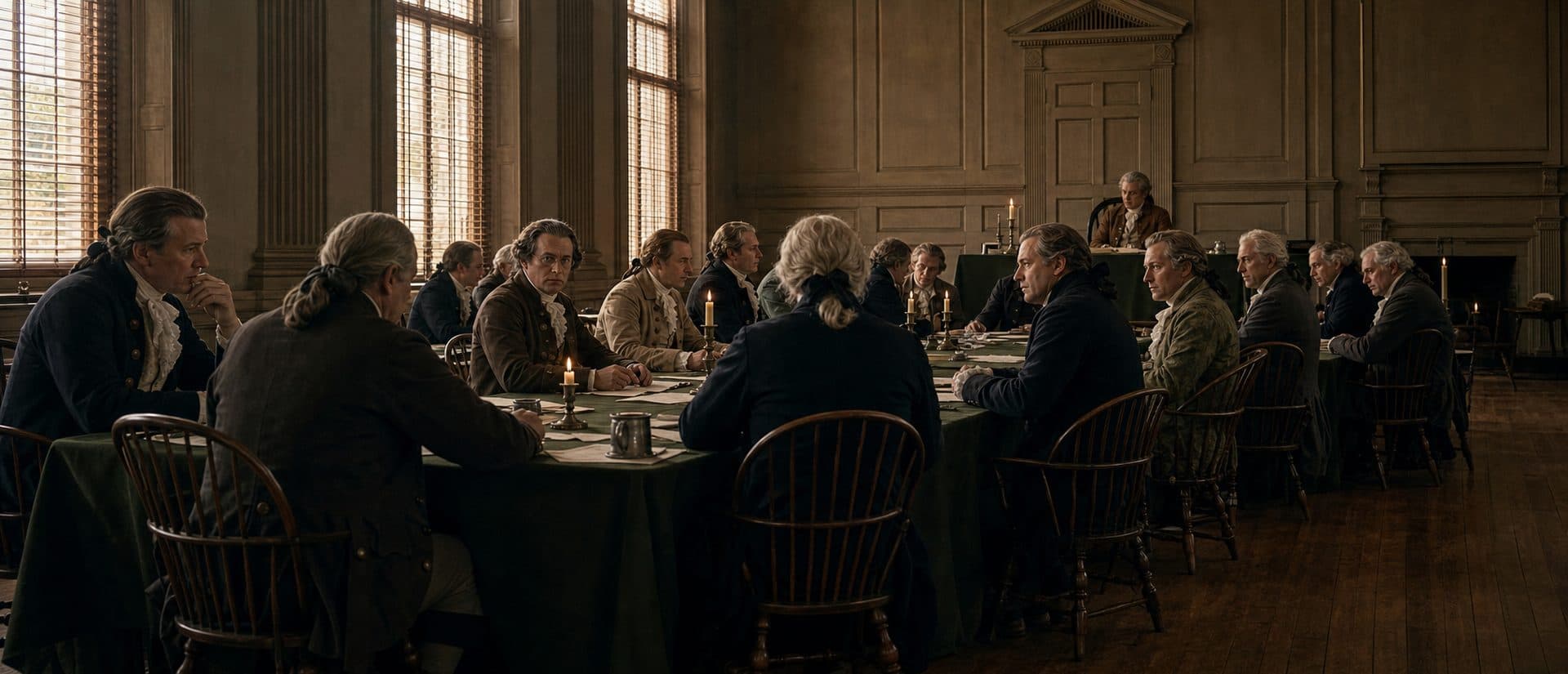
Thirteen colonies put their names to treason
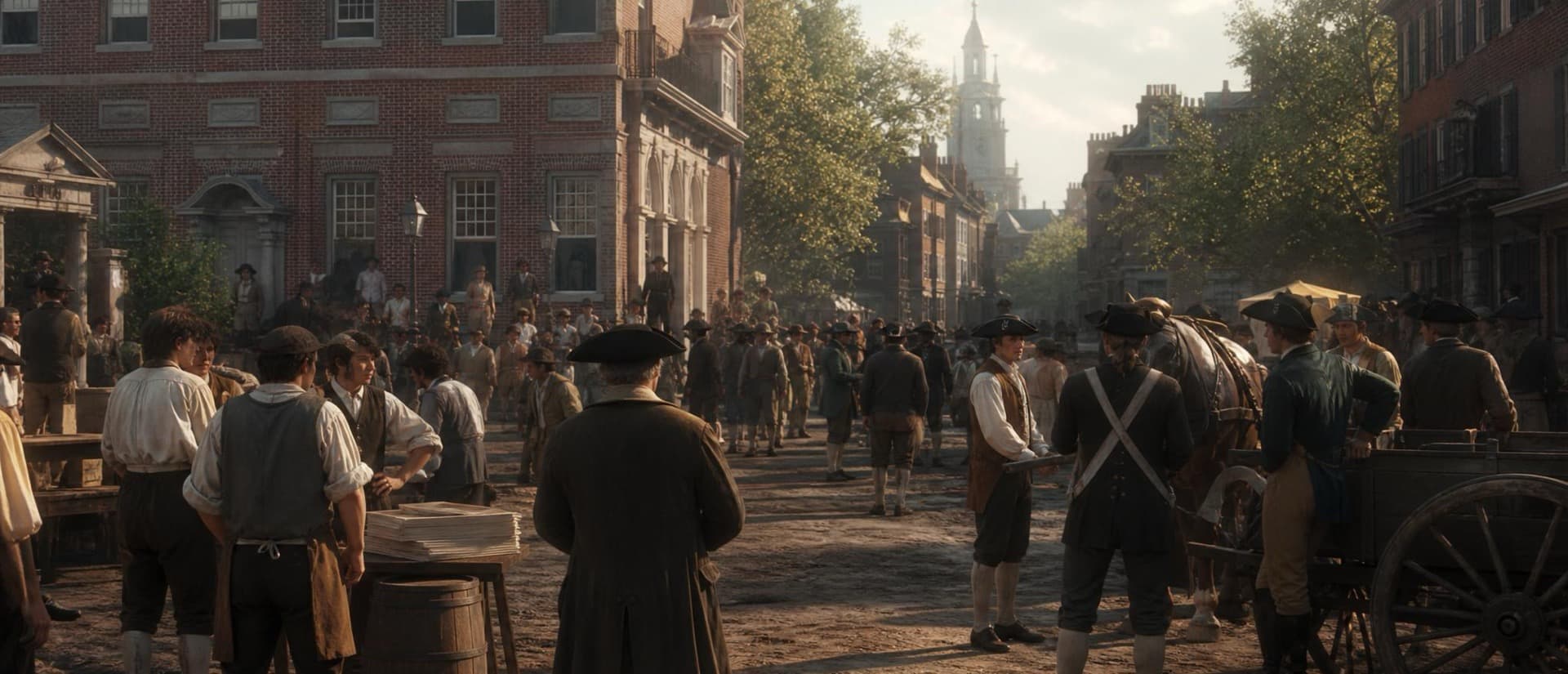
July 1776 - the Declaration leaves Philadelphia and reaches the war
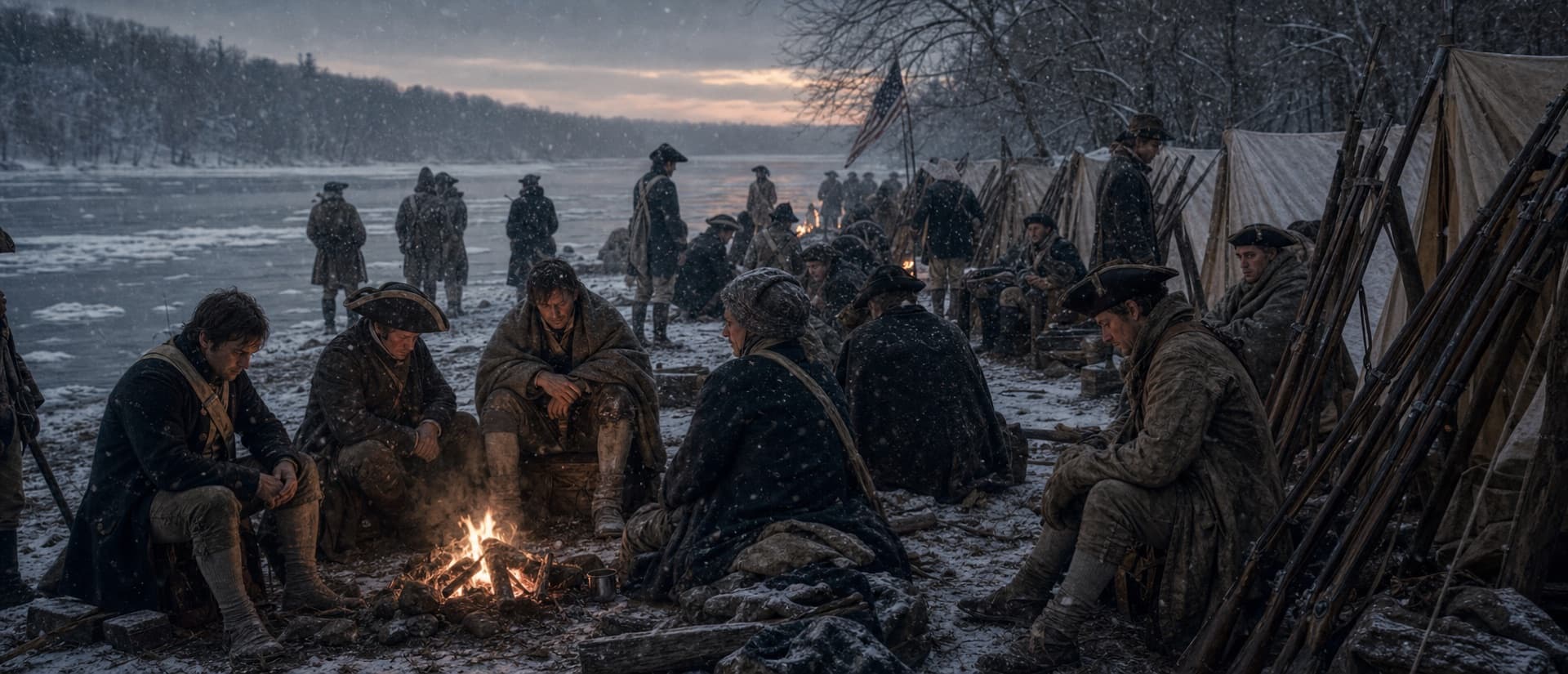
25–26 December 1776 — the gamble that saved the revolution
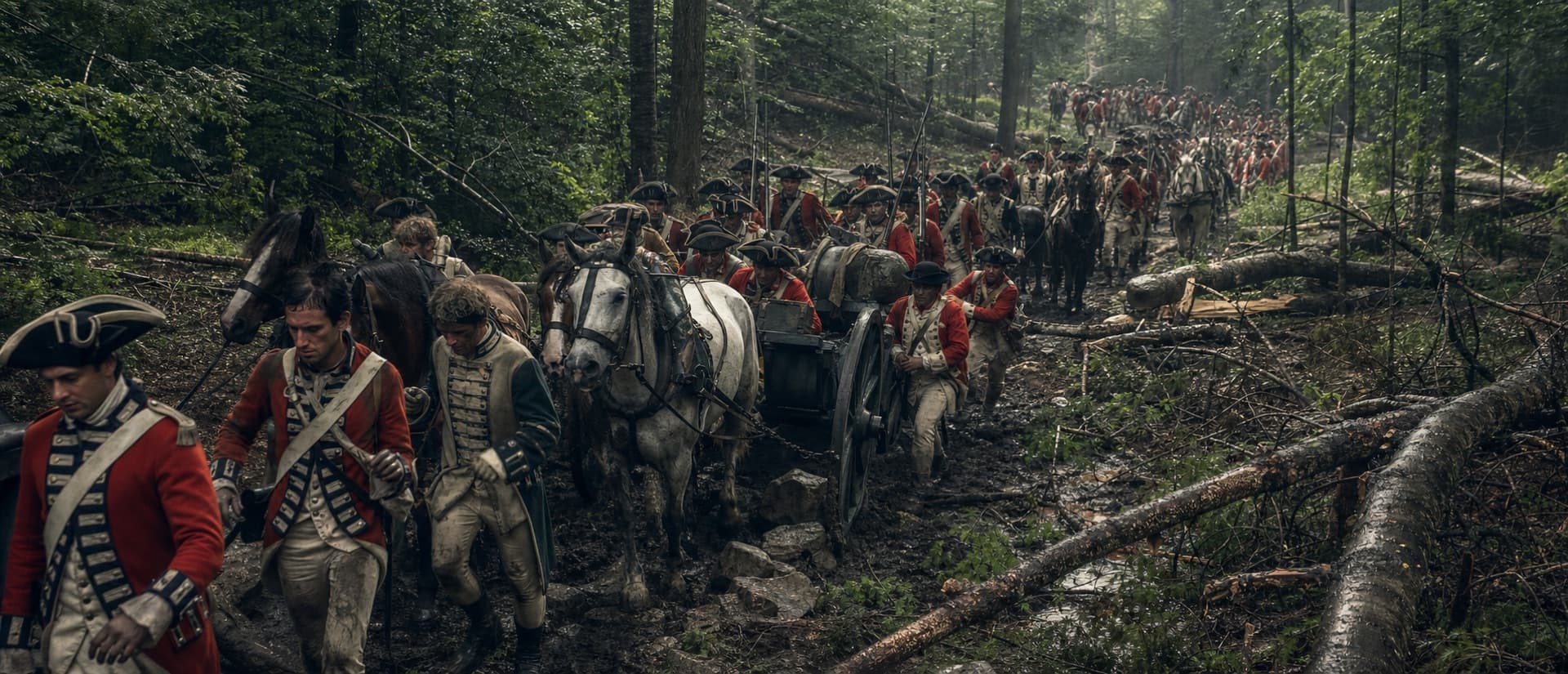
19 September – 17 October 1777 — the turning point of the Revolution
28 September – 19 October 1781 — the battle that won the Revolution