World War I · Western Front
The First Day of the Somme
1 July 1916 — the bloodiest day in British military history
“For seven days our guns hammered the German line. They promised us the wire would be cut, that we'd stroll across. At half past seven the whistles blew.”
This happened 90 years before you were born — 110 years ago.
Why it mattered
By the summer of 1916 the Western Front had been frozen in trench deadlock for nearly two years. To break it — and relieve the French dying at Verdun — Britain planned its biggest attack yet, astride the River Somme.
It was meant to be the breakthrough. Instead it became the day that defined industrial war's horror — and a brutal lesson in why men on foot could not beat the machine gun.
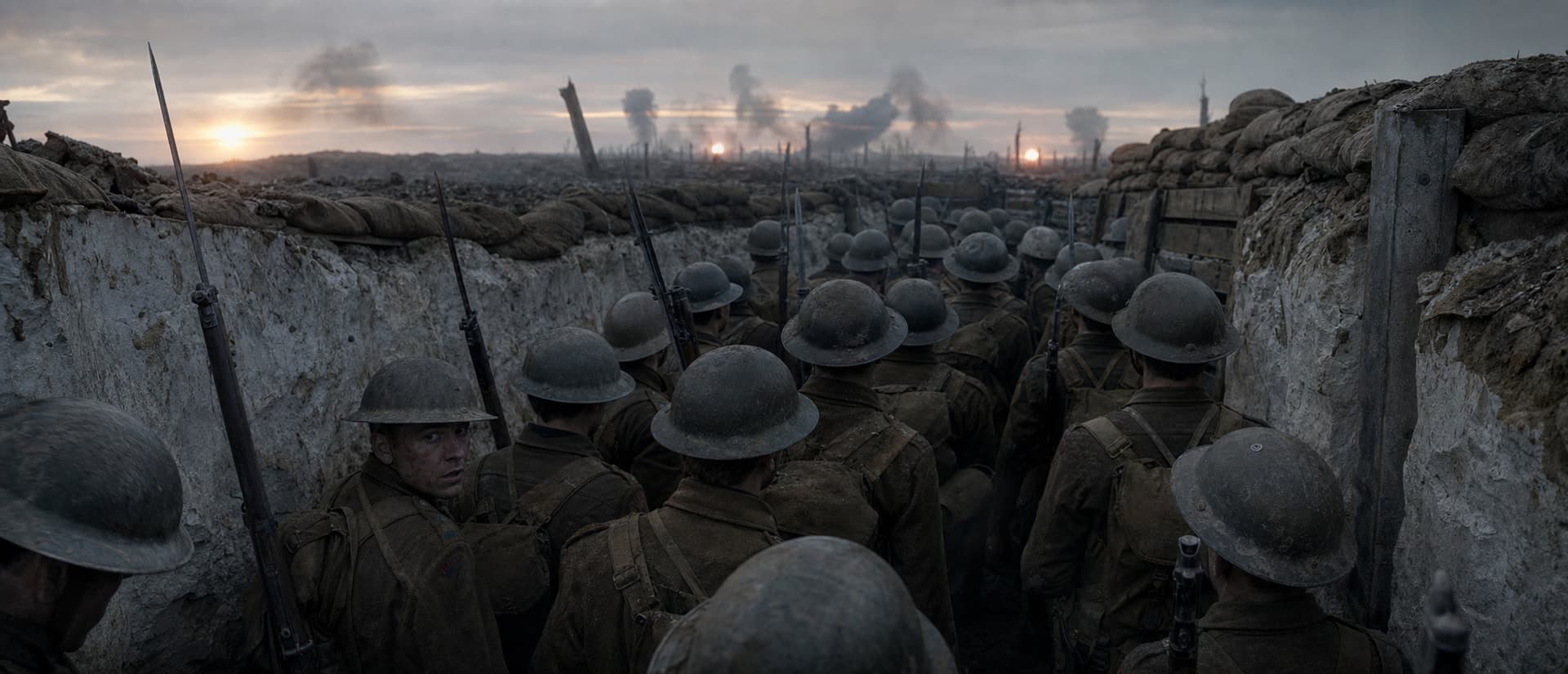
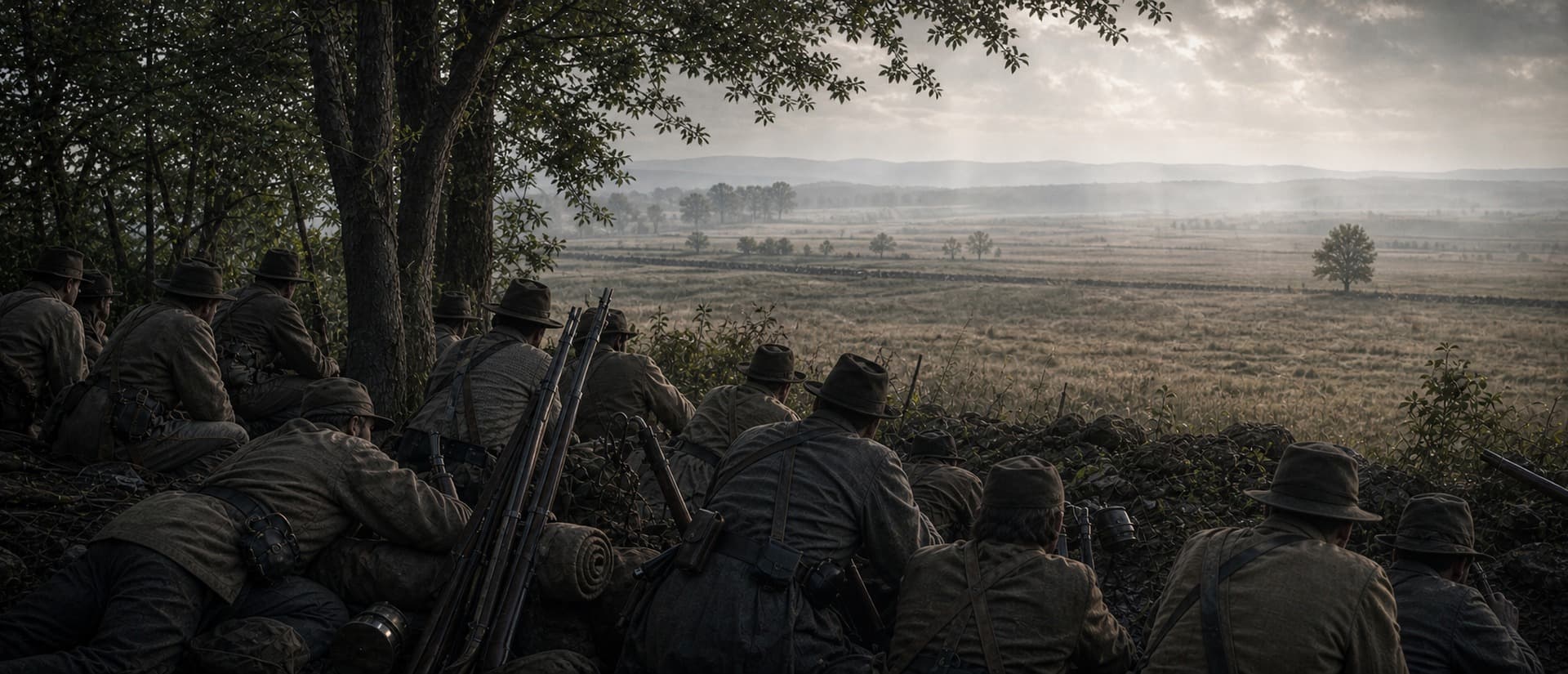
Dawn in the forward trench. We fixed bayonets in the dark, packed shoulder to shoulder, the barrage shaking dirt from the walls. Seven days it had hammered. They told us no one would be left to stop us.
Zero hour: 7:30 a.m., 1 July 1916.
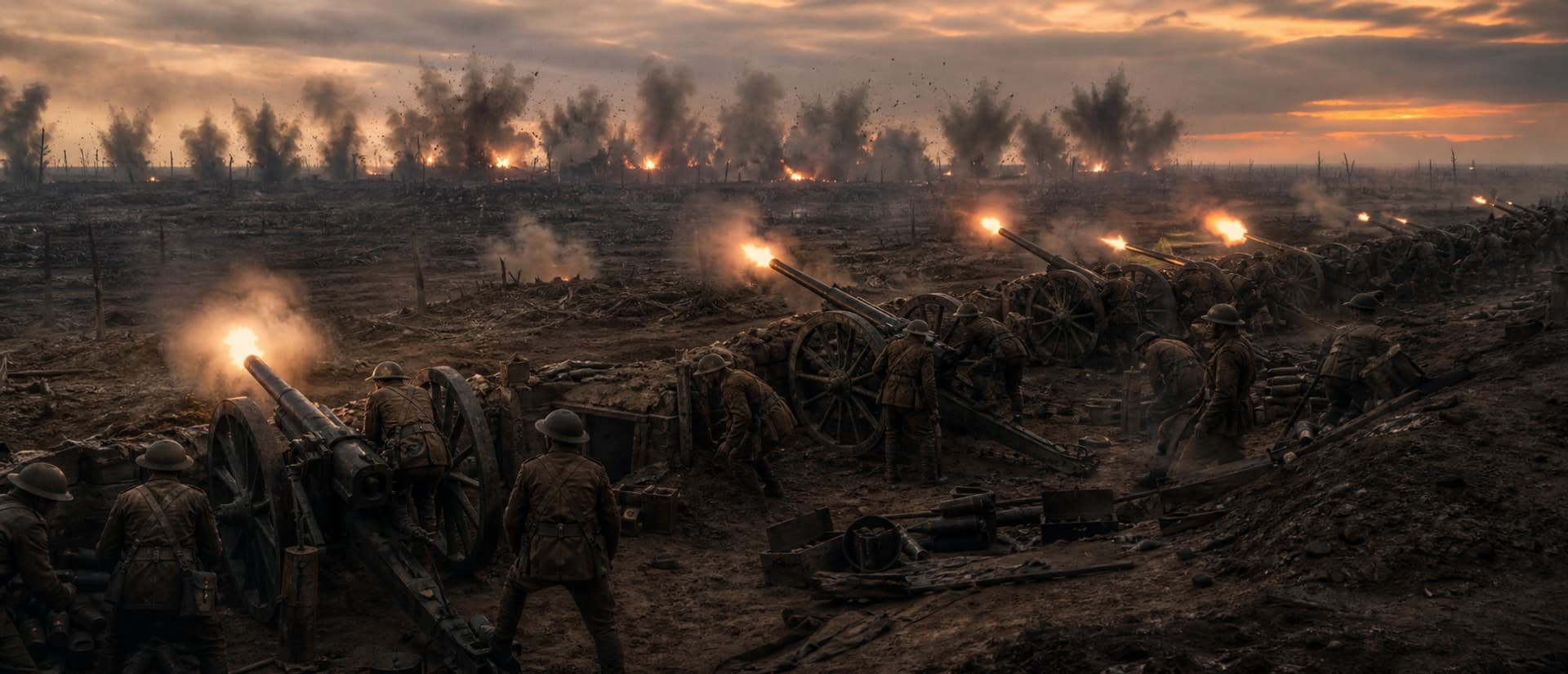
For a week the guns never stopped — a million and a half shells meant to flatten the German wire and bury the men behind it. We counted the days by the noise. We believed it.
~1.5 million shells over 7 days — meant to cut the wire and destroy the German defenders.
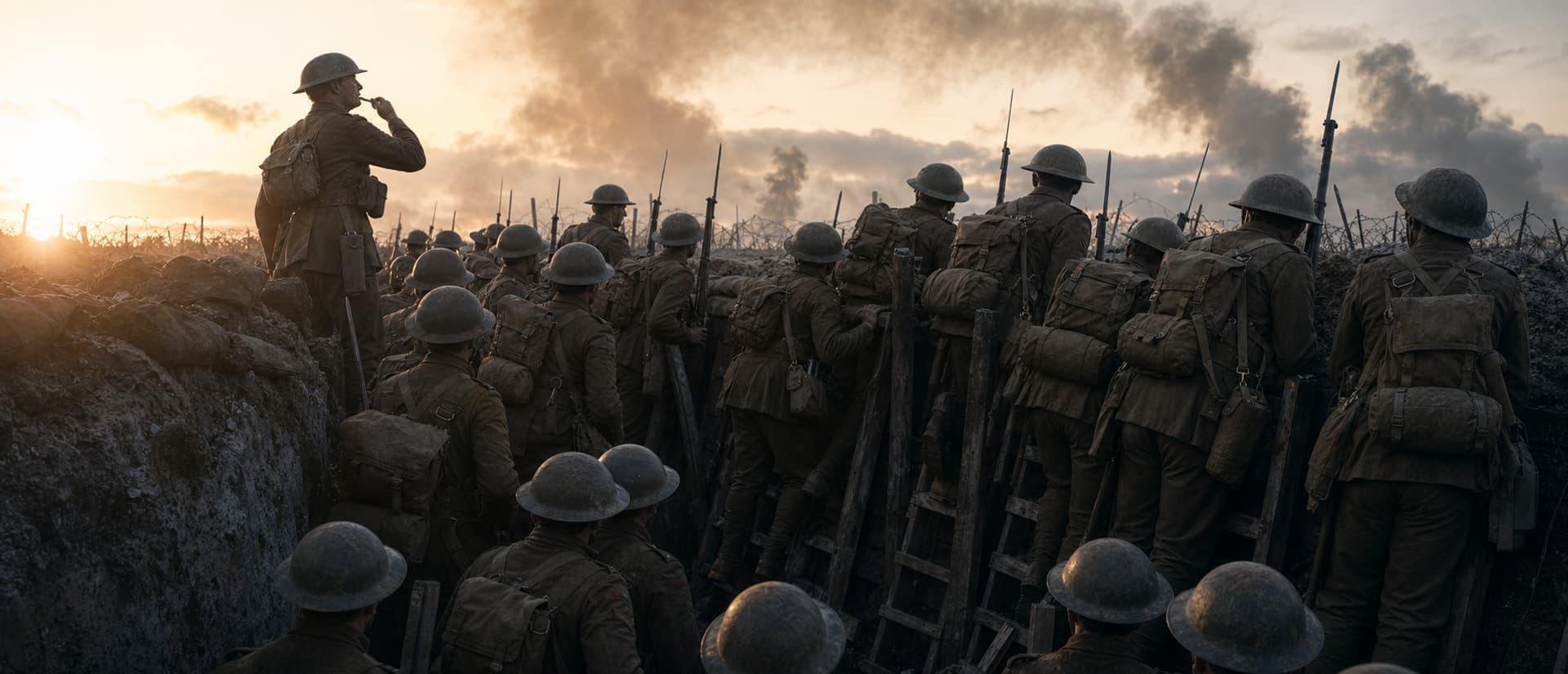
The officers checked their watches. Whistles to their lips. We set our boots on the ladder rungs and waited for the sound that would send us over.
The plan: advance in straight lines at a walk — it assumed the enemy was already dead.
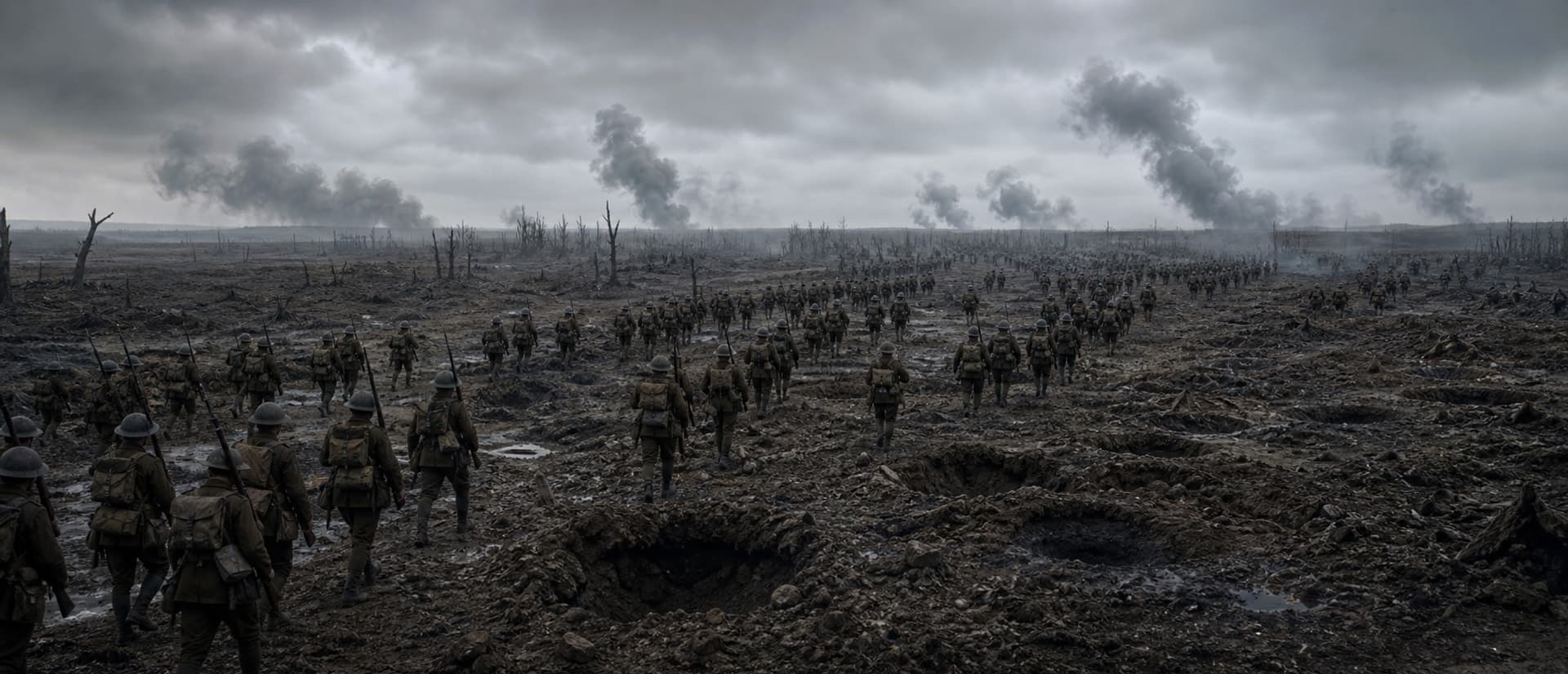
We climbed into the morning sun and formed our lines, just as we'd drilled — upright, dressed by the right, walking. Sixty pounds on every back. The larks were singing over no man's land.
Heavily laden, ordered to walk in line across open ground.
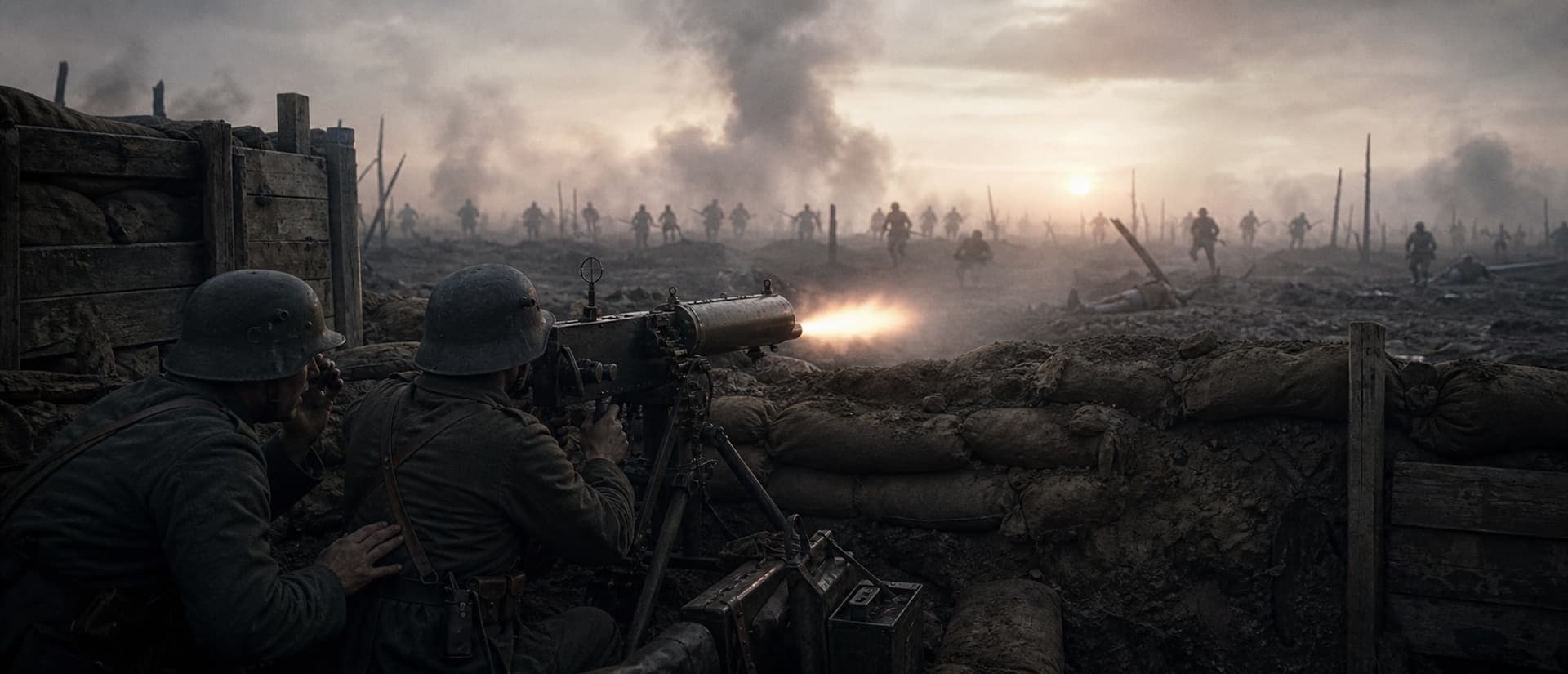
Then the machine guns found us. They had ridden out the whole barrage deep underground, and now they came up. The line didn't break — it folded, like a field going down to the scythe.
German MG08 crews emerged from deep, intact dugouts the bombardment never reached.
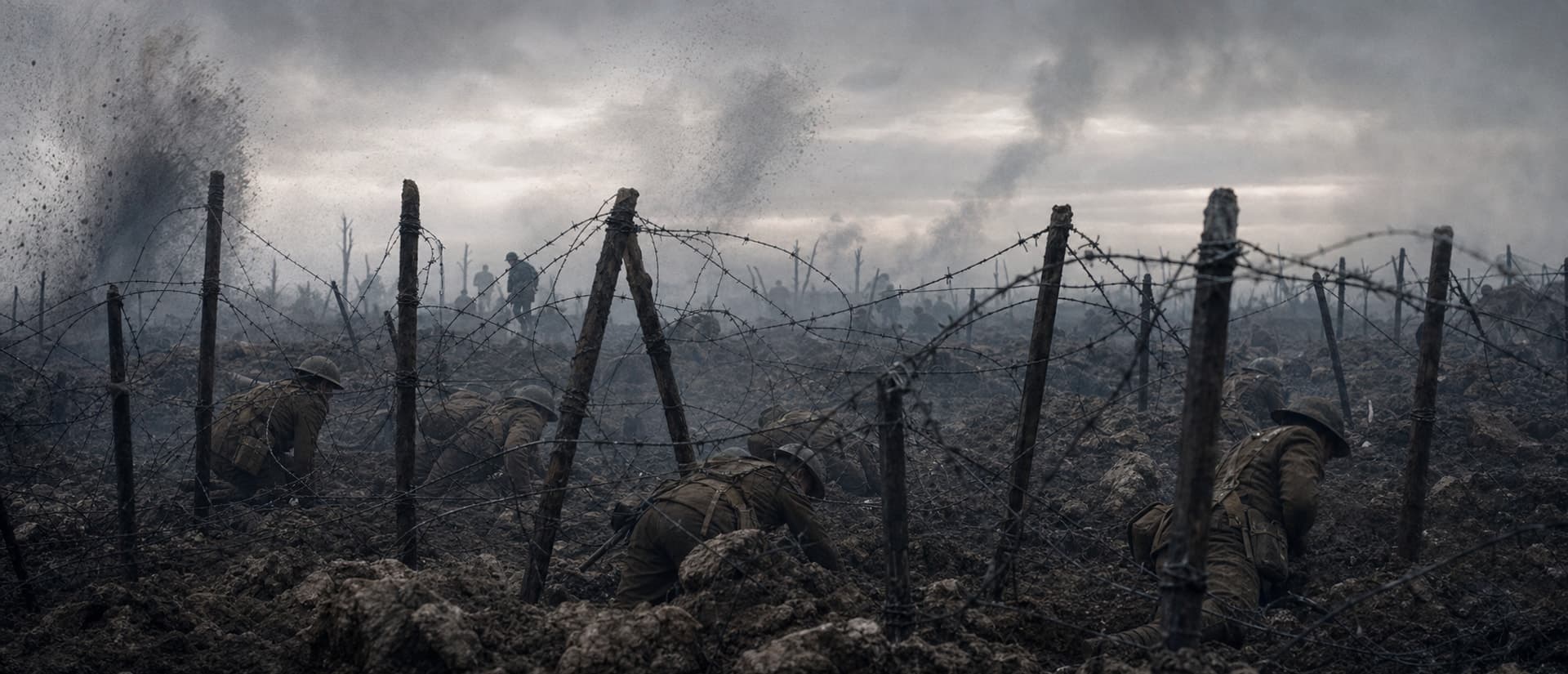
The wire wasn't cut. Whole platoons piled up against it, hunting for a gap that wasn't there, while the guns traversed back and forth. A week of shelling, and the wire still stood.
The bombardment had largely failed: the wire was uncut, the deep dugouts intact.
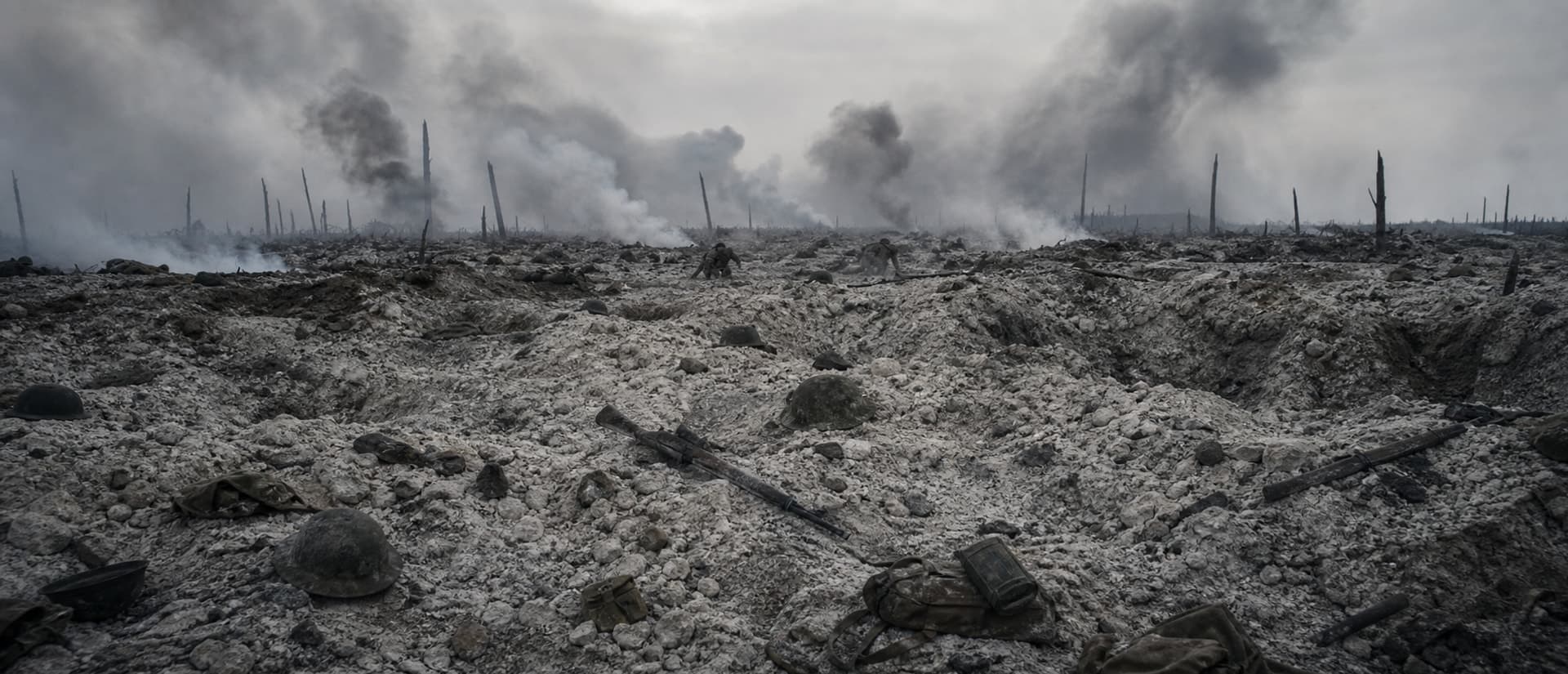
By eight o'clock half my company was somewhere out in that ground and we hadn't reached their trench. You learned fast not to look too long at any one shape in the grass.
Within the first hour, casualties were catastrophic across most of the front.
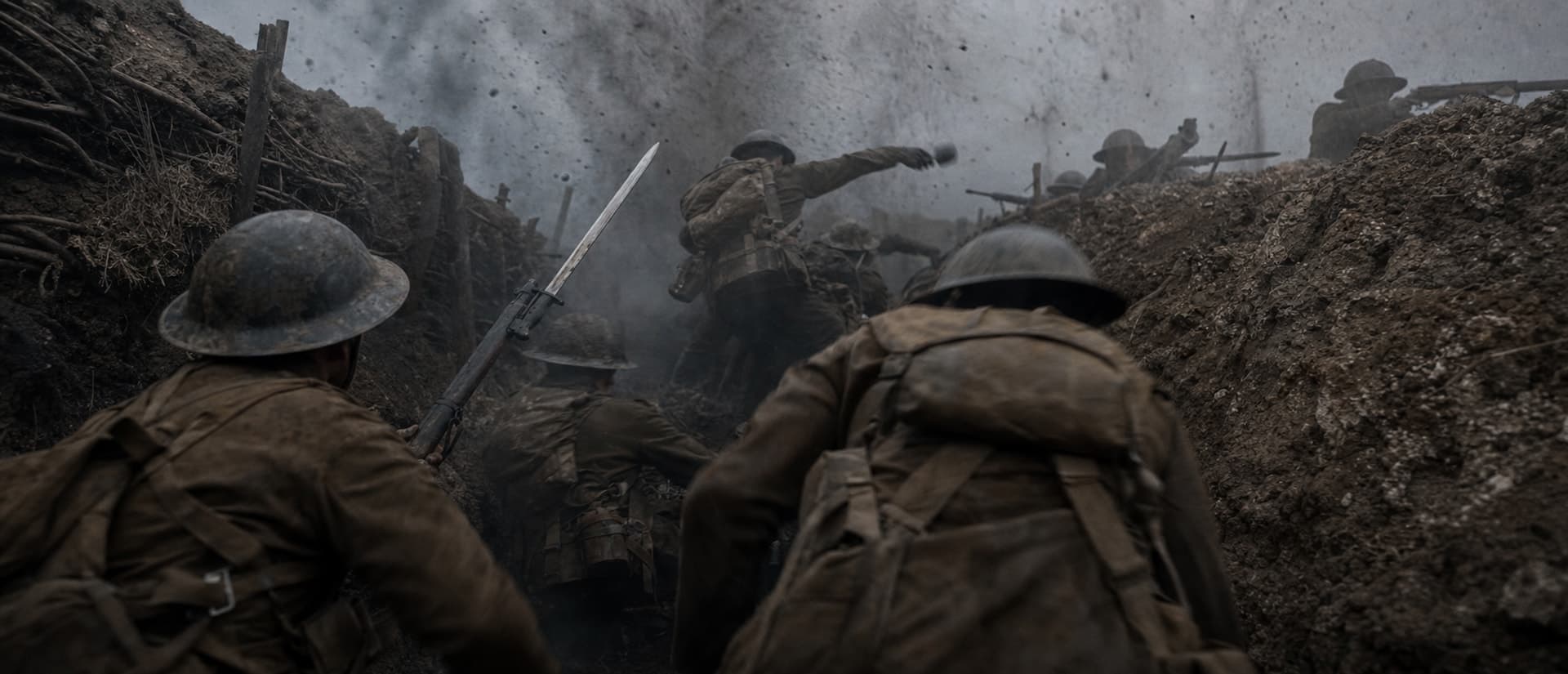
Here and there a handful of us got in — dropped into a German trench and fought down it with bayonet and bomb. But there were never enough, and no one came up behind.
A few sectors broke in; nearly all gains were tiny and impossible to hold.
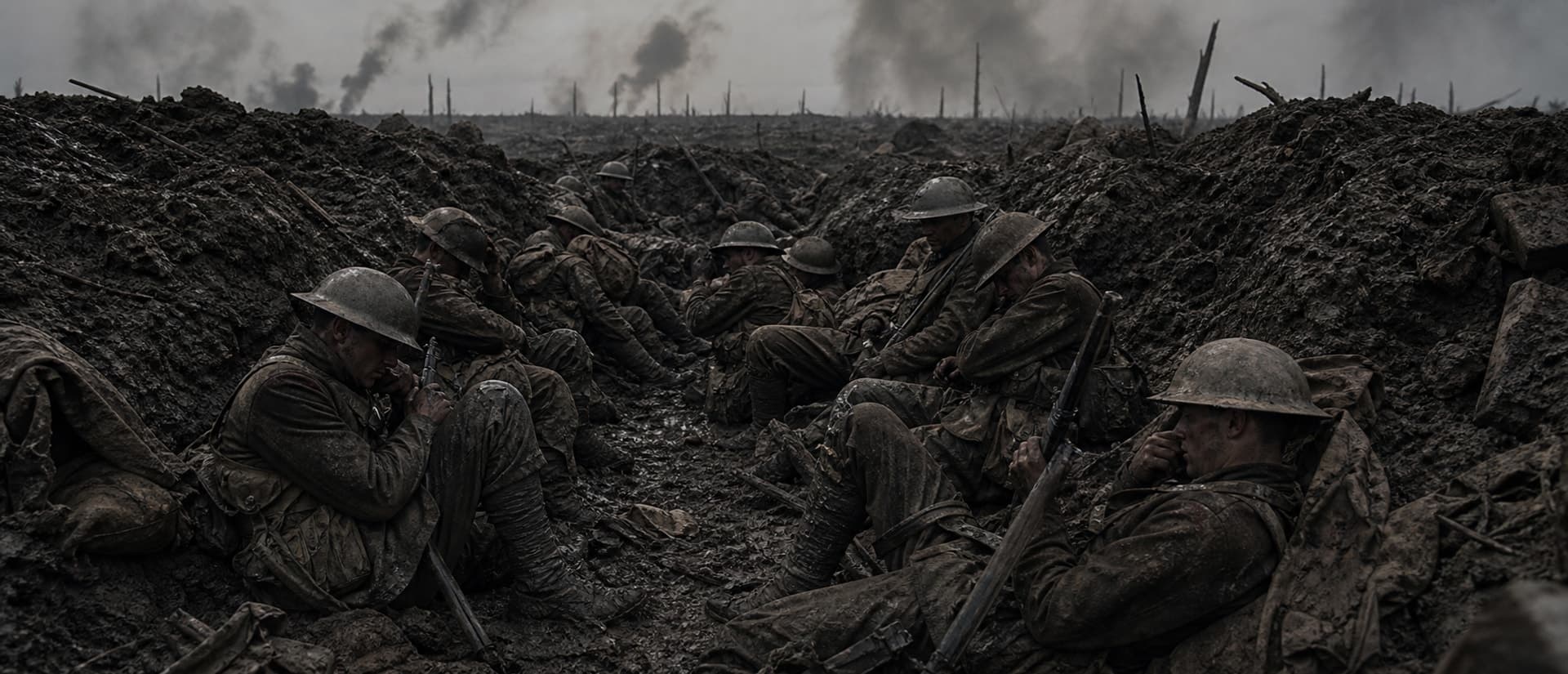
Those of us still out there pressed into shell holes and stayed put. You couldn't go forward and you couldn't go back, not in daylight. So you waited for the dark, and you listened.
Pinned in shell craters through the long summer day.
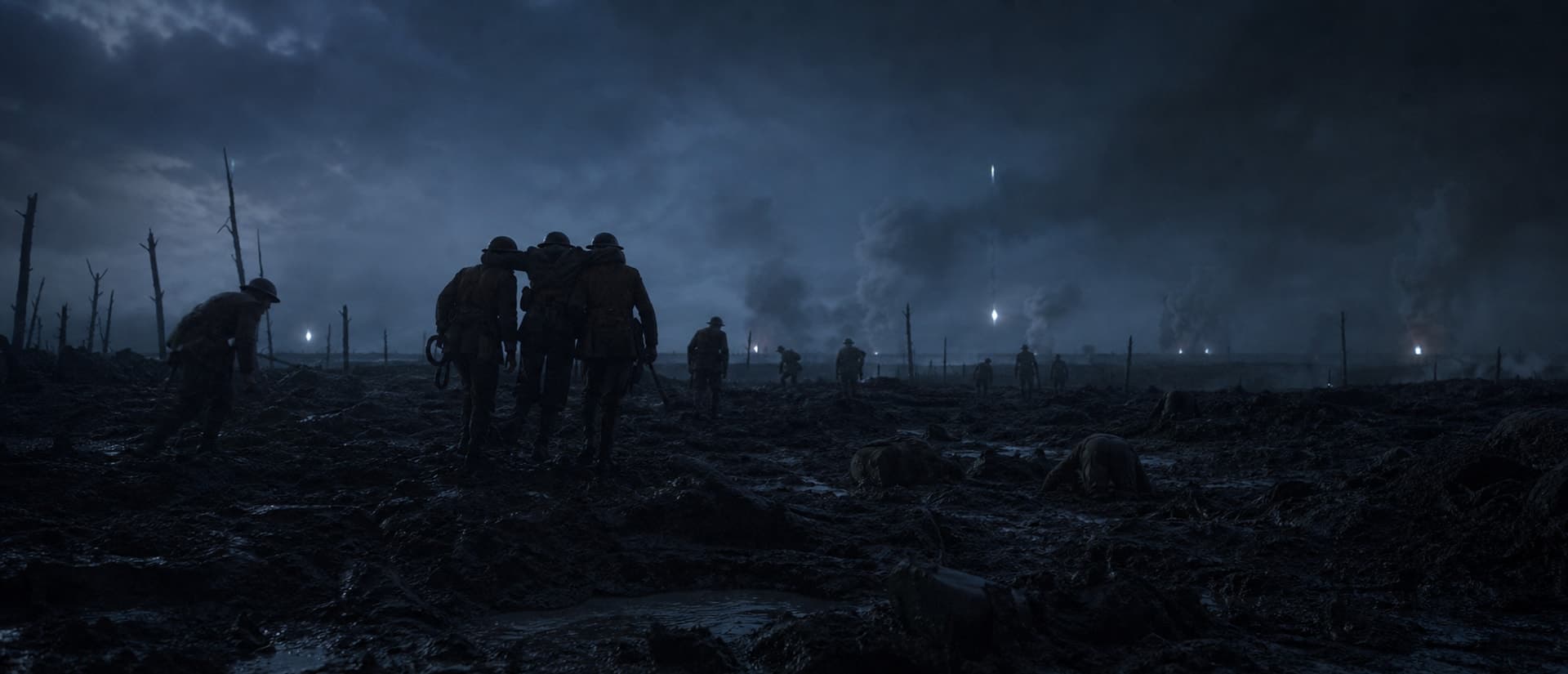
After dark we crawled back, dragging who we could between us, calling softly so our own sentries wouldn't fire. The same ground we'd crossed at a walk that morning took all night to recross on our bellies.
Wounded and survivors crawled back to British lines under cover of night.
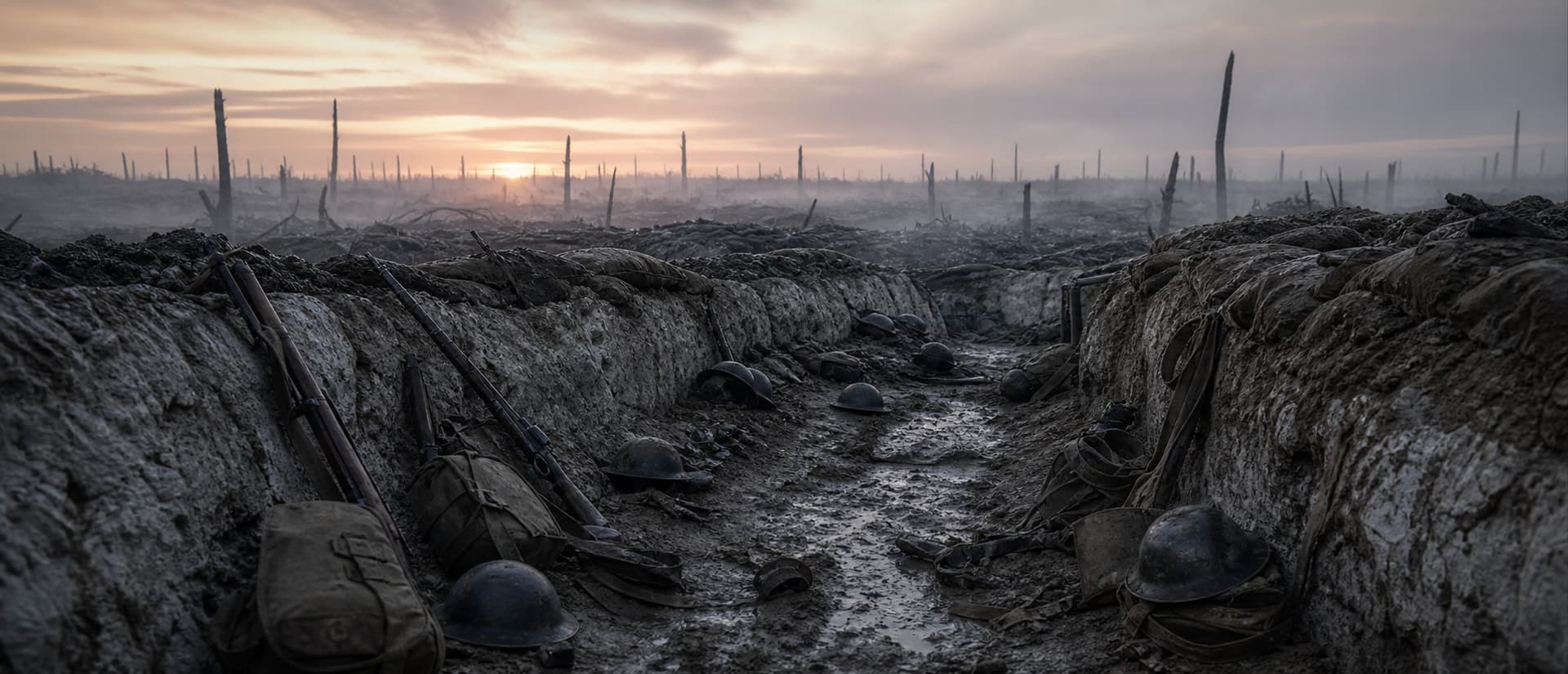
When they counted, it was nearly sixty thousand of us in a single day. Almost twenty thousand would not be counted again. For all of it, the line had barely moved.
~57,000 British casualties — 19,240 killed — in one day. The bloodiest day in the British Army's history. Gains: almost nothing.
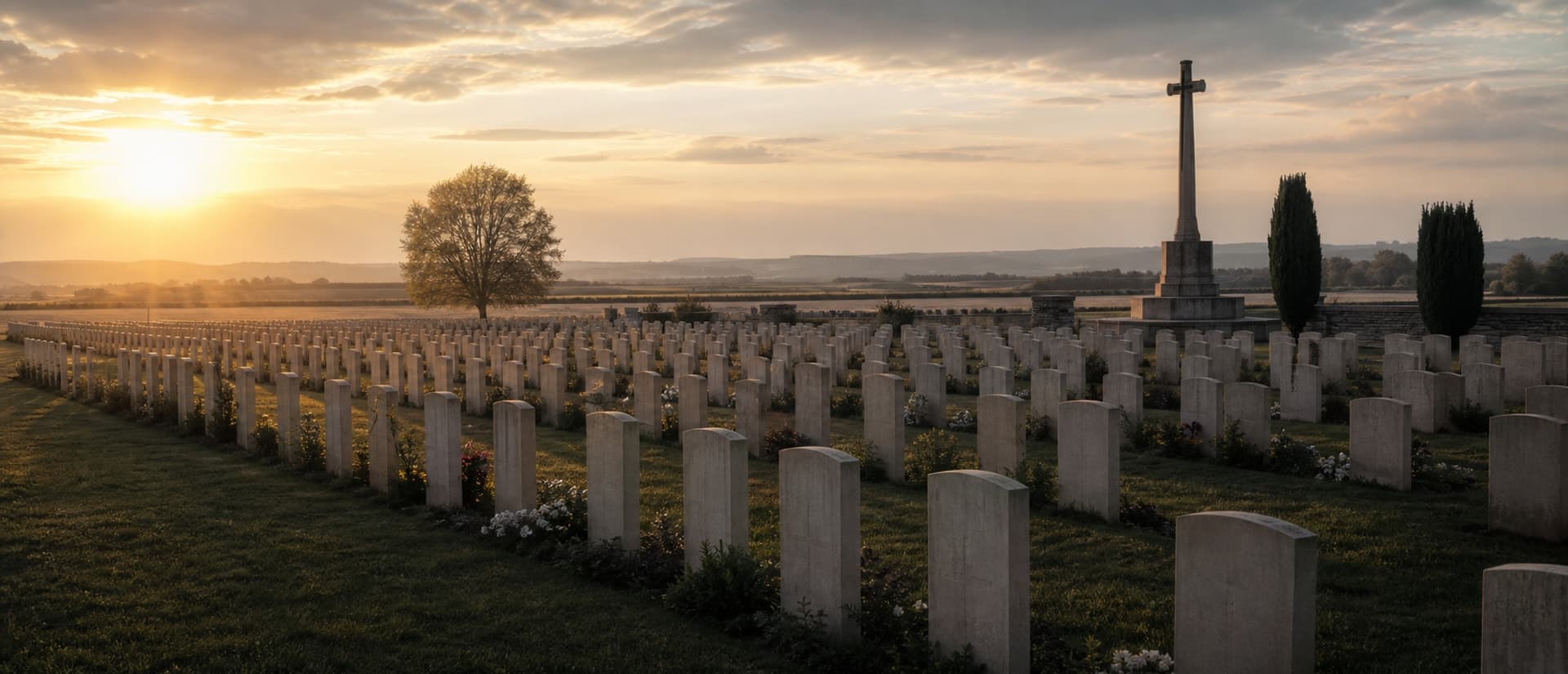
The Somme ground on for four more months and a few more miles, at a cost no one could really grasp. It became the byword for a kind of war that fed men into machines — and for a generation that did not come home.
The battle continued to mid-November 1916: >1 million casualties on all sides, ~6 miles gained. Age-anchor: 1 July 1916 was 110 years ago — within a single long lifetime of now.
Look closer
Objects, maps, and small visual clues that make the story easier to read.
What it changed
The first day shattered the illusion that artillery alone could open a path for infantry. The Somme dragged on until mid-November 1916 for roughly six miles of ground and well over a million casualties on all sides. It became the enduring symbol of WWI's industrial slaughter and reshaped how armies thought about firepower, tactics, and the limits of the frontal assault.
July 1, 1916
This happened 90 years before you were born — 110 years ago.
The last British veterans of the Somme are gone; Britain's final WWI combat veteran, Harry Patch, died in 2009. (EDITORIAL: verify exact 'last Somme survivor' before publish — do not claim Patch fought at the Somme; he fought at Passchendaele.)
What to remember
The essentials — the kind of thing that shows up on the exam.
- 1Date: 1 July 1916 — the first day of the Battle of the Somme.
- 2What happened: after a 7-day, ~1.5-million-shell bombardment failed to cut the German wire or destroy deep dugouts, British infantry advanced at a walk and were cut down by machine guns.
- 3The toll: ~57,000 British casualties (19,240 killed) in a single day — the bloodiest day in British military history.
- 4Why it matters: it became the symbol of industrial-age attrition warfare and the futility of frontal assaults against machine guns and artillery.
- 5The bigger picture: the battle continued to November 1916 — >1 million total casualties for ~6 miles of ground.
Keep going
Read another story
More immersive history stories are unlocked now, with anniversary dates used for promotion.
Sources
- The First Day on the Somme — Martin Middlebrook
- Somme — Lyn Macdonald
- Voices of the First World War (oral histories) — Imperial War Museum
As an Amazon Associate, OlderThan earns from qualifying purchases.