World War II · Eastern Front
The Battle of Kursk
5 July 1943 — the last great German offensive in the East
“I have been inside this T-34 for six weeks, listening to the earth tremble as we carved trench after trench into the black soil of the Kursk salient. When they came at dawn on the fifth of July, I already knew their route — we all did.”
This happened 63 years before you were born — 83 years ago.
Why it mattered
By the summer of 1943 the Eastern Front bulged westward in a massive Soviet salient around Kursk, flanked north and south by German-held ground. Hitler's Operation Citadel aimed to pinch it off: Field Marshal Model's 9th Army striking south from Orel, General Hoth's 4th Panzer Army striking north from Belgorod. The Soviets, warned in advance, spent the spring and early summer building a defense-in-depth of staggering density — belts of minefields, anti-tank ditches, 'pakfront' anti-tank gun clusters, and hundreds of kilometers of earthworks. A trap more than a defense.
Kursk was the Wehrmacht's last attempt to seize the strategic initiative in the East. Success might have destroyed an entire Soviet army group and restabilized the front after Stalingrad. Its failure confirmed that Germany could no longer dictate the tempo of the war — and handed the initiative to the Red Army for good.
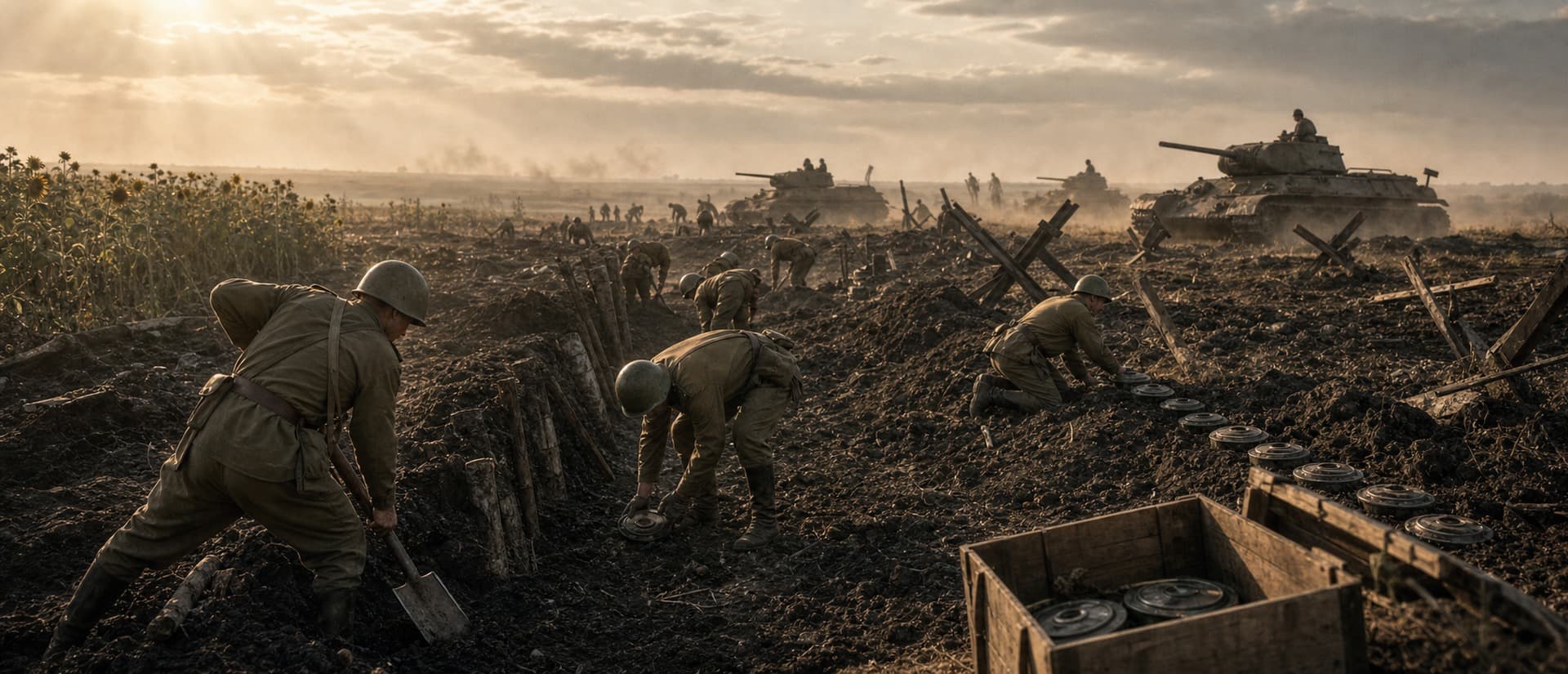
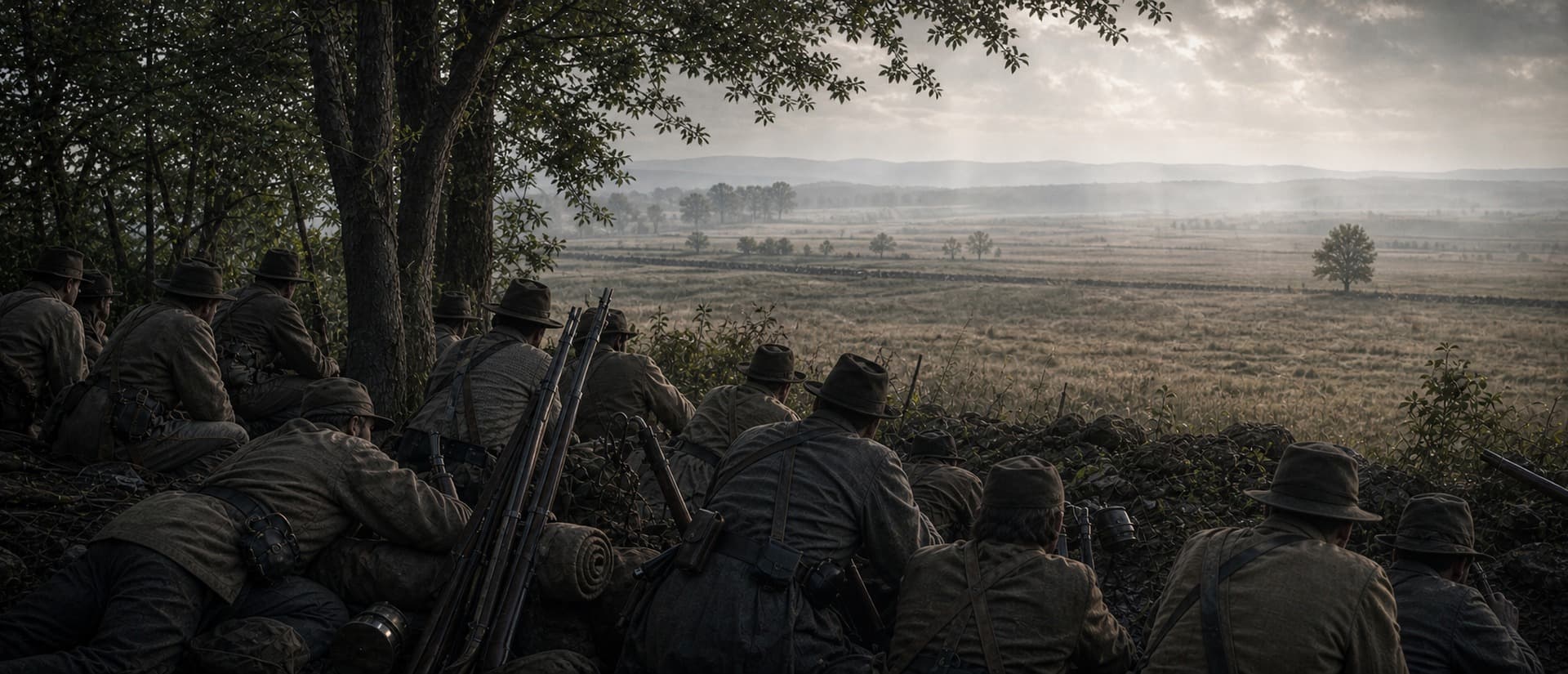
June 1943. We have dug for weeks — mines by the thousand, anti-tank ditches, wire. My hands are blistered before I ever touch the controls. My company waits, hull-down, behind the third belt: we are to let them bleed into us.
Forewarned, the Soviets laid 500,000+ mines and up to eight defensive belts (~300 km deep) across the Kursk salient before 5 July 1943.
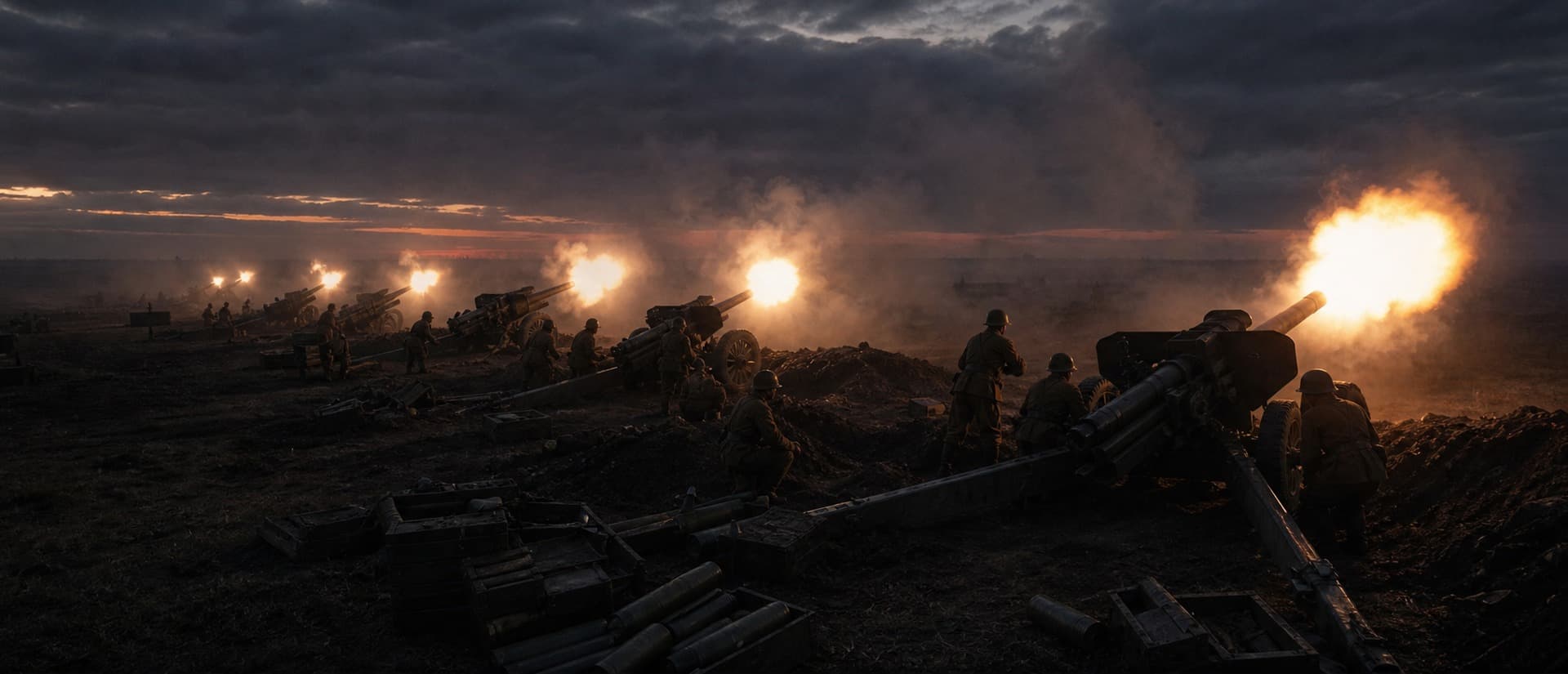
Before dawn on the fifth we hear it — a rumble like weather, low and growing. The Germans have begun. Then our guns answer first; we had their timing from intelligence. My driver grips the levers and says nothing.
Soviet forces launched a pre-emptive counter-bombardment in the early hours of 5 July 1943, disrupting the German assault.
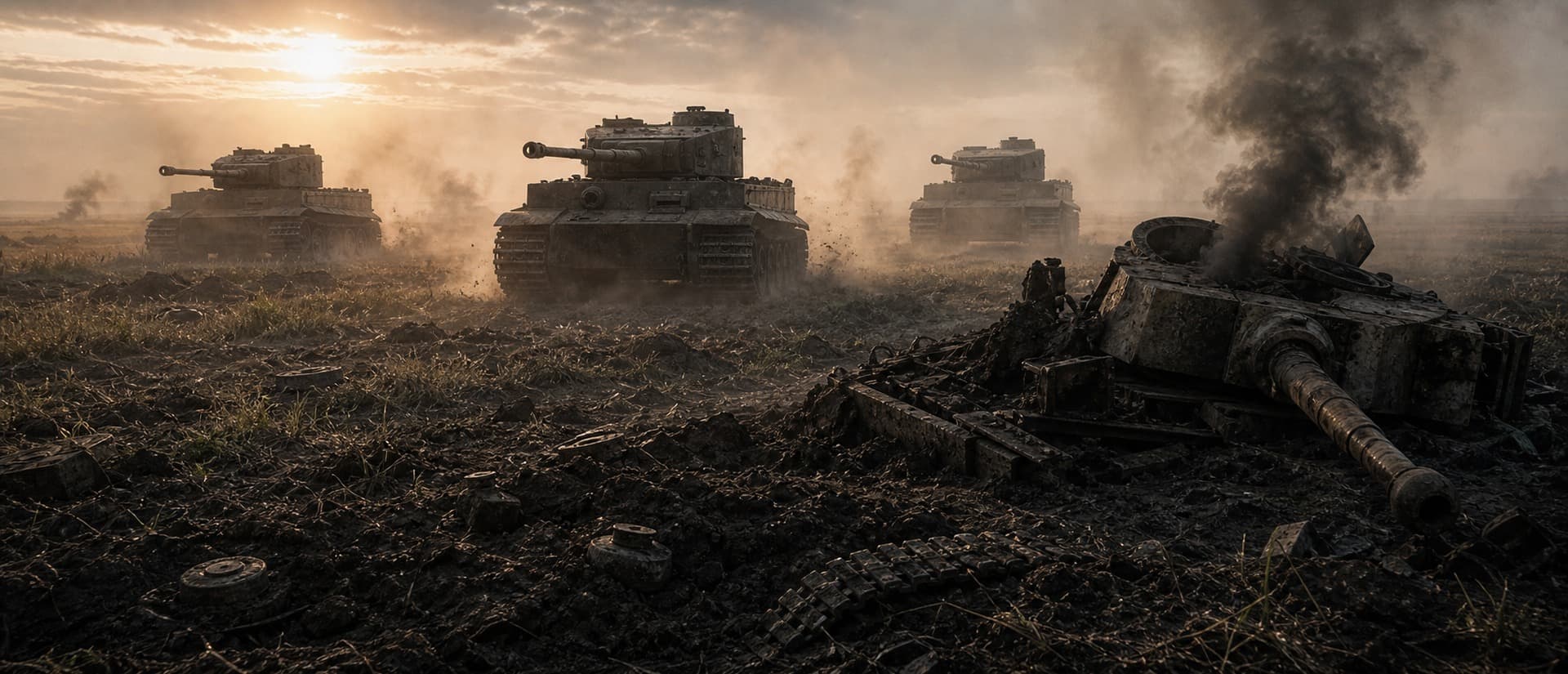
The German armor comes in the morning light — shapes I have never seen. Tigers, the long 88 that kills a T-34 before our 76 can answer. And the new Panthers. They advance slowly, probing. The minefields take the first.
The German Tiger I's 88mm gun could penetrate T-34 armor beyond 1,000 m; the new Panther suffered heavy mechanical failures in its combat debut at Kursk.
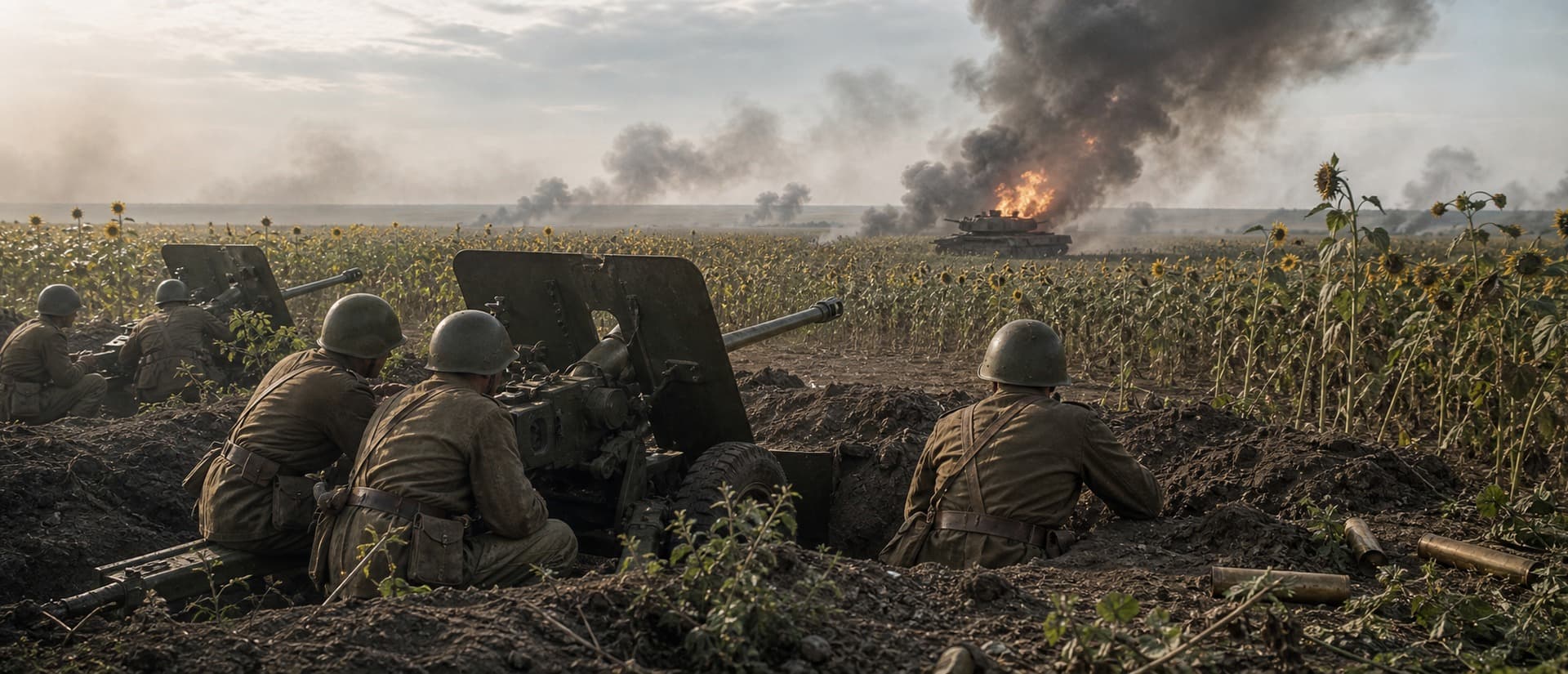
Our pakfronts hold — anti-tank guns dug in, camouflaged, interlocking fire, opening from three sides at once. We lose crews. The guns lose crews. But the Germans lose tanks. The salient is eating them, belt by belt.
Soviet 'pakfront' doctrine grouped anti-tank guns in mutually supporting clusters; with the minefields, it accounted for much of the German armored loss in the defensive phase.
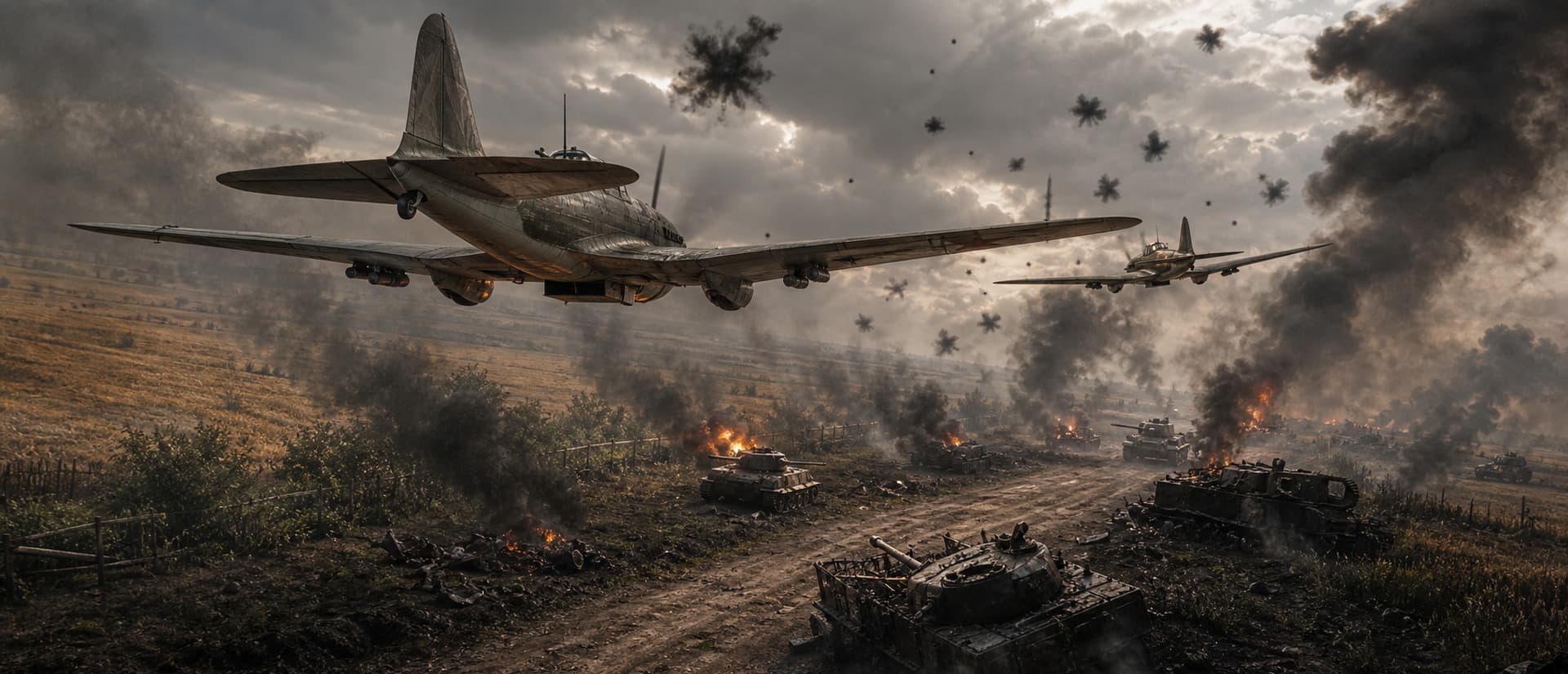
On the second day the Il-2 Sturmoviks come low overhead, a throb I feel in my chest inside the tank. They dive on the German columns — rockets, cannon. Watching one pull up through black smoke, I feel something I can only call pride.
The Il-2 Sturmovik — produced in greater numbers than any other WWII aircraft — was the primary Soviet ground-attack platform at Kursk.
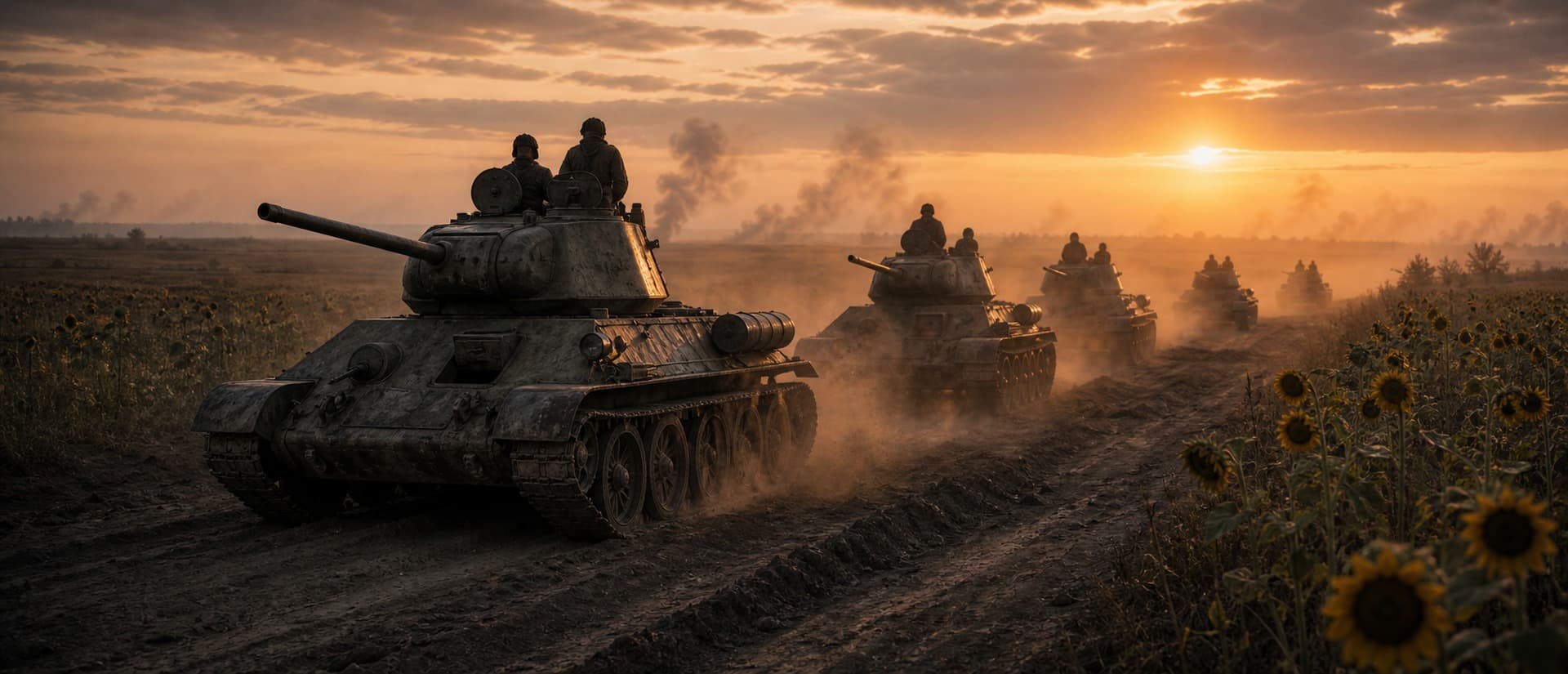
By the tenth the push in the south has gained ground; in the north, Model is stopped cold. My company is ordered forward — to the armored mass gathering at Prokhorovka. I check my rounds and try not to think about what waits there.
By 10–11 July 1943 Hoth's 4th Panzer Army had penetrated Soviet belts in the south but had not broken through.
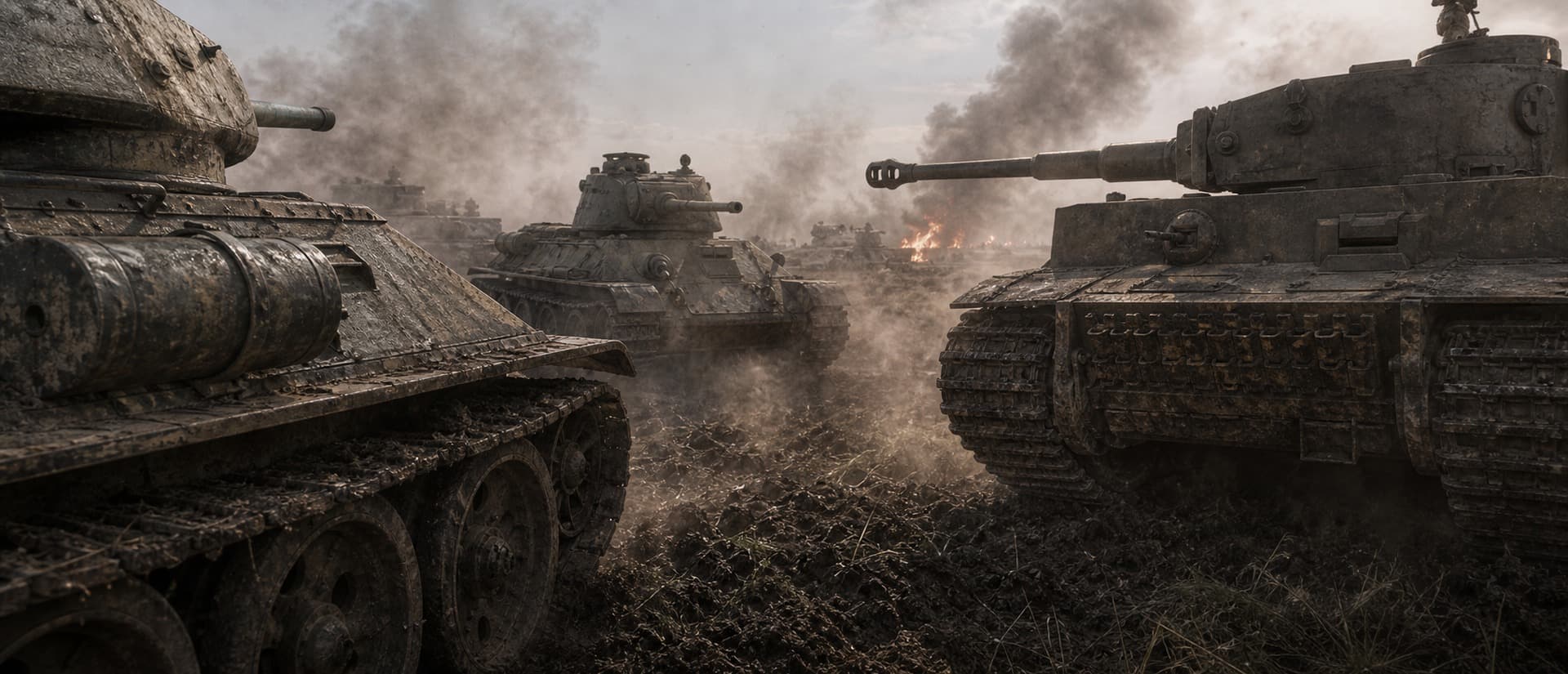
Prokhorovka. The twelfth of July. From inside the hull I see only the tank ahead, a field, smoke — then a Tiger, terrifyingly close. Our shells bounce off its frontal plate. We are in among them, and the line dissolves into chaos.
The Battle of Prokhorovka, 12 July 1943, was a massive armored clash. Modern scholarship finds Soviet 5th Guards Tank Army losses there were far heavier than the German SS corps's — the old story of a clean Soviet tactical victory is contested.
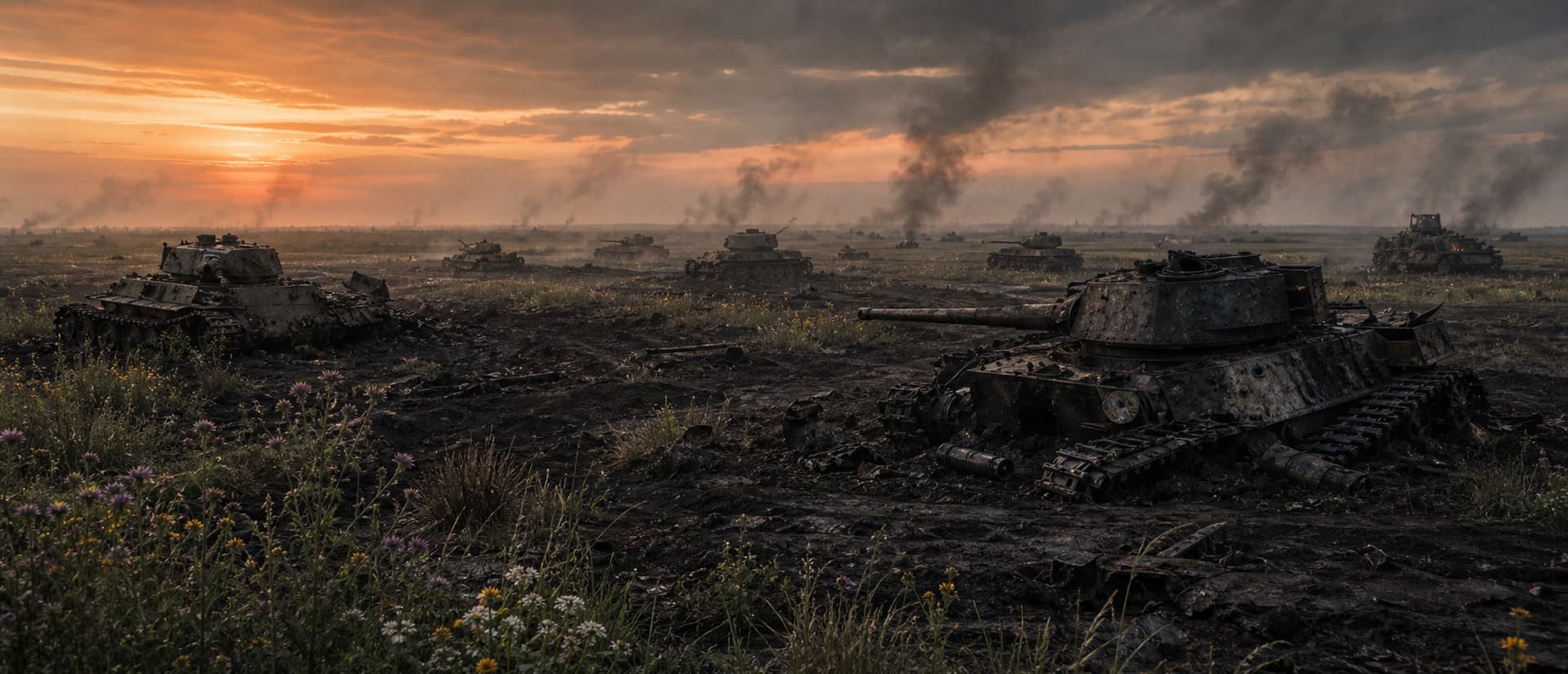
We survive Prokhorovka — but at terrible cost. I will not learn the full numbers for years, and even then the accounts will contradict. What I know on the night of the twelfth: they have not broken through, and we still stand.
Prokhorovka losses are still debated: estimates of Soviet armored losses on 12 July range from ~235 to 400+ tanks, against far lower German losses — a Soviet strategic check rather than a clean tactical win.
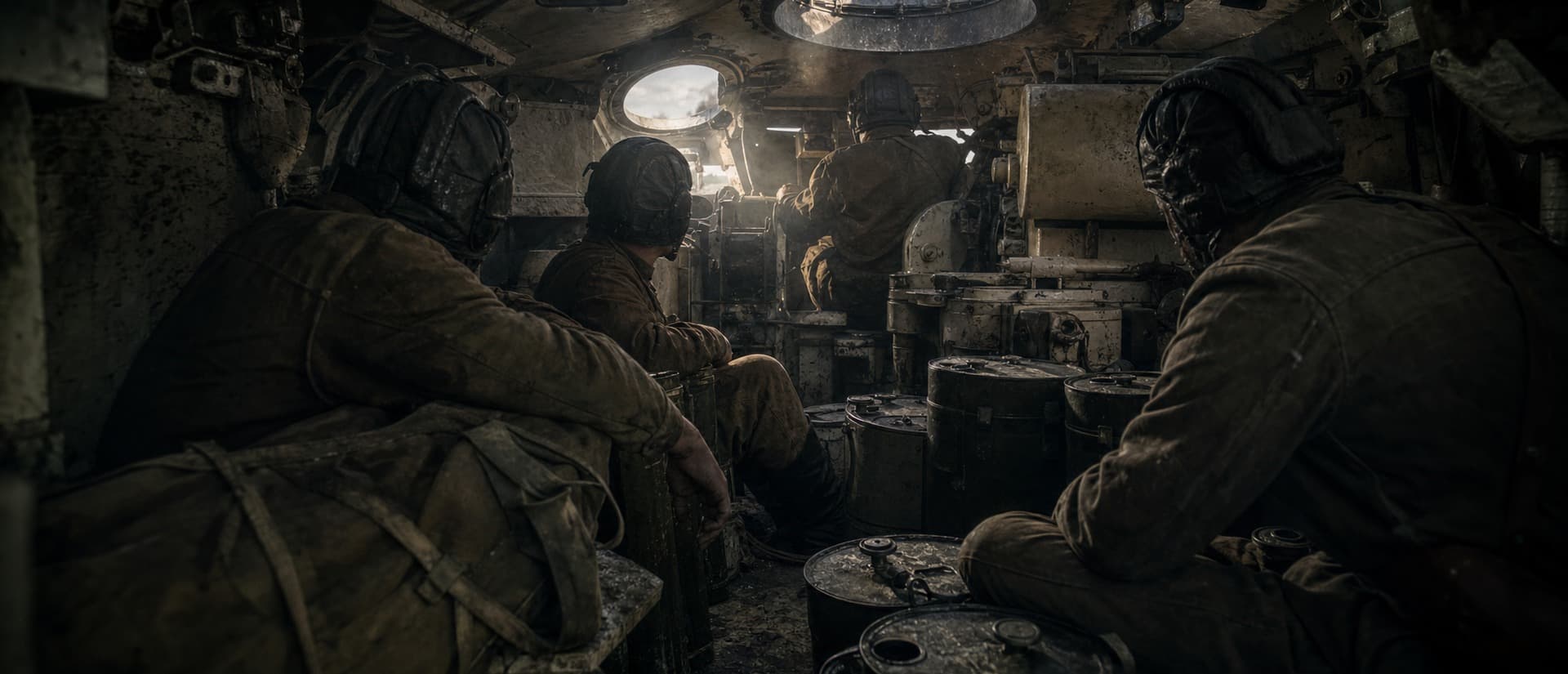
On the thirteenth, word comes down: the Germans are halting Citadel. The Allies have landed in Sicily; Hitler needs his reserves. For a moment no one speaks. Then my gunner says, quietly, that he would like a cigarette.
Hitler ordered Operation Citadel suspended around 13 July 1943; the Allied invasion of Sicily (10 July) and mounting losses drove the decision.
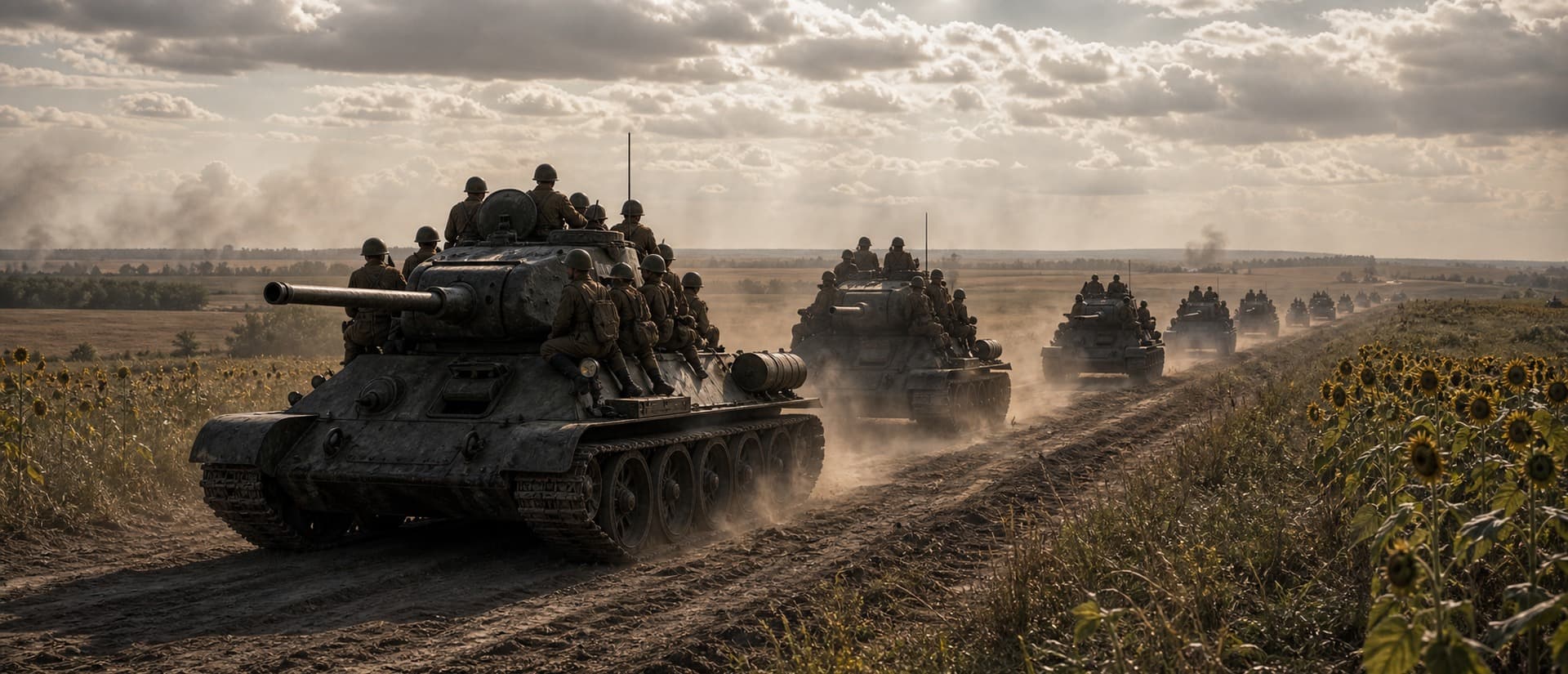
Now it is our turn. Kutuzov, Rumyantsev — we push back. After weeks of absorbing their blow, the Red Army rolls forward, and the Germans cannot stop us. For the first time since 1941, we fight not to survive — but to win.
The Soviet counteroffensives — Kutuzov (from 12 July, north) and Rumyantsev (from 3 August, south) — retook Orel and Kharkov by late August 1943.
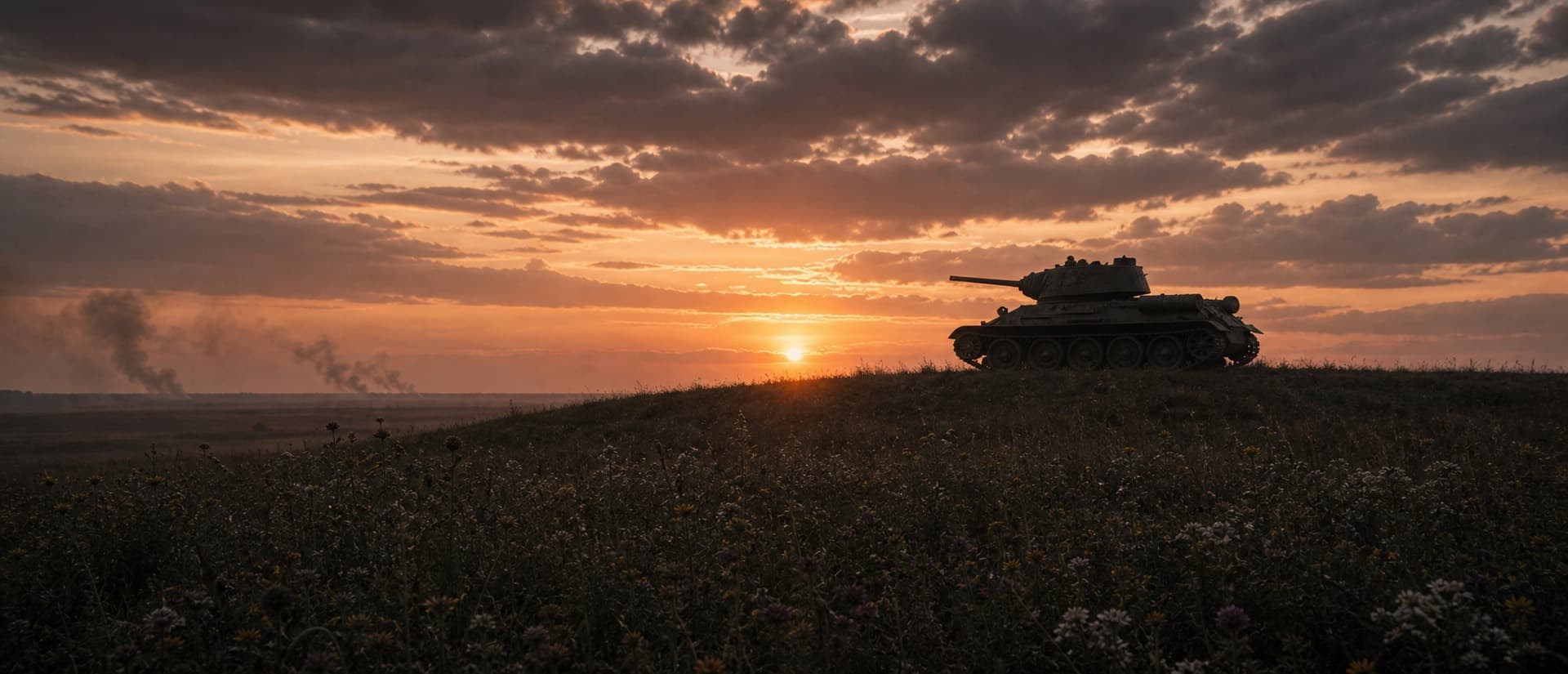
Kursk was the last time Germany tried to seize the initiative in the East. From that summer on, the Wehrmacht only retreated — slowly, bitterly, at terrible cost to us, but always back. The salient held. The jaw did not close.
After Kursk, Germany never again mounted a major strategic offensive in the East; the Red Army advanced steadily westward until VE Day, 8 May 1945. The battle began 83 years ago.
Look closer
Objects, maps, and small visual clues that make the story easier to read.
What it changed
With Operation Citadel suspended around 13 July 1943, the Wehrmacht lost its last realistic chance to stabilize the Eastern Front by offensive action. The Red Army launched immediate counteroffensives — Kutuzov retook Orel, Rumyantsev retook Kharkov — showing an operational capacity it had not possessed a year earlier. From that summer on, Germany fought a long, grinding retreat across the Soviet Union, Ukraine, and Poland, into Germany itself, until unconditional surrender in May 1945. Kursk marked the inflection point after which the outcome of the war in Europe — though not its terrible remaining cost — was no longer in serious doubt.
July 5, 1943
This happened 63 years before you were born — 83 years ago.
83 years ago — within a single long lifetime, but only just; virtually all of its combat veterans are now gone.
What to remember
The essentials — the kind of thing that shows up on the exam.
- 1Operation Citadel, the German offensive to pinch off the Kursk salient, was launched 5 July 1943 and suspended around 13 July — barely a week of offensive action.
- 2Forewarned, the Soviets built a defense-in-depth of extraordinary density — 500,000+ mines, multiple anti-tank belts, and pakfront gun clusters — that ground down the German armor before it could break through.
- 3The battle involved hundreds of thousands of troops and thousands of tanks across the campaign, among the largest land engagements in history — though the specific 'largest tank battle' claim about Prokhorovka is debated.
- 4Kursk was the last major strategic offensive Germany launched in the East; afterward the Wehrmacht was permanently on the defensive and the Red Army held the initiative for the rest of the war.
- 5The follow-on Soviet counteroffensives (Kutuzov and Rumyantsev) showed the Red Army could not only absorb German blows but exploit the resulting weakness at scale — the capability that carried it to Berlin.
Keep going
Read another story
More immersive history stories are unlocked now, with anniversary dates used for promotion.
Sources
- The Battle of Kursk — David Glantz & Jonathan House
- Kursk 1943: The Greatest Battle of the Second World War — Roman Töppel
- Demolishing the Myth: The Tank Battle at Prokhorovka, Kursk, July 1943 — Valeriy Zamulin
- Kursk: The Air Battle, July 1943 — Christer Bergström
As an Amazon Associate, OlderThan earns from qualifying purchases.