Industrial / environmental disaster · Gulf of Mexico
Deepwater Horizon
20 April 2010 — the blowout that became the worst marine oil spill in history
“I was finishing a routine shift on the drill floor when the mud started flowing the wrong way. By the time any of us understood what that meant, the sky behind me was already burning.”
You would have been 4 years old when this happened.
Why it mattered
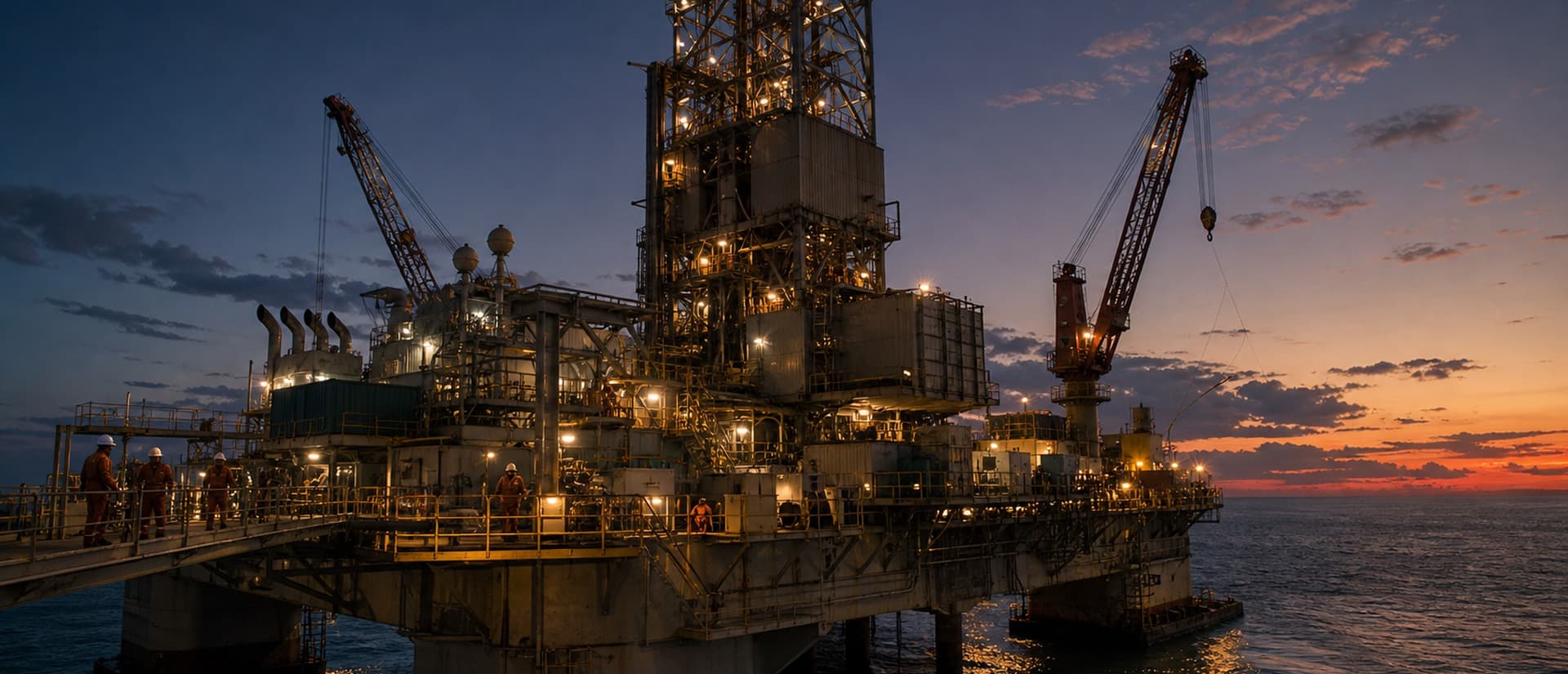
The Deepwater Horizon was a massive semi-submersible drilling rig — the size of a city block — floating above the Macondo exploratory well about 41 miles off the Louisiana coast, in roughly 5,000 feet of water. On the night of 20 April 2010, 126 people were aboard, running what felt like the tail end of a long job. The well had taken months longer than planned and was nearly complete.
Eleven of those 126 people did not survive the night. And beneath the wreckage, a well 18,000 feet deep would bleed into the Gulf for 87 days, becoming the largest marine oil spill in recorded history.
It was a Tuesday evening and the Gulf was calm. I'd been on the Deepwater Horizon long enough that the constant roar of the rig felt like silence. We were close to done — men were already talking about going home.
20 April 2010 — 126 people aboard the Deepwater Horizon, ~41 miles off the Louisiana coast.
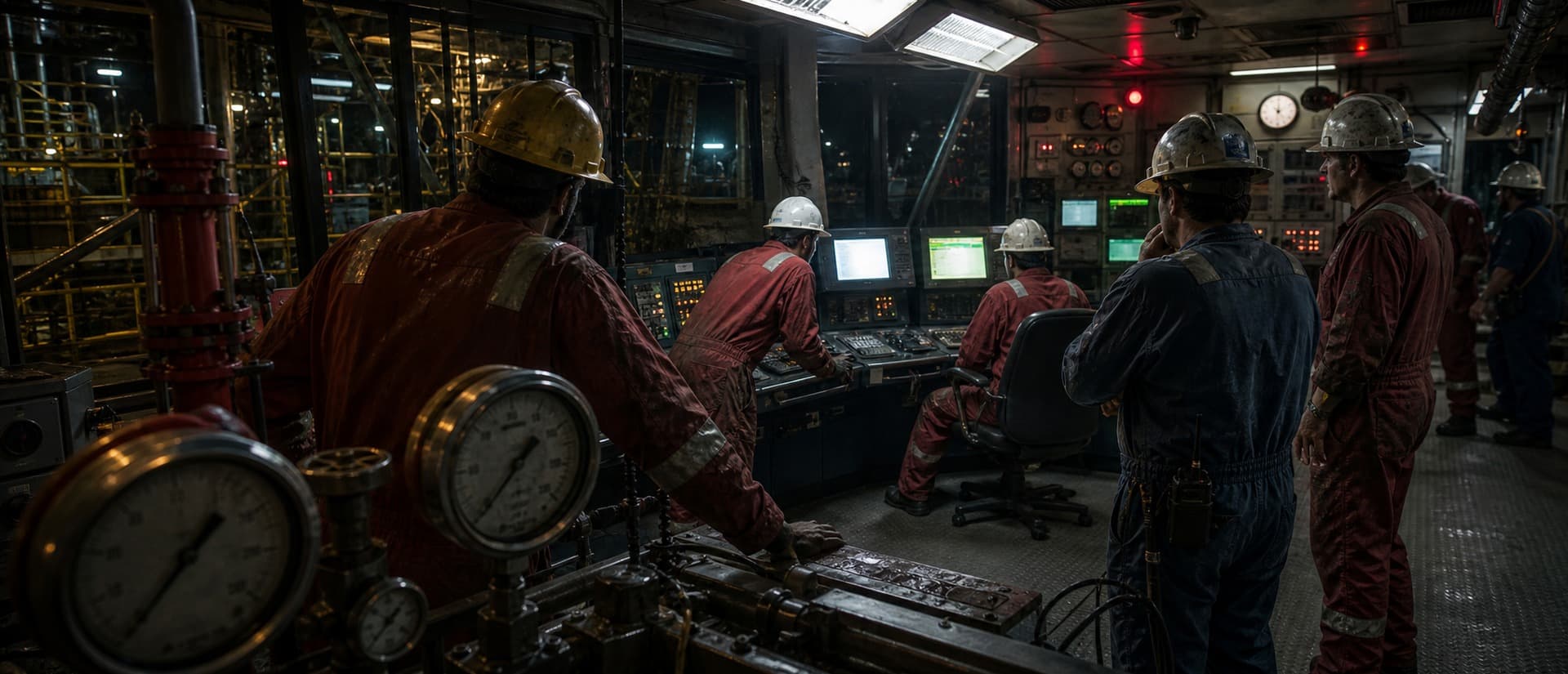
Earlier that evening we ran a negative pressure test — checking whether the cement plug sealing the well was holding. There was disagreement about the readings. Warning signs were explained away.
~5:00–8:00 p.m.: A negative pressure test was conducted; investigations later found its results were misinterpreted.
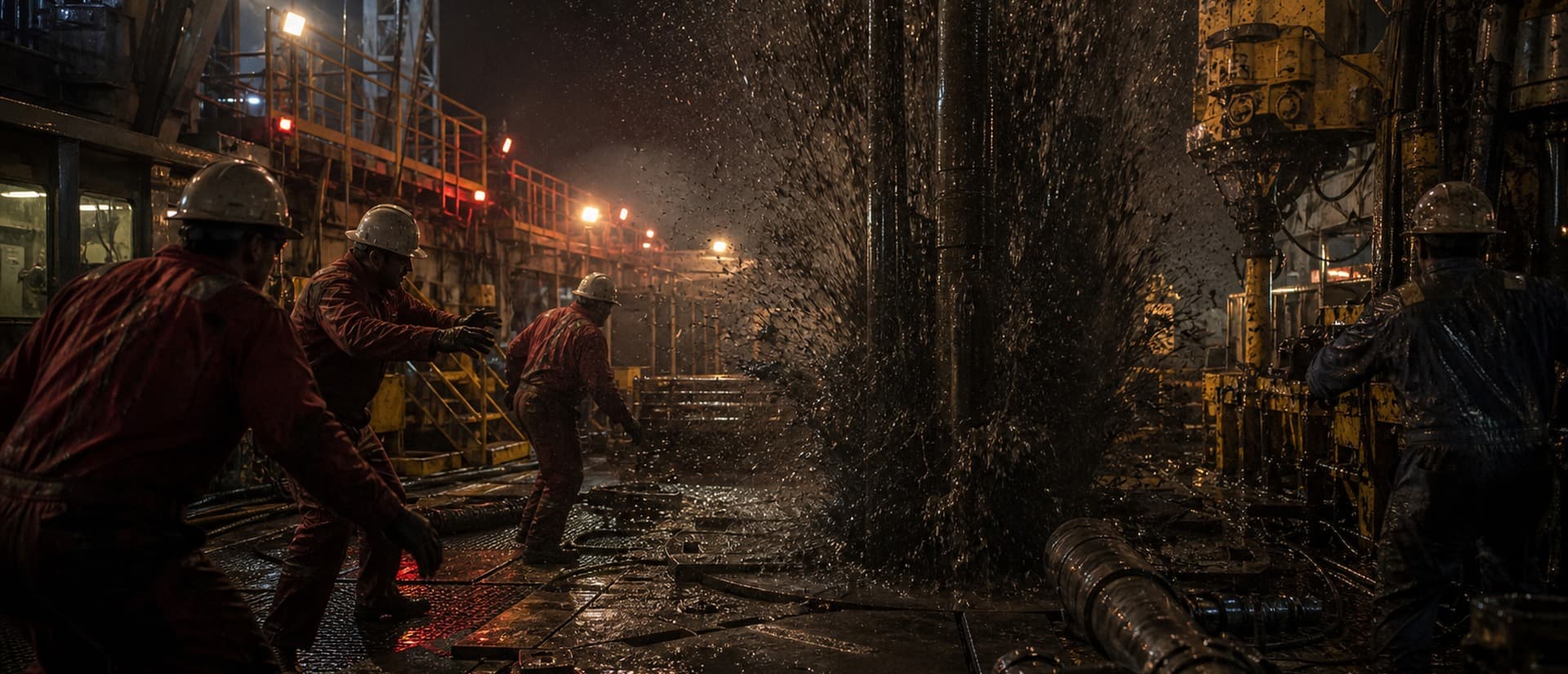
Around 9:40 I heard something change. Mud — the heavy fluid we pump down to control pressure — was coming back up when it shouldn't. On a rig, that's a kick: gas had found a path upward. We had minutes.
~9:40 p.m.: A 'kick' — uncontrolled influx of high-pressure methane gas surges up the wellbore.
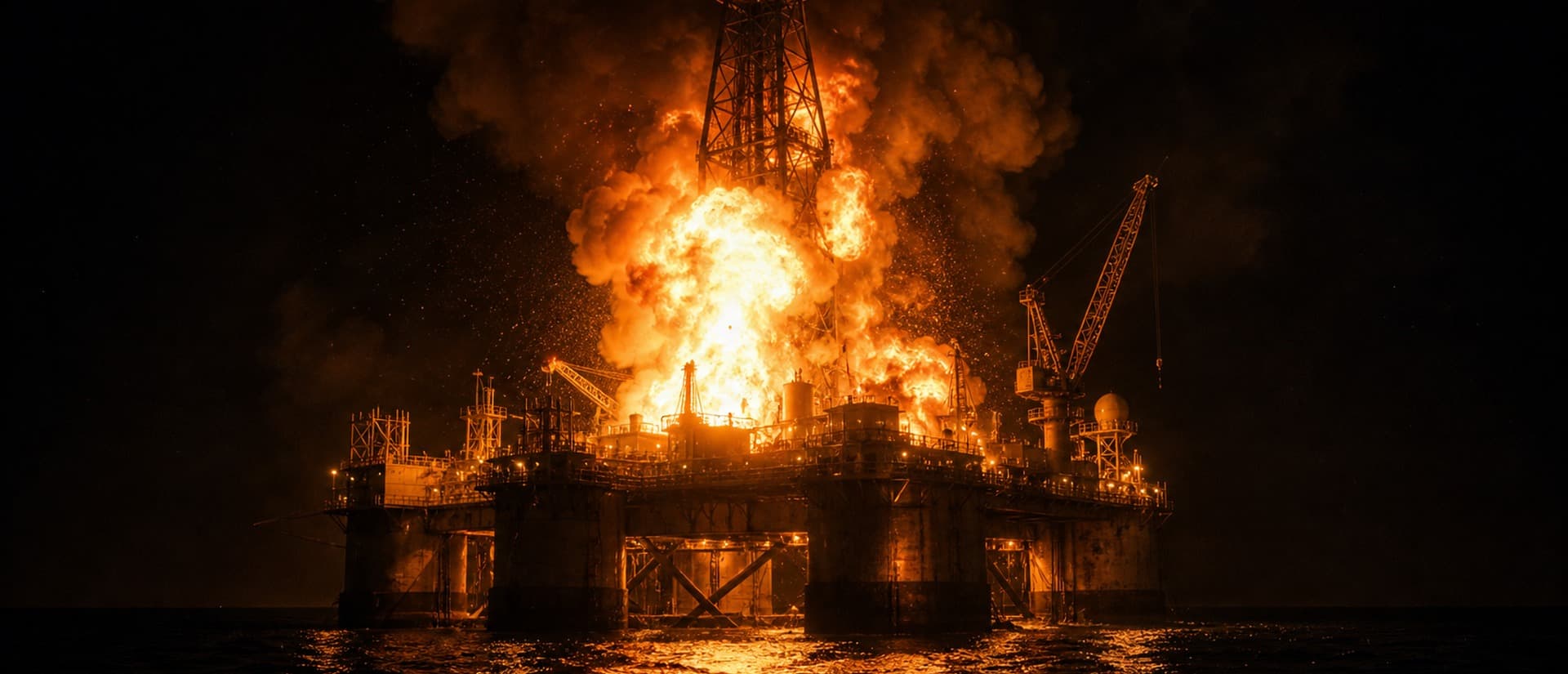
Gas hit the surface and the air changed — a heavy hydrocarbon reek that shouldn't exist topside. Alarms sounding, engines overspeeding. A voice on the radio, almost calm: 'shut it in.' Then the first explosion came.
~9:49 p.m.: Methane gas ignites — the first explosion tears through the rig, 20 April 2010.
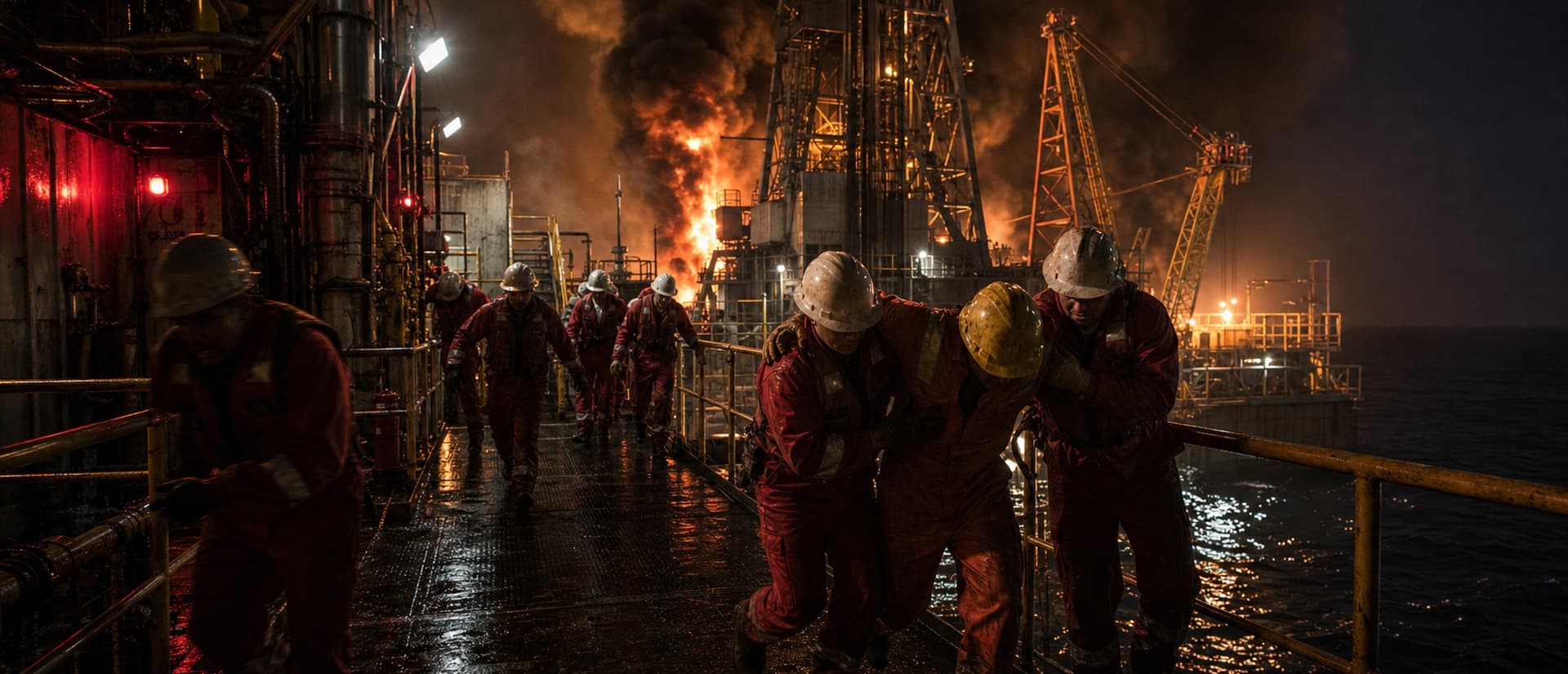
Eleven men died that night — some on the drill floor and in the engine rooms when the blasts hit. I didn't know that yet. I only knew to move, to reach my muster station, to account for my crew.
11 workers killed; 17 injured; 126 people were aboard the Deepwater Horizon that night.
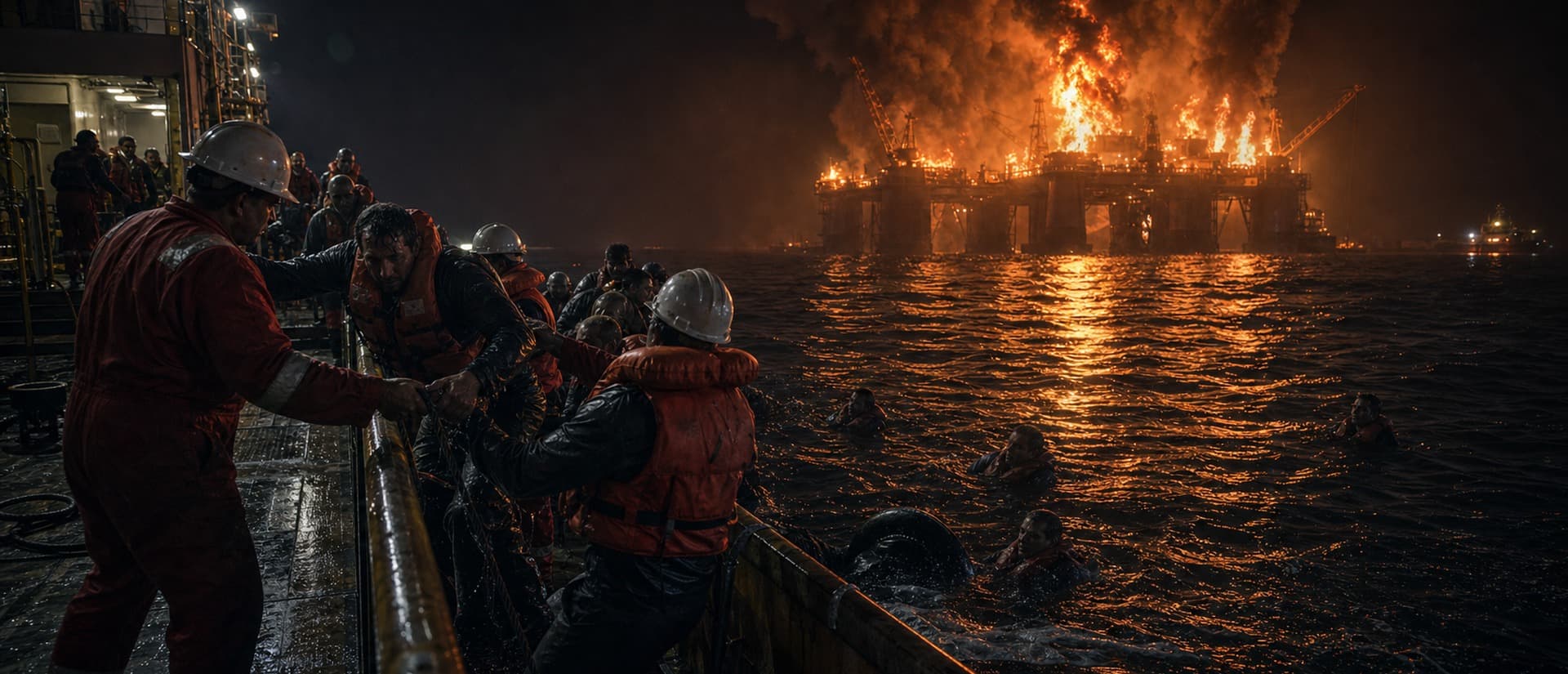
We went over the side in lifeboats; the supply vessel Damon B. Bankston pulled survivors from the water. Watching the rig burn against the black sky, I counted the people around me — and tried not to count who wasn't there.
Survivors evacuated by lifeboat; the supply vessel Damon B. Bankston rescued crew from the water.
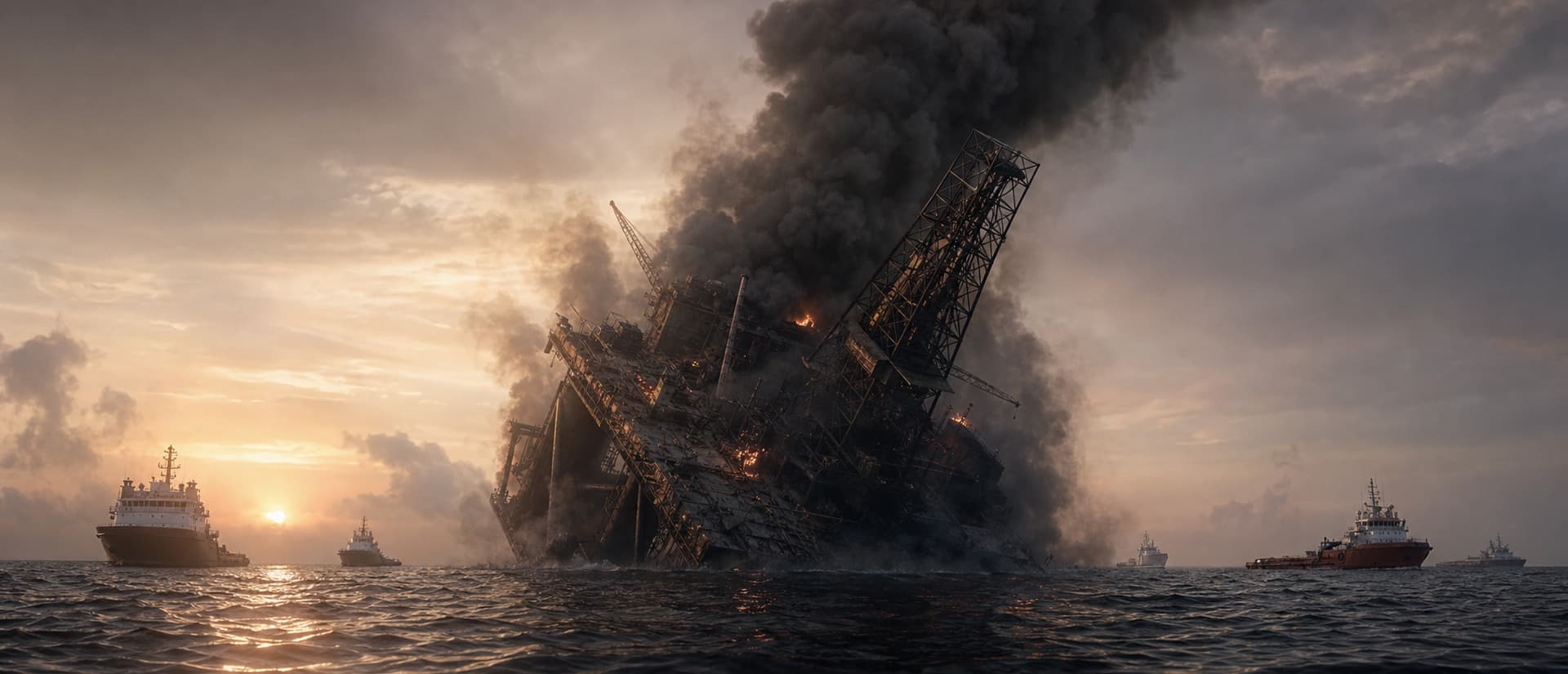
The Deepwater Horizon burned for thirty-six hours. On 22 April — Earth Day — she sank. The riser pipe broke open, and the Macondo well began flowing freely into the Gulf, a mile down, with nothing to stop it.
22 April 2010: The Deepwater Horizon sinks; the Macondo well begins gushing uncontrolled.
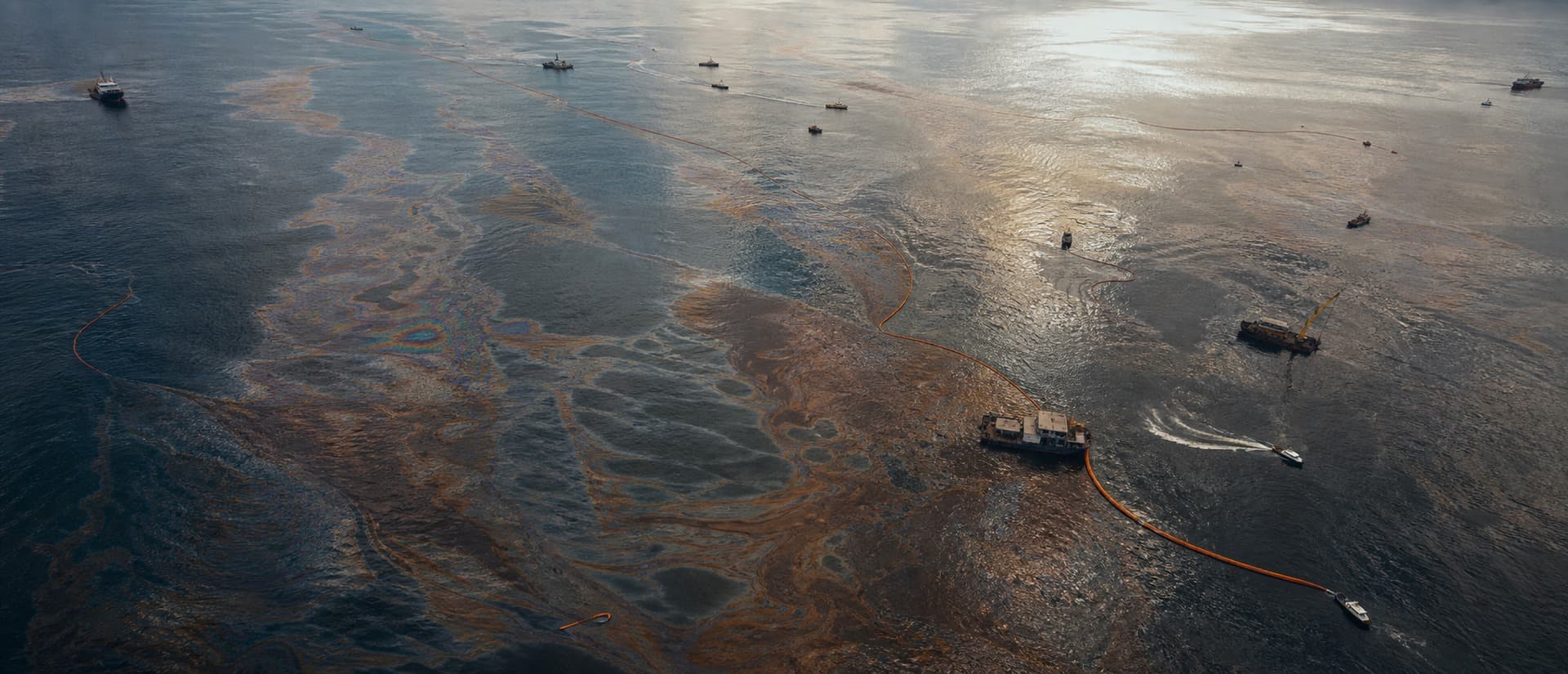
Oil gushed from the broken wellhead a mile down. Containment domes, top kills, junk shots — none worked at that depth. On the surface, miles of boom and skimmers chased the slick; dispersants were pumped straight into the well.
Weeks 1–12: containment attempts fail; dispersants are deployed; the slick spreads across the Gulf.
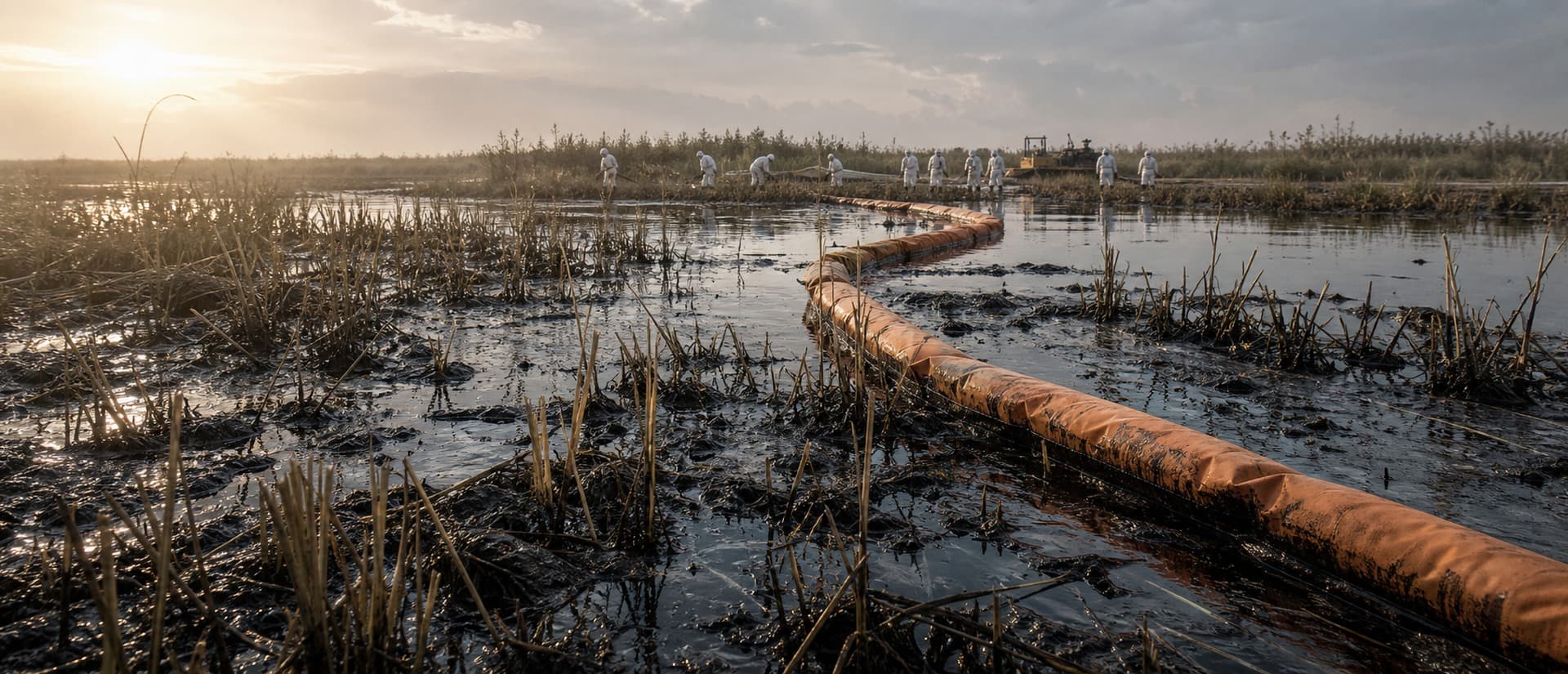
The oil reached the coast. Marshes that had known only grass and egrets turned black at the waterline. Pelicans came up coated in crude, the fisheries closed — and families who had fished here for generations could only wait.
Oil reaches Gulf Coast marshes, beaches, and wildlife; fisheries close across Louisiana, Mississippi, Alabama, and Florida.
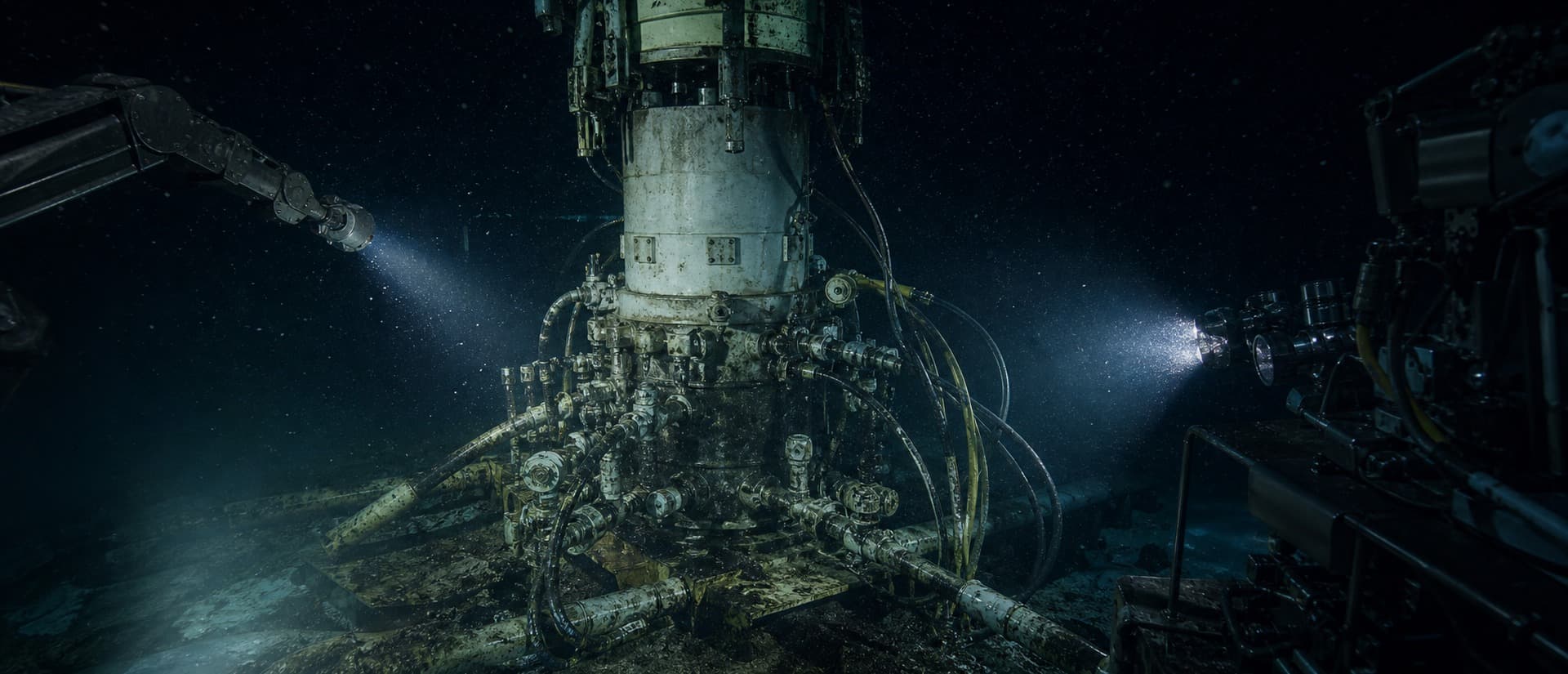
The well was capped on 15 July — 87 days after the blowout — and a relief well sealed it for good in September. By then some 4.9 million barrels had entered the Gulf: the largest marine oil spill in history.
15 July 2010: well capped after ~87 days; ~4.9 million barrels spilled — the largest marine oil spill in history.
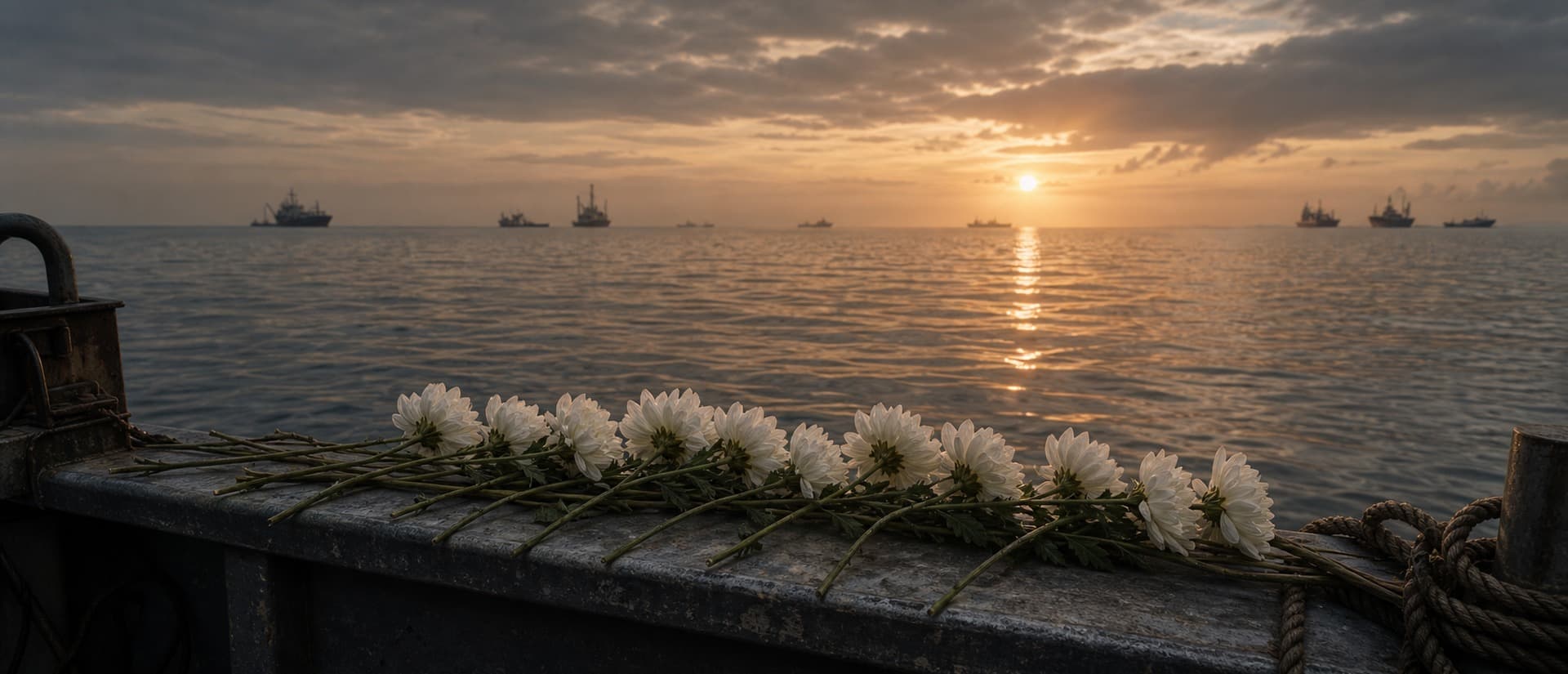
I think about those eleven men. They were doing the same job I was. The failures ran back months — the well, the cement, the blowout preventer — not just that night. The men who never reached the lifeboats never came home.
11 workers killed: Jason Anderson, Aaron Burkeen, Donald Clark, Stephen Curtis, Gordon Jones, Roy Kemp, Karl Kleppinger Jr., Keith Manuel, Dewey Revette, Shane Roshto, Adam Weise.
Look closer
Objects, maps, and small visual clues that make the story easier to read.
What it changed
The 87-day spill caused enormous economic and environmental damage: Gulf fisheries closed for months, coastal tourism collapsed, and long-term harm to marshes, deepwater coral, and marine-mammal populations was documented for over a decade. The National Commission's January 2011 report concluded the disaster stemmed from systemic risk-management failures by BP, Transocean, and Halliburton and from inadequate federal oversight — echoed by the CSB. In response, the U.S. dissolved the Minerals Management Service and restructured offshore oversight, tightened well-integrity and blowout-preventer testing rules, and required independent safety regimes. BP ultimately paid more than $65 billion in cleanup, settlements, and fines. Deepwater Horizon reshaped the global conversation about deepwater-drilling risk and responsibility.
April 20, 2010
You would have been 4 years old when this happened.
This happened about 16 years ago. If you were born in 2005, you were five. Many of today's adults watched the live coverage — the underwater 'spillcam' ran for weeks.
What to remember
The essentials — the kind of thing that shows up on the exam.
- 1On 20 April 2010, a blowout on the Deepwater Horizon drilling rig in the Gulf of Mexico triggered explosions that killed 11 workers and injured others.
- 2The rig was drilling BP's Macondo exploratory well in about 5,000 feet of water, ~41 miles off the Louisiana coast; the blowout preventer failed to seal the well.
- 3The 115 survivors were rescued largely by the nearby supply vessel Damon B. Bankston; the rig burned ~36 hours and sank on 22 April 2010.
- 4The well gushed uncontrolled for ~87 days, releasing an estimated 4.9 million barrels (~210 million US gallons) — the largest marine oil spill in history — before being capped on 15 July and permanently sealed on 19 September 2010.
- 5Investigations (National Commission, CSB, Coast Guard) found failures in cementing, pressure-test interpretation, and the blowout preventer — leading to sweeping reforms in U.S. offshore drilling regulation.
Keep going
Read another story
More immersive history stories are unlocked now, with anniversary dates used for promotion.
Sources
- Deep Water: The Gulf Oil Disaster and the Future of Offshore Drilling (Report to the President) — National Commission on the BP Deepwater Horizon Oil Spill and Offshore Drilling
- Deepwater Horizon Blowout and Explosion — Investigation Report — U.S. Chemical Safety and Hazard Investigation Board (CSB)
- Deepwater Horizon Oil Spill — response & natural resource damage assessment — National Oceanic and Atmospheric Administration (NOAA)
- Report of Investigation into the Explosion, Fire, Sinking and Loss of Eleven Crew (MODU Deepwater Horizon) — U.S. Coast Guard / BSEE