Volkswagen Bus
It's from 1950, before you were born.
- Iconic generation
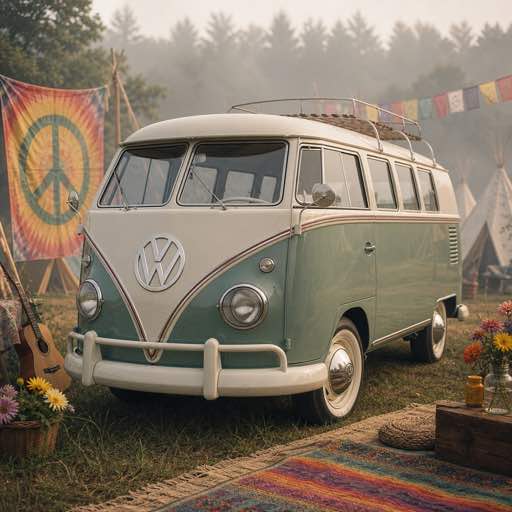
- 1950 Type 2 T1 'Splittie' Microbus
- Origin
- Wolfsburg, Germany — production began March 1950
- Engine
- 1.1L air-cooled flat-four (early cars)
- Power
- ~25 hp (early cars)
- Layout
- Rear engine, rear-wheel drive, cab-over-axle
- Production
- T1 split-window built 1950–1967
- Claim to fame
- The definitive 1960s counterculture vehicle
About
As of 2026, it's 76 years old.
The story goes that a Dutch importer sketched a boxy people-mover on a napkin, and Volkswagen took the dare. Bolt a roomy body onto Beetle mechanicals, push the driver right up over the front axle, and you get the Type 2 — the Microbus, the Kombi, the Splittie, the Hippie Van, the most beloved box on wheels ever built.
Mechanically it was pure Beetle: a wheezy air-cooled flat-four in the back making around 25 horsepower, asked to haul a brick-shaped body and everyone's worldly possessions. It was gloriously, hilariously slow — flooring it was less acceleration than a polite suggestion — but nobody bought a Bus to win drag races.
The early 'split-window' T1, with its two-piece windshield and that big friendly V of chrome on the nose, became the rolling symbol of the 1960s. Surfers, families, and flower children all saw the same thing: freedom you could sleep in. Slap a peace sign on the front and you had the unofficial mascot of an entire generation.
Today a clean split-window Microbus fetches collector-car money that would have stunned its original owners. Not bad for a van that takes a running start to merge onto the highway.
Volkswagen Bus through the years
The box debuts
VW launches the Type 2 on March 8, building just under 10,000 in its first year.
One million Buses
The millionth Transporter rolls off the line as the world embraces the practical van.
End of the Splittie
The two-piece windshield retires as the smoother 'Bay window' T2 takes over.
Woodstock icon
The painted Microbus becomes the enduring visual shorthand for peace, love, and the 1960s.
Last classic Bus
Brazil builds the final air-cooled-heritage Kombi, ending a 63-year global run.