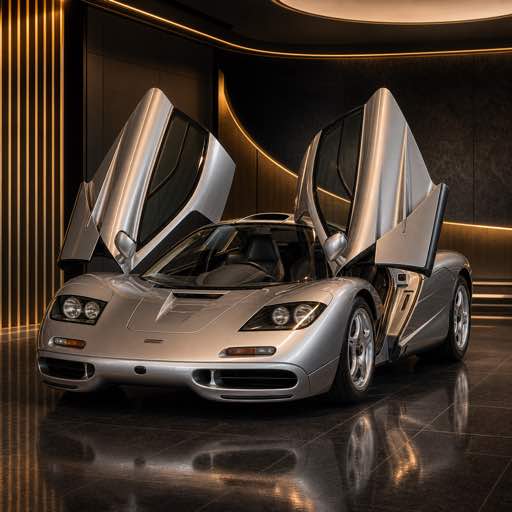
McLaren F1
It's from 1992, before you were born.
- Iconic generation
- McLaren F1 (1992–1998)
- Origin
- Woking, England
- Designer
- Gordon Murray
- Engine
- 6.1L BMW S70/2 V12
- Power
- 627 hp at 7,400 rpm
- Top speed
- 240.1 mph (record-setting XP5)
- Production
- 106 cars built
- Price when new
- ~$815,000 (1990s)
About
As of 2026, it's 34 years old.
The McLaren F1 wasn't designed to be the fastest car in the world. Gordon Murray just wanted to build the perfect road car with no compromises and an unlimited budget, and being the fastest turned out to be a side effect. That is the most McLaren thing imaginable: world domination as an accident.
It is gloriously weird. The driver sits dead center, ahead of two passenger seats, like a fighter pilot flanked by two slightly nervous friends. The engine bay is lined with actual gold foil because gold is the best heat reflector money can buy, and Murray had decided money was not the issue. BMW built the 6.1-liter V12 so good it had to be detuned for being too powerful.
In 1998 a long-tail version hit 240.1 mph and held the production-car speed record for years, all while being completely streetable with no turbos, no traction control, and no electronic nannies whatsoever. Just you, three pedals, and 627 naturally aspirated horsepower.
Only 106 were ever built, and today they trade for tens of millions. The F1 is the rare hypercar that has only grown more mythical with age. They don't make them like this anymore, mostly because nobody is reckless and brilliant enough to try.
McLaren F1 through the years
The F1 debuts
Gordon Murray's no-compromise three-seater stuns the world at its Monaco unveiling.
First deliveries
Customers finally take the keys to the gold-lined, center-driver supercar.
Le Mans win
The race-spec F1 GTR wins the 24 Hours of Le Mans outright on its debut.
240.1 mph record
The XP5 prototype sets the production-car speed record that stood for years.
Production ends
Just 106 cars built, cementing instant legend status.