Lotus Esprit
It's from 1976, before you were born.
- Iconic generation
- 1976 Esprit S1
- Origin
- Hethel, England
- Designer
- Giorgetto Giugiaro
- Engine
- 2.0L Lotus 907 inline-4
- Power
- 160 hp (Euro spec)
- 0–60 mph
- approx. 6.8–8.0 sec
- Top speed
- approx. 135 mph (217 km/h)
- Production
- 1976–1978 (S1, 718 built)
About
As of 2026, it's 50 years old.
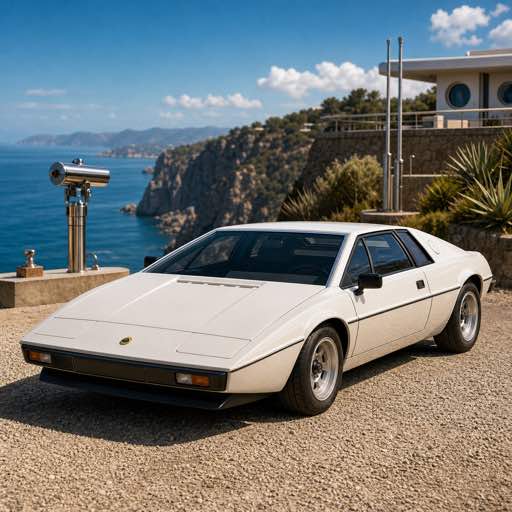
In 1976, Lotus unveiled a wedge of folded origami so sharp you could probably open mail with it. The Esprit was styled by Giorgetto Giugiaro, who took his 'folded paper' design language to its most extreme conclusion: a low, flat, impossibly angular fibreglass body sitting on a steel backbone chassis.
Then James Bond happened. In 1977's 'The Spy Who Loved Me,' Roger Moore drove an Esprit S1 off a pier and it transformed into a submarine, complete with fins and torpedoes. It is, to this day, one of the greatest car stunts in cinema, and it turned a small British sports car into an instant international icon.
Mechanically, the early Esprit was pure Lotus philosophy: not very powerful, but feather-light and brilliantly balanced. Founder Colin Chapman's mantra was 'simplify, then add lightness,' and the Esprit followed it to the letter, prioritising cornering grace over brute force.
The Esprit soldiered on for over a quarter-century, eventually gaining a twin-turbo V8, but the original angular S1, the submarine, remains the one schoolkids taped to their walls and grown adults still dream about.
Lotus Esprit through the years
Wedge revealed
The Giugiaro-designed Esprit debuts at the Paris Motor Show.
S1 enters production
The first Esprit reaches customers, replacing the Lotus Europa.
The submarine
An Esprit dives into the sea in 'The Spy Who Loved Me' and becomes a film legend.
Turbo Esprit
A turbocharged version finally gives the lightweight wedge serious muscle.
V8 finale
Lotus fits a twin-turbo V8, the most powerful Esprit ever, before retirement.
Production ends
After 28 years, the last Esprit leaves Hethel.