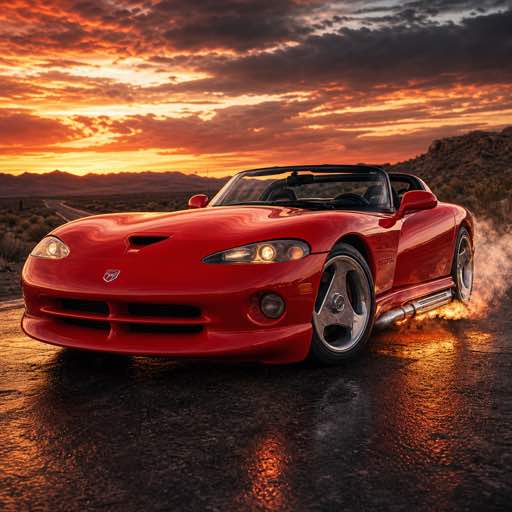
Dodge Viper
It's from 1991, before you were born.
- Iconic generation
- 1992 Viper RT/10 (first-gen SR)
- Origin
- Detroit, Michigan, USA
- Engine
- 8.0L (488 cu in) V10
- Power
- 400 hp; 465 lb-ft torque
- 0–60 mph
- 4.5 seconds
- Top speed
- ~165 mph
- Production
- RT/10 sold from 1992; ~285 in the first year
- Price when new
- $50,000–$52,000 MSRP (dealers asked far more)
About
As of 2026, it's 35 years old.
The Viper is what happens when a car company decides safety committees are for cowards. Conceived in the late 1980s as a modern Shelby Cobra, the 1992 RT/10 arrived with no traction control, no anti-lock brakes, no airbags, no exterior door handles, and side pipes hot enough to brand your calf. It was less a car than a dare.
At its heart was an 8.0-liter V10, the first production V10 in any car, period, and a block reportedly massaged by Lamborghini (then Chrysler-owned). It made 400 hp and a colossal 465 lb-ft of torque, hurling the bare-bones roadster to 60 in 4.5 seconds and on to 165 mph, all while doing its level best to kill the inexperienced.
Priced at $50,000-ish but flipped by dealers for double, the Viper became the 1990s American supercar, the homegrown answer to imported exotics that cost three times as much. It paced the Indy 500, terrorized racetracks, and looked like a doorstop designed by a shark.
Over five generations the Viper got more civilized, eventually gaining the brakes and airbags it once scorned, and even won at Le Mans. But the original RT/10 remains the purest expression of the idea: huge engine, light body, no nannies, infinite attitude.
Dodge Viper through the years
Concept shock
The Viper concept stuns the Detroit Auto Show and demands to be built.
Indy pace car
A pre-production Viper paces the Indianapolis 500 before it's even on sale.
Production begins
The brutal, doorhandle-free RT/10 reaches customers with its first-ever production V10.
GTS coupe
The 'double-bubble' GTS coupe adds a roof, more power, and Le Mans ambitions.
Le Mans glory
Viper GTS-R takes class wins at Le Mans, validating the snake on the world stage.
Final strike
Dodge retires the Viper after five generations and one unrepentant attitude.