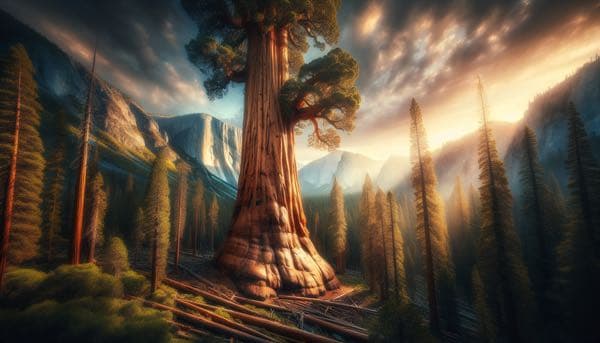
Alerce (Patagonian Cypress)
This tree has been standing in the same spot since before the invention of writing. You get restless after 20 minutes in a waiting room.
This tree has been standing in the same spot since before the invention of writing. You get restless after 20 minutes in a waiting room.
Lifespan
3622 years
Your age
20
Size
150 ft tall
Habitat
Southern Chile and adjacent Argentina
Are you older than a Alerce (Patagonian Cypress)?
No — a Alerce (Patagonian Cypress) can live up to 3622 years. You have 3602 years to go.
At your age (20), a Alerce (Patagonian Cypress) has already germinated from a seed (at age 0), but hasn't yet reached sapling stage (at age 50).
In 2006, when you were born
Population
12,600
Still alive today
10,306
Population trend
📉 Decreasing
Current population
10,000
Conservation status
VulnerableAlerce (Patagonian Cypress) Life Timeline
The Alerce, or Patagonian Cypress, is not just a tree; it's a living testament to time itself, standing tall in the lush forests of southern Chile and Argentina. Imagine a tree that has witnessed the dawn of civilization, the rise and fall of empires, and the invention of the wheel — all while looking fabulous in its 150-foot glory. With its impressive lifespan of over 3,600 years, the Alerce is like the wise old sage of the forest, offering a unique perspective on life that no human could ever hope to achieve in a single lifetime.
Read more
These majestic conifers thrive in the temperate rainforests, where they soak up the moisture from the air and grow at a glacial pace. Alerces start their lives as tiny seeds, eventually maturing into towering giants that can live for millennia. Their slow growth rate means that they take their time to reach full height, but once they do, they become resilient to the elements, surviving harsh weather and even fires. Their longevity makes them critical to their ecosystem, providing habitat for various species and playing a vital role in carbon sequestration.
Humans have both revered and exploited the Alerce. While some have admired their beauty and longevity, others have logged them for their valuable wood. Thankfully, conservation efforts are in place to protect these ancient trees and their habitats. As we learn more about their ecological importance, we might just find ourselves taking a page from their book on patience and endurance. After all, while you were busy scrolling through social media, this tree was busy being a living monument to the passage of time.
Germinated from a seed
The journey begins as a tiny seed, nestled in the forest floor, soaking up moisture and nutrients from the soil. This humble start is where the Alerce's epic tale of growth and resilience begins.
An Alerce germinated from a seed at age 0. At that age, most humans are learning to crawl. Are you older than an Alerce when it germinated?
At this age, a human newborn is just starting to learn the world around them, figuring out how to crawl and babble.
Reached sapling stage
After five decades of slow but steady growth, the Alerce has finally graduated from its sapling phase. This is when it starts to stretch its branches and develop a sturdy trunk, preparing for a long life ahead.
An Alerce reached sapling stage at age 50. At that age, most humans are navigating adulthood. Are you older than an Alerce when it became a sapling?
At 50, a human is often navigating the complexities of adulthood, perhaps raising children or advancing in their career.
Matured into a young tree
Now a century old, the Alerce is no longer a sapling but a young tree, standing tall and beginning to play its role in the ecosystem. It starts attracting wildlife and providing shelter to various species.
An Alerce matured into a young tree at age 100. At that age, most humans are starting a family. Are you older than an Alerce when it became a young tree?
At this age, a human might be in their early career, possibly starting a family and making big life decisions.
Became a mature tree
After three centuries, this Alerce has fully matured, showcasing its impressive height and thick trunk. It's a vital part of the forest, providing habitat and food for countless creatures.
An Alerce became a mature tree at age 300. At that age, most humans are mentoring younger generations. Are you older than an Alerce when it became a mature tree?
At 300, a human is likely enjoying a stable career and possibly mentoring younger generations.
Survived its first millennium
Celebrating a millennium, this Alerce has seen it all: climate changes, wildlife migrations, and human encroachment. It's a living archive of history, with each ring telling a story.
An Alerce survived its first millennium at age 1000. At that age, most humans are reflecting on life achievements. Are you older than an Alerce when it hit its first millennium?
At this age, a human might be reflecting on life achievements and considering retirement plans — if they were still around, that is.
A revered ancient tree
Now two millennia old, the Alerce is a revered ancient tree, often visited by nature lovers and researchers who marvel at its grandeur and resilience. It stands as a symbol of endurance.
An Alerce became a revered ancient tree at age 2000. At that age, most humans are reflecting on their legacy. Are you older than an Alerce when it became revered?
At this age, a human may be enjoying their golden years, surrounded by family and reflecting on their legacy.
A living monument
Having reached 3,000 years, this Alerce is now a living monument, witnessing the passage of time and the changes in its environment. It's a crucial part of the ecosystem, supporting various life forms.
An Alerce became a living monument at age 3000. At that age, most humans are great-grandparents. Are you older than an Alerce when it became a living monument?
At this age, a human might be a great-grandparent, sharing stories and wisdom with the younger generations.
Reached maximum known age
At 3,622 years, this Alerce has reached its maximum known age, standing as a testament to resilience and longevity in the face of environmental changes and human activity.
An Alerce reached its maximum known age at 3622. At that age, most humans are enjoying retirement. Are you older than an Alerce when it reached its maximum age?
At this age, a human might be enjoying retirement, reflecting on a lifetime of experiences and the impact they've made.
Great-grandchildren thriving
By now, the Alerce's great-grandchildren are thriving, continuing the legacy of resilience and strength in their own right, contributing to the forest's biodiversity.
An Alerce's great-grandchildren are thriving at age 4000. At that age, most humans are great-grandparents. Are you older than an Alerce when its great-grandchildren thrived?
At this age, a human might be a great-grandparent, watching their grandchildren grow and thrive.
A legacy of ancient wisdom
As it reaches 5,000 years, the Alerce stands as a beacon of ancient wisdom, influencing the ecosystem and shaping the forest's future generations through its existence.
An Alerce's legacy of ancient wisdom is felt at age 5000. At that age, most humans are reflecting on a life well-lived. Are you older than an Alerce when its wisdom was felt?
At this age, a human might be reflecting on a life well-lived, sharing stories and wisdom with the younger generations.
Lifespan Comparison
This species can live 45× longer than a human.
A Alerce (Patagonian Cypress) can live to 3622 — you have 3602 years to go.
See what else you're older than