Trabant 601
It's from 1963, before you were born.
- Iconic generation
- Trabant 601
- Origin
- Zwickau, East Germany
- Body
- Duroplast (resin & cotton-fiber)
- Engine
- 594cc two-stroke inline-2
- Power
- 26 PS (19 kW)
- 0–62 mph
- ~21 seconds
- Top speed
- 112 km/h (70 mph)
- Production
- 1963–1991 (2.8M+ built)
About
As of 2026, it's 63 years old.
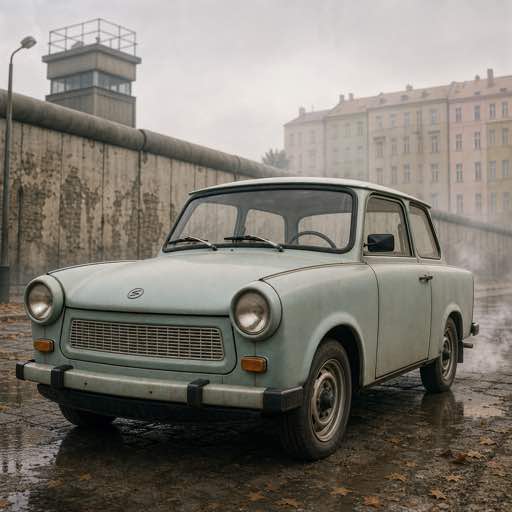
Behind the Iron Curtain, the dream car wasn't a Ferrari — it was a Trabant 601, and you'd wait up to a decade to get one. Built in East Germany from 1963, the 'Trabi' was the people's car of the GDR: tiny, smoky, and clad in a body made of Duroplast, a hard plastic of resin and recycled cotton fibers. Yes, your car was partly made of old clothes.
Power, and we use the term generously, came from a 594cc two-stroke twin making around 26 horsepower. It mixed oil into the fuel like a lawnmower, belched a signature blue haze, and rattled from 0 to 62 mph in a leisurely 21 seconds — assuming a tailwind and good intentions.
But the Trabi was tougher than its punchlines suggest. Simple enough to fix with hand tools, the Duroplast body never rusted, and over 2.8 million 601s trundled out of Zwickau across nearly three decades of remarkable mechanical stubbornness.
When the Berlin Wall fell in 1989, convoys of Trabants puttering west became the iconic image of freedom on wheels — a humble cardboard comrade suddenly cast as a symbol of liberation. Not bad for a car you could theoretically compost.
Trabant 601 through the years
The Trabi arrives
The 601 launches in Zwickau with a two-stroke twin and a body partly made of cotton.
Universal wagon
The practical estate version joins, doubling the family-hauling smoke output.
Symbol of freedom
Trabants stream west as the Berlin Wall falls, becoming the car of reunification.
Modern heart
A four-stroke VW-sourced engine arrives too late to save the smoky legend.
End of the line
Production ceases after 28 years and over 2.8 million stubbornly cheerful 601s.