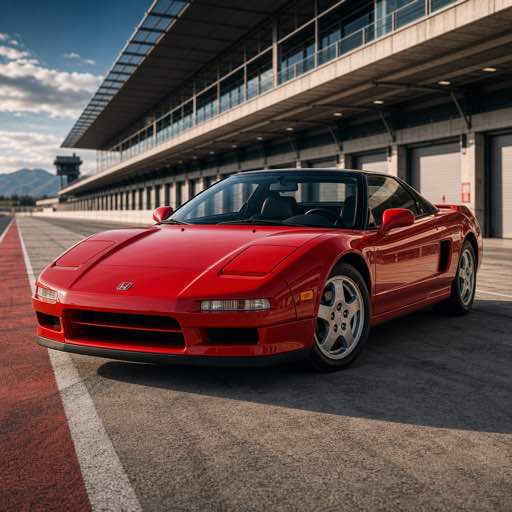
Honda NSX
It's from 1990, before you were born.
- Iconic generation
- 1990 NSX (NA1)
- Origin
- Tochigi, Japan
- Engine
- 3.0L C30A V6 with VTEC
- Power
- 270 hp (280 PS) at 7,300 rpm
- 0–60 mph
- approx. 5.2 sec
- Top speed
- approx. 163 mph (262 km/h)
- Body
- First all-aluminium production car
- Price when new
- approx. $58,000 (1990, US)
About
As of 2026, it's 36 years old.
In 1990, supercars were temperamental, terrifying Italian thoroughbreds that overheated in traffic and required a small fortune to maintain. Then Honda showed up with the NSX and asked an outrageous question: what if a supercar was reliable, comfortable, and as easy to drive to the shops as a Civic?
Honda built it like nothing before, the first production car with an all-aluminium body, a high-revving VTEC V6 mounted behind the seats, and a chassis honed with input from a Brazilian racing driver named Ayrton Senna, who pushed Honda's engineers to stiffen the structure until it was worthy of his name. When the greatest F1 driver of his era tells you it's not stiff enough, you listen.
The result drove like a precision instrument: forgiving, communicative, devastatingly quick, and utterly dependable. It so thoroughly embarrassed Ferrari and Porsche that legend says it forced them to up their own game. The NSX proved a supercar didn't have to hurt to own.
Today the original 'NA1' NSX is a revered classic, the car that civilised the supercar and showed the establishment that a Japanese company could beat them at their own game, then drive home without breaking down.
Honda NSX through the years
Concept stuns Chicago
Honda reveals the NS-X prototype, signalling its supercar ambitions.
NSX goes on sale
The aluminium-bodied, VTEC-powered NSX redefines what a supercar can be.
The Senna effect
Ayrton Senna's feedback helps make the production chassis dramatically stiffer.
3.2L upgrade
A larger engine and six-speed gearbox keep the NSX competitive.
First generation ends
After 15 years, the original NSX retires as a bona fide modern classic.